
Human Visfatin ELISA Kit | EL-213-222
Cat. No: EL-213-222
$859.99 USD
96 wells
| Target protein | Visfatin |
|---|---|
| Alternative name | NAMPT |
| Gene ID | 10135 |
| Reactivity | Human |
| Detection range | 0.16-10 ng/mL |
| Sample type | serum, plasma and other biological fluids |
| Sample volume | 100 µL |
| Assay time | 3h 20min |
| Precision | Intra-assay CV <8%. Inter-assay CV <10% |
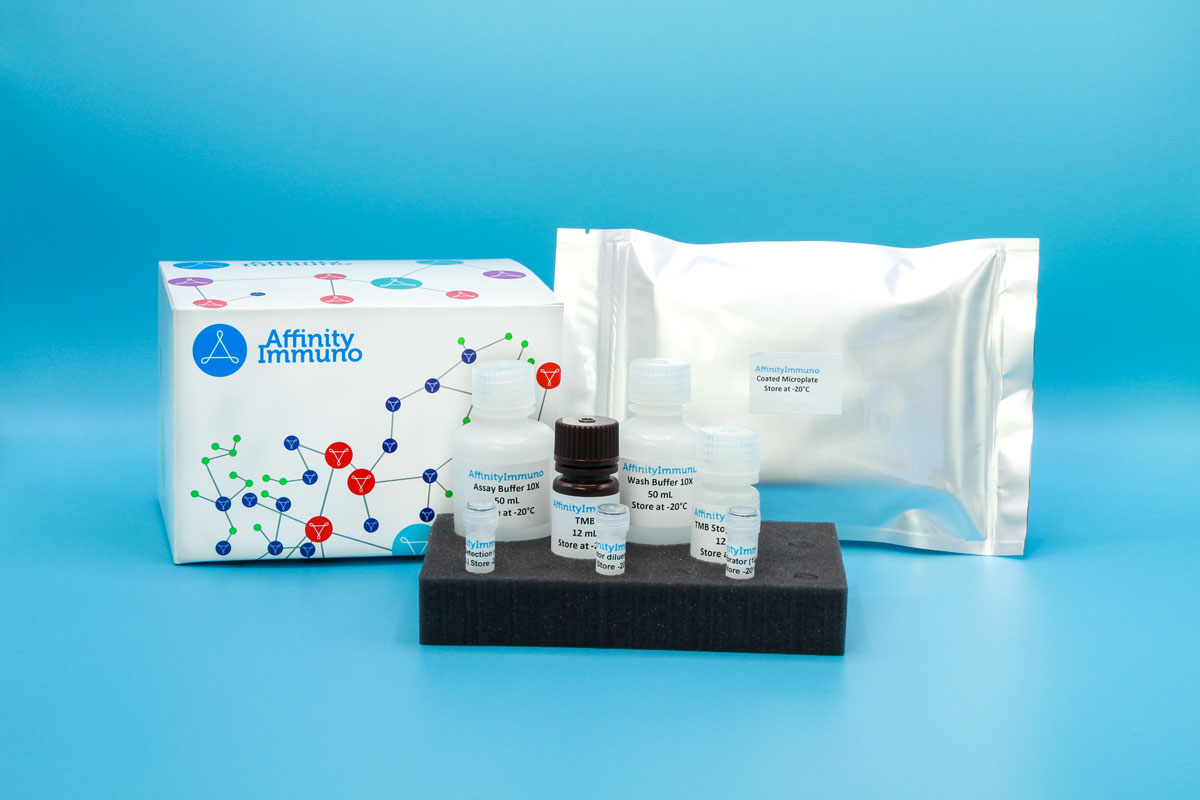
| Components | Pre-Coated Microplate - 12 strips x 8 wells (4°C/-20°C) Standard (Lyophilized) - 2 vials (4°C/-20°C) Biotinylated Antibody (100×) - 120 μL (4°C/-20°C) Streptavidin-HRP (100×) - 120 μL (4°C/-20°C) Standard/Sample Diluent Buffer - 20 mL (4°C/-20°C) Biotinylated Antibody Diluent - 12 mL (4°C/-20°C) HRP Diluent - 12 mL (4°C/-20°C) Wash Buffer (25×) - 20 mL (4°C/-20°C) TMB Substrate Solution - 10 mL (4°C/-20°C (store in dark)) Stop Reagent - 6 mL (4°C/-20°C) Plate Covers - 2 pieces (RT) |
| Storage | 4°C/-20°C |
Introduction
NAMPT, also called visfatin or PBEF, exists in both an intracellular enzymatic form and a secreted form with separate biological roles. Inside the cell it is the rate-limiting catalyst that converts nicotinamide into nicotinamide mononucleotide, the committed step feeding most of the body’s NAD production, and through NAD-dependent signaling it also helps set the pace of the circadian clock. Once released into circulation, the protein loses its catalytic activity and instead acts as a signaling molecule, functioning as an adipose-derived hormone with insulin-like, anti-diabetic effects and as an immune mediator that was originally identified for its ability to promote the maturation of early B-lymphocytes. NAMPT is broadly produced across fat, liver, muscle, and bone marrow, and its dual enzymatic and hormonal activities have linked it to metabolism, immune regulation, and biological aging.
NAMPT/visfatin’s unusual dual identity — the rate-limiting intracellular enzyme in NAD biosynthesis and, once secreted, an insulin-mimetic adipokine and immune mediator — connects this assay to the fast-growing NAD-metabolism and cellular-aging research field in addition to its more established role in metabolic syndrome and diabetes research.
Principle of the Assay
This kit uses a sandwich enzyme immunoassay format. Wells of the microtiter plate arrive pre-coated with a capture antibody specific to Human Visfatin (VF). During the first incubation, any Visfatin present in the standards or samples is bound by this capture antibody. A biotin-conjugated detection antibody, also specific to Human VF, is then introduced and binds a second epitope on the captured analyte. Following this, Avidin conjugated to Horseradish Peroxidase (HRP) is added and binds to the biotin on the detection antibody. After all unbound reagents are removed, TMB substrate solution is added; a colorimetric signal develops only in wells where Human VF, the biotin-conjugated detection antibody, and HRP-conjugated Avidin are all present. The enzymatic reaction is stopped by addition of a sulphuric acid solution, and absorbance is read at 450 nm (± 10 nm). Sample concentrations are determined by referencing measured optical densities against a standard curve.