
Human vaspin ELISA Kit | EL-213-22
Cat. No: EL-213-22
$859.99 USD
96 wells
| Target protein | vaspin |
|---|---|
| Alternative name | SERPINA12 |
| Gene ID | 145264 |
| Reactivity | Human |
| Detection range | 0.16-10 ng/mL |
| Sample type | Serum, plasma, tissue homogenates and other biological fluids |
| Sample volume | 100 µL |
| Assay time | 3h 20min |
| Precision | Intra-assay CV <8%. Inter-assay CV <10% |
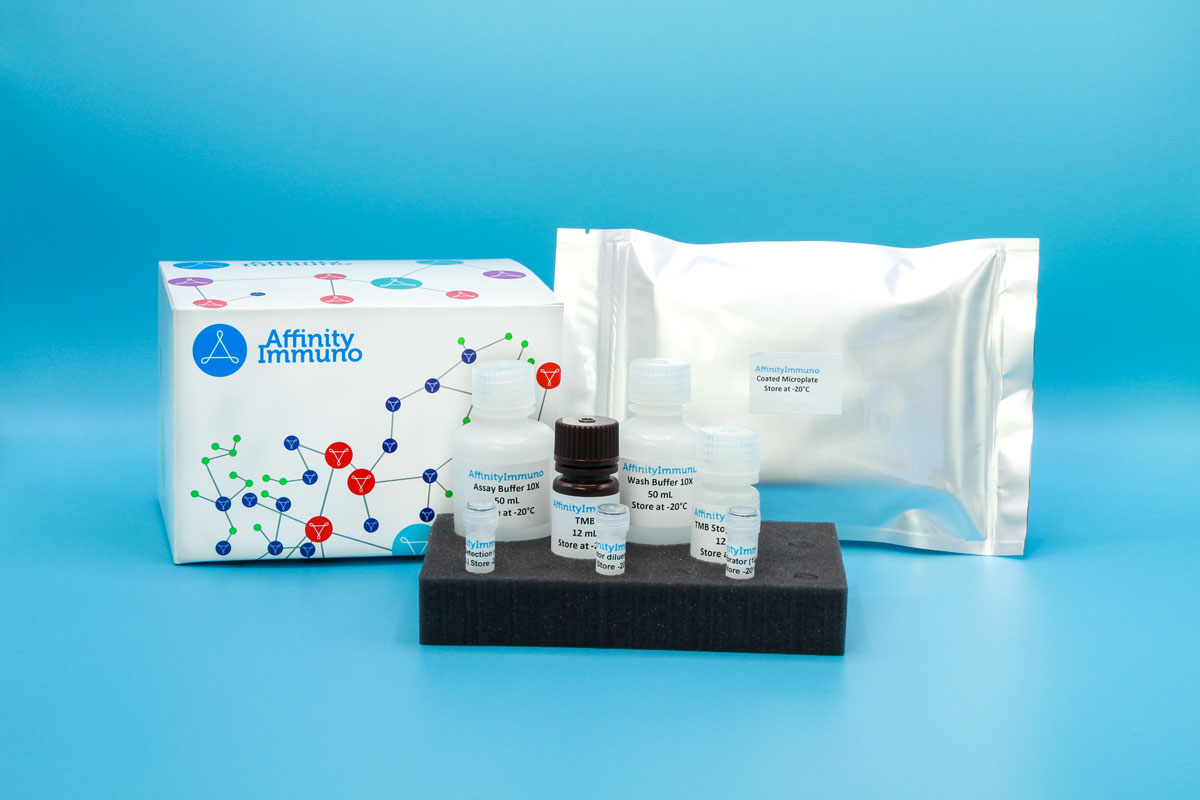
| Components | Pre-Coated Microplate - 12 strips x 8 wells (4°C/-20°C) Standard (Lyophilized) - 2 vials (4°C/-20°C) Biotinylated Antibody (100×) - 120 μL (4°C/-20°C) Streptavidin-HRP (100×) - 120 μL (4°C/-20°C) Standard/Sample Diluent Buffer - 20 mL (4°C/-20°C) Biotinylated Antibody Diluent - 12 mL (4°C/-20°C) HRP Diluent - 12 mL (4°C/-20°C) Wash Buffer (25×) - 20 mL (4°C/-20°C) TMB Substrate Solution - 10 mL (4°C/-20°C (store in dark)) Stop Reagent - 6 mL (4°C/-20°C) Plate Covers - 2 pieces (RT) |
| Storage | 4°C/-20°C |
Introduction
Vaspin, short for visceral adipose tissue-derived serine protease inhibitor and the product of the SERPINA12 gene, is an adipokine first identified in visceral fat that belongs to the serpin superfamily of protease inhibitors. Like other serpins, it carries an exposed reactive-center loop that acts as bait for its target protease, forming an irreversible complex that inactivates the enzyme; for vaspin, reported targets include the kallikrein-related peptidase KLK7, which also has a role in skin barrier turnover. Metabolically, vaspin has an insulin-sensitizing action, is linked to suppression of food intake, and its circulating levels rise in association with obesity and insulin resistance, making it a marker of interest in metabolic syndrome research. Because it is also produced and active in skin, vaspin has drawn separate interest in dermatology, including in inflammatory skin conditions where kallikrein activity is dysregulated.
Vaspin’s dual relevance — as a visceral-fat-derived marker of obesity and insulin resistance, and separately as an active player in skin where its target protease KLK7 also governs skin barrier turnover — gives this assay applicability to both metabolic-syndrome research and dermatology research on inflammatory skin conditions.
Principle of the Assay
This kit uses a sandwich enzyme immunoassay format. The microtiter plate wells are pre-coated with a capture antibody specific to human vaspin, which binds the target analyte present in standards or samples upon addition. A biotin-conjugated detection antibody, also specific to human vaspin, is then introduced and binds a second epitope on the captured analyte. Avidin conjugated to horseradish peroxidase (HRP) is subsequently added and binds the biotin label, completing the detection complex. After addition of TMB substrate solution, a colorimetric signal develops only in wells where human vaspin, the biotin-conjugated antibody, and the avidin-HRP conjugate are all present. The enzymatic reaction is stopped by the addition of sulphuric acid solution, and absorbance is measured at 450 nm (± 10 nm). Vaspin concentration in each sample is determined by comparing sample optical density values against a standard curve.