
Human ULBP1 ELISA Kit | EL-213-2112201
Cat. No: EL-213-2112201
$859.99 USD
96 wells
| Target protein | ULBP1 |
|---|---|
| Gene ID | 80329 |
| Reactivity | Human |
| Detection range | 93.75-6000 pg/mL |
| Sample type | Serum, plasma and other biological fluids. |
| Sample volume | 100 µL |
| Assay time | 3h 20min |
| Precision | Intra-assay CV <8%. Inter-assay CV <10% |
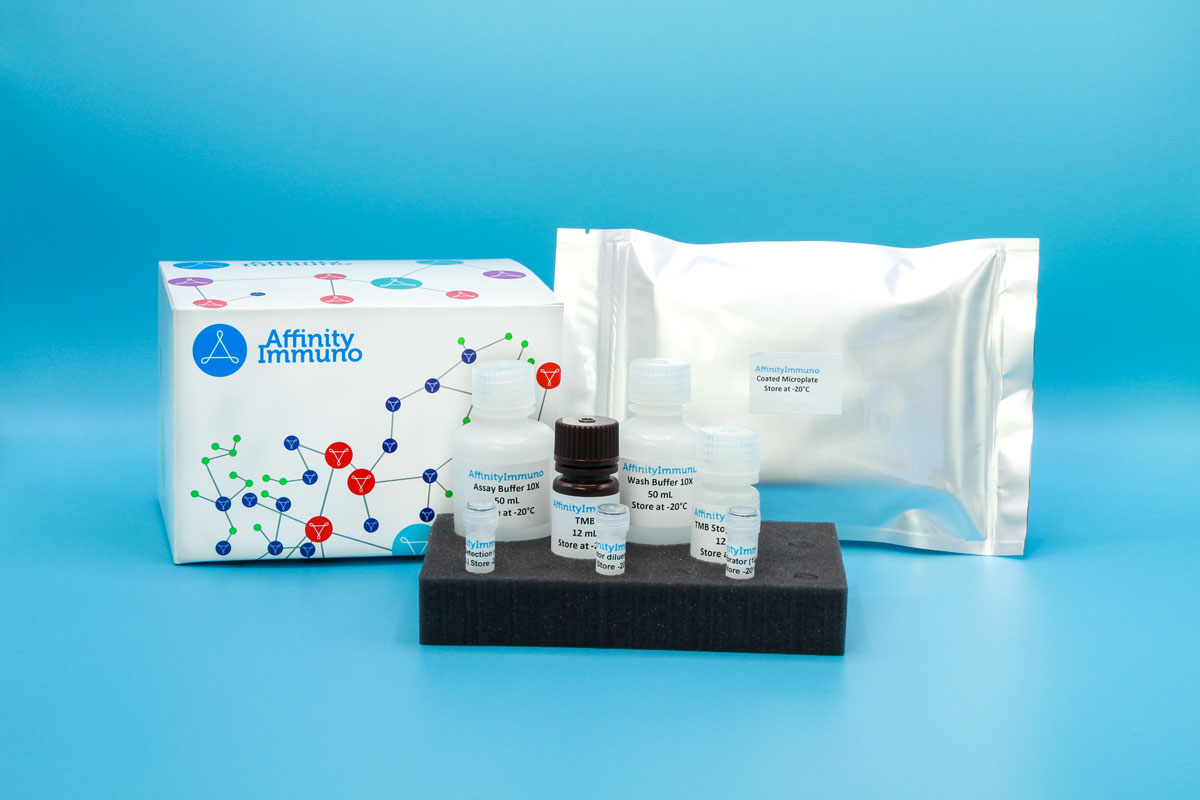
| Components | Pre-Coated Microplate - 12 strips x 8 wells (4°C/-20°C) Standard (Lyophilized) - 2 vials (4°C/-20°C) Biotinylated Antibody (100×) - 120 μL (4°C/-20°C) Streptavidin-HRP (100×) - 120 μL (4°C/-20°C) Standard/Sample Diluent Buffer - 20 mL (4°C/-20°C) Biotinylated Antibody Diluent - 12 mL (4°C/-20°C) HRP Diluent - 12 mL (4°C/-20°C) Wash Buffer (25×) - 20 mL (4°C/-20°C) TMB Substrate Solution - 10 mL (4°C/-20°C (store in dark)) Stop Reagent - 6 mL (4°C/-20°C) Plate Covers - 2 pieces (RT) |
| Storage | 4°C/-20°C |
Introduction
ULBP1 is a cell-surface glycoprotein structurally related to MHC class I molecules that serves as a stress-induced ligand for the NKG2D receptor found on natural killer cells and certain T-cell subsets. Engagement of NKG2D by ULBP1, acting through the adaptor DAP10, triggers a signaling cascade involving JAK2, STAT5, ERK, and PI3K/Akt that primes cytotoxic lymphocytes to eliminate the ULBP1-bearing cell. Because ULBP1 is frequently upregulated on infected or transformed cells, it functions as part of an innate surveillance system that flags abnormal cells for immune attack. Notably, human cytomegalovirus has evolved a countermeasure: its UL16 glycoprotein binds ULBP1 inside the cell and holds it away from the surface, blunting this recognition pathway during infection.
ULBP1’s role activating NK cells through NKG2D makes it relevant to NK-cell-based immunotherapy research, and human cytomegalovirus’s evolved countermeasure — its UL16 protein sequesters ULBP1 inside infected cells — gives this assay additional value in viral immune-evasion research.
Principle of the Assay
This kit uses a sandwich enzyme immunoassay format in which the microtiter plate wells are pre-coated with a capture antibody specific to Human ULBP1. Standards or samples are pipetted into the appropriate wells along with a biotin-conjugated detection antibody that also recognizes Human ULBP1. Avidin conjugated to horseradish peroxidase (HRP) is then added to each well and allowed to incubate. Upon addition of TMB substrate solution, a colorimetric signal develops exclusively in wells where Human ULBP1, the biotin-conjugated detection antibody, and the avidin-HRP conjugate are all present. The enzymatic reaction is stopped by the addition of a sulphuric acid stop solution, and absorbance is measured at 450 nm (± 10 nm). ULBP1 concentration in each sample is determined by referencing the measured optical density against a standard curve.