
Human TSLPR ELISA Kit | EL-213-202
Cat. No: EL-213-202
$859.99 USD
96 wells
| Target protein | TSLPR |
|---|---|
| Alternative name | CRLF2 |
| Gene ID | 64109 |
| Reactivity | Human |
| Detection range | 31.25-2000 pg/mL |
| Sample type | serum, plasma, tissue homogenates, cell lysates, cell culture supernates and other biological fluids |
| Sample volume | 100 µL |
| Assay time | 3h 20min |
| Precision | Intra-assay CV <8%. Inter-assay CV <10% |
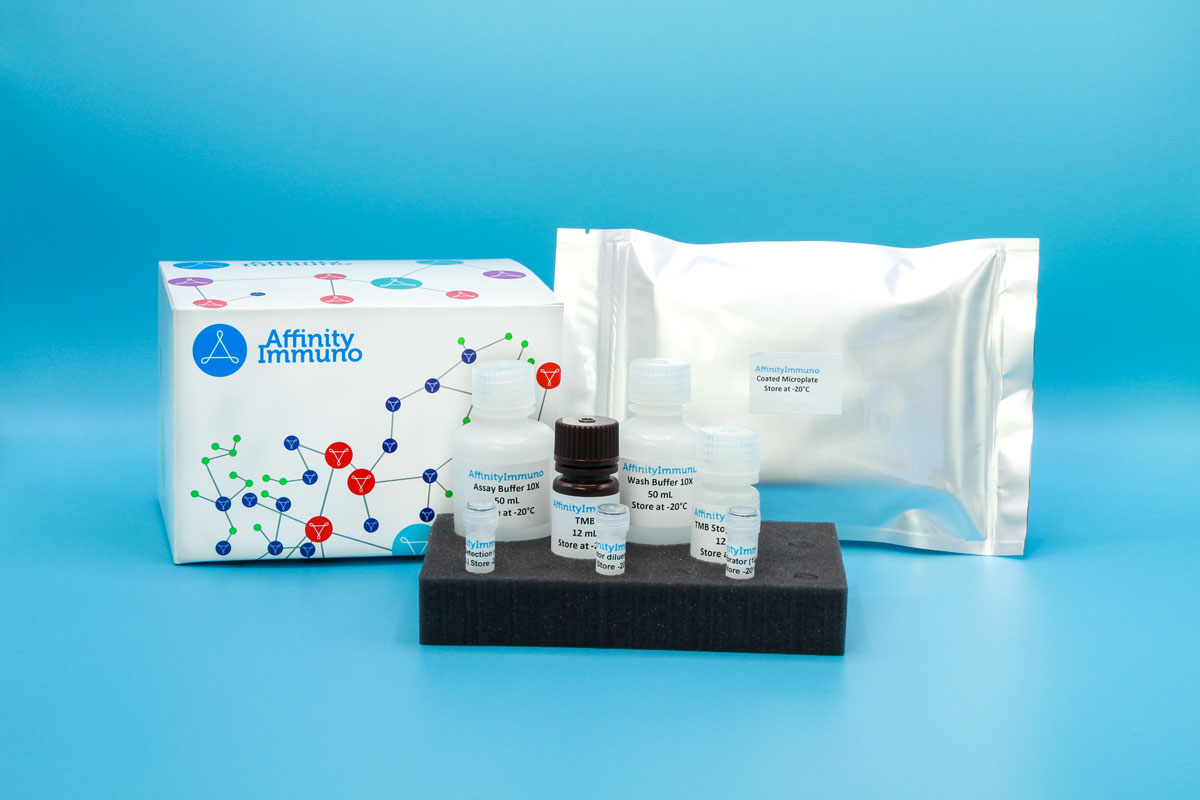
| Components | Pre-Coated Microplate - 12 strips x 8 wells (4°C/-20°C) Standard (Lyophilized) - 2 vials (4°C/-20°C) Biotinylated Antibody (100×) - 120 μL (4°C/-20°C) Streptavidin-HRP (100×) - 120 μL (4°C/-20°C) Standard/Sample Diluent Buffer - 20 mL (4°C/-20°C) Biotinylated Antibody Diluent - 12 mL (4°C/-20°C) HRP Diluent - 12 mL (4°C/-20°C) Wash Buffer (25×) - 20 mL (4°C/-20°C) TMB Substrate Solution - 10 mL (4°C/-20°C (store in dark)) Stop Reagent - 6 mL (4°C/-20°C) Plate Covers - 2 pieces (RT) |
| Storage | 4°C/-20°C |
Introduction
CRLF2 encodes the receptor subunit for thymic stromal lymphopoietin (TSLP), commonly referred to as TSLPR. Together with the interleukin-7 receptor chain, this receptor pairs with TSLP to trigger STAT3, STAT5 and JAK2 signaling, driving proliferation of hematopoietic progenitors and shaping normal blood cell development. Chromosomal rearrangements that place CRLF2 next to the immunoglobulin heavy-chain locus or the P2RY8 gene are recurrently found in B-progenitor acute lymphoblastic leukemia, including cases arising in children with Down syndrome. Because of this link, measuring CRLF2/TSLPR protein levels is of interest in research on leukemogenesis and lymphoid progenitor biology.
While the approved biologic tezepelumab targets the TSLP ligand itself (not the receptor) for severe asthma, TSLPR/CRLF2 shares the same signaling axis and carries independent research importance through its recurrent chromosomal rearrangements in B-progenitor acute lymphoblastic leukemia, including in children with Down syndrome — giving this assay relevance to both leukemogenesis research and, contextually, type-2 inflammatory disease research.
Principle of the Assay
This kit uses a sandwich enzyme immunoassay format in which the microtiter plate wells are pre-coated with a capture antibody specific to Human CRLF2 (TSLPR). Standards or samples are pipetted into the appropriate wells along with a biotin-conjugated detection antibody that also recognizes Human CRLF2. Avidin conjugated to horseradish peroxidase (HRP) is then added to each well and allowed to incubate, linking the enzymatic reporter to the captured analyte via the biotin–avidin interaction. Upon addition of TMB substrate solution, a colorimetric signal develops exclusively in wells containing Human CRLF2, the biotin-conjugated antibody, and the avidin-HRP conjugate. The enzymatic reaction is stopped by the addition of sulphuric acid solution, and absorbance is read spectrophotometrically at 450 nm (± 10 nm). Sample concentrations are determined by comparing the optical density of each sample against a standard curve.