
Human TSG101 ELISA Kit | EL-213-20197101
Cat. No: EL-213-20197101
$859.99 USD
96 wells
| Target protein | TSG101 |
|---|---|
| Gene ID | 7251 |
| Reactivity | Human |
| Detection range | 0.32-20 ng/mL |
| Sample type | serum, plasma, tissue homogenates and other biological fluids |
| Sample volume | 100 µL |
| Assay time | 3h 20min |
| Precision | Intra-assay CV <8%. Inter-assay CV <10% |
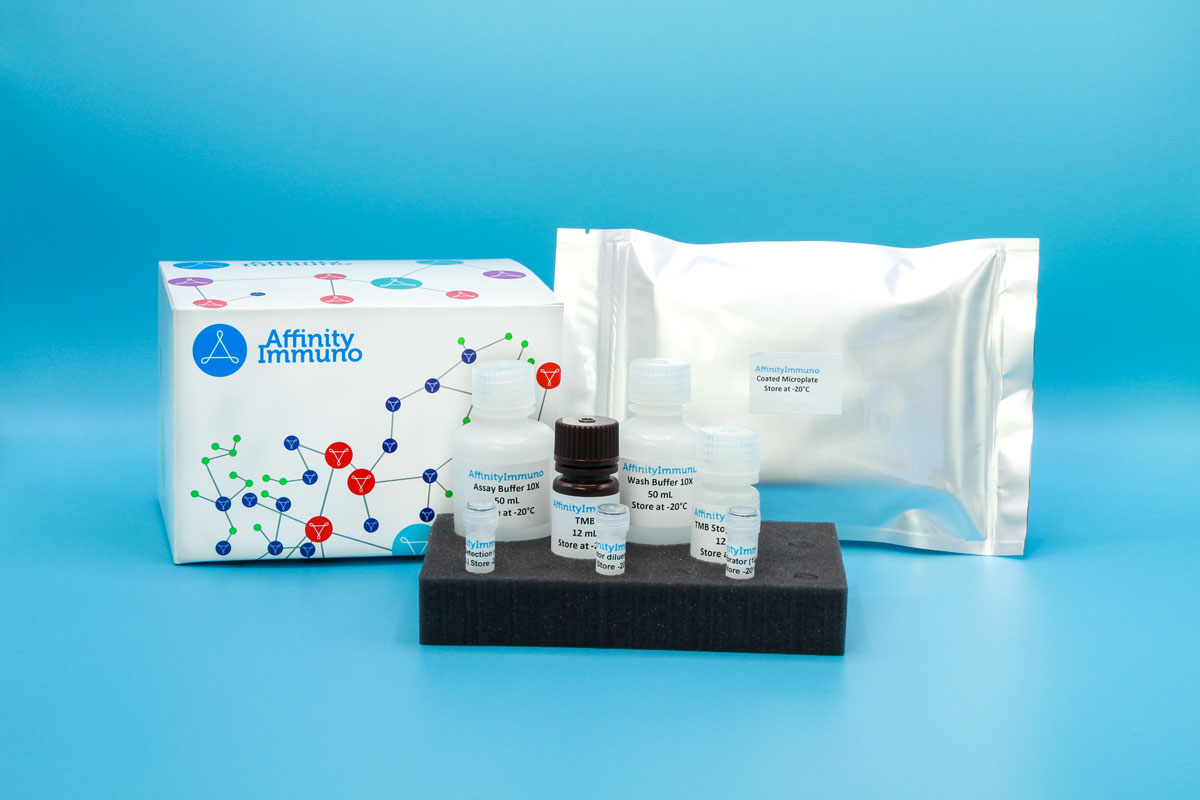
| Components | Pre-Coated Microplate - 12 strips x 8 wells (4°C/-20°C) Standard (Lyophilized) - 2 vials (4°C/-20°C) Biotinylated Antibody (100×) - 120 μL (4°C/-20°C) Streptavidin-HRP (100×) - 120 μL (4°C/-20°C) Standard/Sample Diluent Buffer - 20 mL (4°C/-20°C) Biotinylated Antibody Diluent - 12 mL (4°C/-20°C) HRP Diluent - 12 mL (4°C/-20°C) Wash Buffer (25×) - 20 mL (4°C/-20°C) TMB Substrate Solution - 10 mL (4°C/-20°C (store in dark)) Stop Reagent - 6 mL (4°C/-20°C) Plate Covers - 2 pieces (RT) |
| Storage | 4°C/-20°C |
Introduction
TSG101 is best known as a core subunit of the ESCRT-I machinery that helps sort ubiquitin-tagged membrane proteins into intraluminal vesicles during multivesicular body formation, a step that underlies both normal receptor turnover and the packaging of exosomal cargo. Beyond this trafficking role, the protein assists in the final abscission stage of cell division and has been implicated in maintaining genomic stability, consistent with early studies that identified TSG101 as a candidate tumor-suppressor locus frequently altered by mutation or aberrant splicing in breast cancer. Because retroviruses and other enveloped viruses hijack the same ESCRT-I sorting pathway to bud from infected cells, TSG101 is also studied as a host factor exploited during viral egress. Its consistent presence on exosomes and other extracellular vesicles has made it a widely used biochemical marker for these vesicle populations in cell biology research.
As a standard biochemical marker for exosomes and other extracellular vesicles, TSG101 is a natural companion assay to our CD63 and CD81 kits for liquid-biopsy and extracellular-vesicle research, while its exploitation by retroviruses during viral egress and its early identification as a candidate breast cancer tumor-suppressor locus give it additional relevance to virology and oncology research.
Principle of the Assay
This kit uses a sandwich enzyme immunoassay format to detect Human TSG101. The microtiter plate wells are pre-coated with a TSG101-specific capture antibody that binds the target analyte present in standards or samples. A biotin-conjugated detection antibody, also specific to Human TSG101, is then added and binds a second epitope on the captured analyte. Avidin conjugated to horseradish peroxidase (HRP) is subsequently introduced and binds the biotin label. Upon addition of TMB substrate solution, an enzymatic color reaction develops exclusively in wells containing Human TSG101, the biotin-conjugated detection antibody, and avidin-HRP. The reaction is stopped by the addition of a sulphuric acid solution, and absorbance is read spectrophotometrically at 450 nm (± 10 nm). Human TSG101 concentration in each sample is then calculated by comparing sample optical density values against a standard curve.