
Human SIRPG ELISA Kit | EL-213-192
Cat. No: EL-213-192
$859.99 USD
96 wells
| Target protein | SIRPG |
|---|---|
| Gene ID | 55423 |
| Reactivity | Human |
| Detection range | 0.16-10 ng/mL |
| Sample type | Tissue homogenates, cell lysates and other biological fluids |
| Sample volume | 100 µL |
| Assay time | 3h 20min |
| Precision | Intra-assay CV <8%. Inter-assay CV <10% |
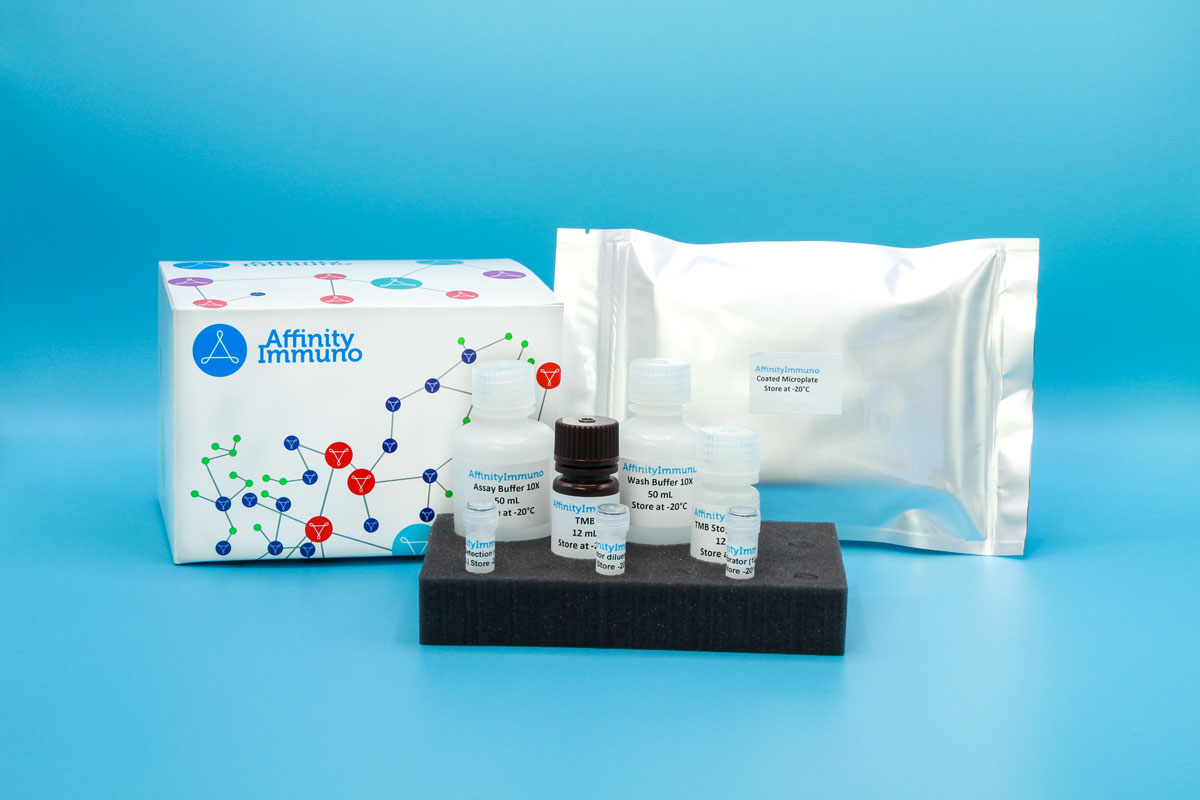
| Components | Pre-Coated Microplate - 12 strips x 8 wells (4°C/-20°C) Standard (Lyophilized) - 2 vials (4°C/-20°C) Biotinylated Antibody (100×) - 120 μL (4°C/-20°C) Streptavidin-HRP (100×) - 120 μL (4°C/-20°C) Standard/Sample Diluent Buffer - 20 mL (4°C/-20°C) Biotinylated Antibody Diluent - 12 mL (4°C/-20°C) HRP Diluent - 12 mL (4°C/-20°C) Wash Buffer (25×) - 20 mL (4°C/-20°C) TMB Substrate Solution - 10 mL (4°C/-20°C (store in dark)) Stop Reagent - 6 mL (4°C/-20°C) Plate Covers - 2 pieces (RT) |
| Storage | 4°C/-20°C |
Introduction
SIRPG encodes signal-regulatory protein gamma (SIRP-gamma), an immunoglobulin superfamily member closely related to SIRPA, expressed primarily on the surface of T lymphocytes. Structural and functional studies indicate that SIRP-gamma binds the widely distributed protein CD47 on antigen-presenting cells, and this interaction supports integrin-independent adhesion between the two cell types while delivering a costimulatory boost to T-cell receptor signaling, increasing antigen-driven T-cell proliferation. This stimulatory role sets SIRPG apart from its inhibitory paralog SIRPA, since SIRP-gamma lacks the cytoplasmic signaling motifs that let SIRPA recruit inhibitory phosphatases; general reference summaries describing the SIRP family as inhibitory regulators of tyrosine-kinase signaling appear to reflect that broader family pattern rather than SIRPG’s own, largely costimulatory function. Alternative splicing of the gene is known to generate additional protein isoforms, though their individual functional consequences remain less well defined.
SIRP-gamma’s costimulatory rather than inhibitory role on T cells — despite family-wide descriptions of SIRPs as inhibitory regulators — makes it a useful counterpoint assay to our SIRPA kit for researchers studying the full CD47-SIRP receptor family’s opposing effects on T-cell versus myeloid-cell activation.
Principle of the Assay
This kit uses a sandwich enzyme immunoassay format to detect Human SIRPG. Microtiter plate wells are pre-coated with a SIRPG-specific capture antibody that binds the target analyte present in standards or samples. A biotin-conjugated detection antibody, also specific to Human SIRPG, is then added to each well, followed by incubation with Avidin conjugated to horseradish peroxidase (HRP). Color development occurs only in wells where Human SIRPG, the biotin-conjugated detection antibody, and the Avidin-HRP conjugate are all present, upon addition of TMB substrate solution. The enzymatic reaction is stopped by the addition of sulphuric acid solution, and the resulting color change is measured spectrophotometrically at 450 nm (± 10 nm). Sample concentrations are determined by comparing well absorbance values against a standard curve.