
Human SIRPA ELISA Kit | EL-213-19
Cat. No: EL-213-19
$859.99 USD
96 wells
| Target protein | SIRPA |
|---|---|
| Gene ID | 140885 |
| Reactivity | Human |
| Detection range | 0.16-10 ng/mL |
| Sample type | Tissue homogenates, cell lysates and other biological fluids |
| Sample volume | 100 µL |
| Assay time | 3h 20min |
| Precision | Intra-assay CV <8%. Inter-assay CV <10% |
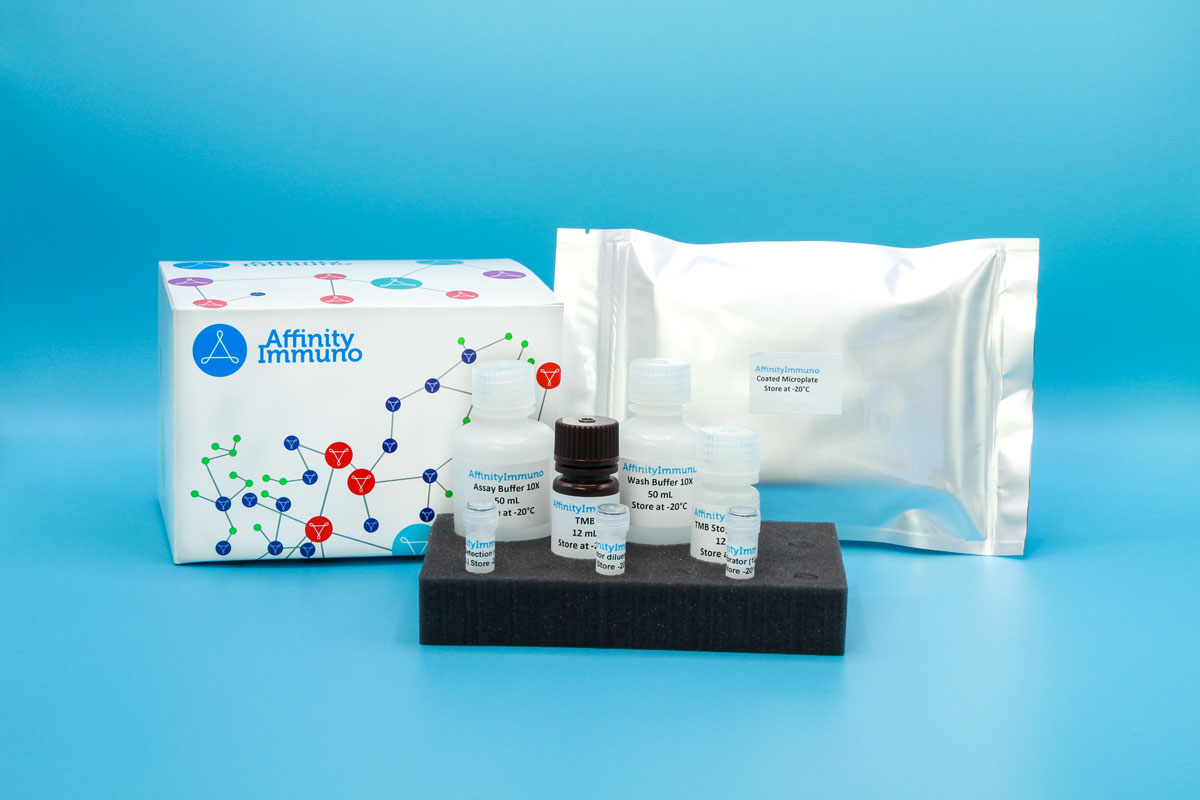
| Components | Pre-Coated Microplate - 12 strips x 8 wells (4°C/-20°C) Standard (Lyophilized) - 2 vials (4°C/-20°C) Biotinylated Antibody (100×) - 120 μL (4°C/-20°C) Streptavidin-HRP (100×) - 120 μL (4°C/-20°C) Standard/Sample Diluent Buffer - 20 mL (4°C/-20°C) Biotinylated Antibody Diluent - 12 mL (4°C/-20°C) HRP Diluent - 12 mL (4°C/-20°C) Wash Buffer (25×) - 20 mL (4°C/-20°C) TMB Substrate Solution - 10 mL (4°C/-20°C (store in dark)) Stop Reagent - 6 mL (4°C/-20°C) Plate Covers - 2 pieces (RT) |
| Storage | 4°C/-20°C |
Introduction
SIRPA encodes a transmembrane receptor, also called CD172a, whose three extracellular immunoglobulin-like domains recognize the broadly expressed protein CD47, while its cytoplasmic tail carries inhibitory tyrosine motifs that recruit the phosphatases SHP-1 and SHP-2 once phosphorylated. This receptor is especially abundant on macrophages and dendritic cells, and CD47 engagement there delivers a restraining “don’t eat me” signal that blocks phagocytic engulfment of healthy cells, while separately preventing the maturation of immature dendritic cells and limiting cytokine release from mature ones. Beyond myeloid cells, the same receptor supports cerebellar neuron adhesion, neurite outgrowth, and synapse formation in the nervous system, and it can additionally act as a receptor for thrombospondin-1, a binding event that triggers its own phosphorylation and stimulates reactive-oxygen production through NADPH oxidase in non-phagocytic cells. SIRPA further contributes to innate antiviral defense by curbing the cell entry of certain arenaviruses, illustrating how this single inhibitory receptor integrates immune, neural, and antiviral signaling roles.
As the receptor side of the CD47/SIRP-alpha ‘don’t-eat-me’ checkpoint now being blocked therapeutically to unleash macrophage attack on tumor cells, SIRP-alpha is a natural companion assay to our CD47 kit for studying that axis, on top of its separate, less commonly discussed roles in neuronal adhesion and antiviral defense against arenaviruses.
Principle of the Assay
This kit uses a sandwich enzyme immunoassay format to measure Human SIRPa. The microtiter plate wells are pre-coated with a capture antibody specific to Human SIRPa; when standards or samples are added, the target analyte is immobilized at the well surface. A biotin-conjugated detection antibody, also specific to Human SIRPa, is then introduced and binds a distinct epitope on the captured analyte. Avidin conjugated to horseradish peroxidase (HRP) is subsequently added and binds the biotin label, completing the detection complex. Upon addition of TMB substrate solution, a colorimetric signal develops only in wells containing Human SIRPa, the biotin-conjugated antibody, and the avidin-HRP conjugate. The enzymatic reaction is stopped with a sulphuric acid stop solution, and absorbance is read spectrophotometrically at 450 nm (± 10 nm). Human SIRPa concentrations in unknown samples are derived by comparing their optical density values against a standard curve.