
Human PYY ELISA Kit | EL-213-162
Cat. No: EL-213-162
$859.99 USD
96 wells
| Target protein | PYY |
|---|---|
| Gene ID | 5697 |
| Reactivity | Human |
| Detection range | 15.63-1000 pg/mL |
| Sample type | Serum, plasma, cell lysates, cell culture supernates and other biological fluids |
| Sample volume | 50 µL |
| Assay time | 2h 20min |
| Precision | Intra-assay CV <8%. Inter-assay CV <10% |
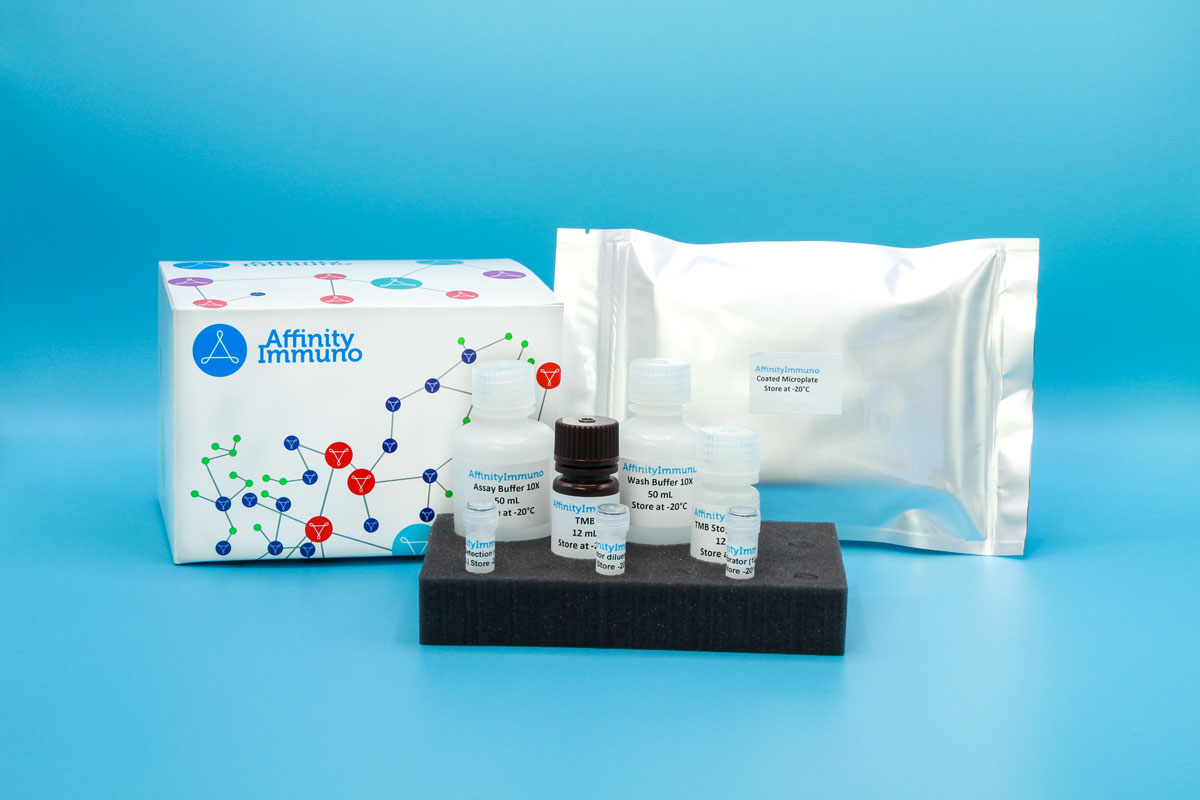
| Components | Pre-Coated Microplate - 12 strips x 8 wells (4°C/-20°C) Standard (Lyophilized) - 2 vials (4°C/-20°C) Biotinylated-Conjugate (100×) - 60 μL (4°C/-20°C) Streptavidin-HRP (100×) - 120 μL (4°C/-20°C) Standard/Sample Diluent Buffer - 20 mL (4°C/-20°C) Biotinylated-Conjugate Diluent - 10 mL (4°C/-20°C) HRP Diluent - 12 mL (4°C/-20°C) Wash Buffer (25×) - 20 mL (4°C/-20°C) TMB Substrate Solution - 10 mL (4°C/-20°C (store in dark)) Stop Reagent - 6 mL (4°C/-20°C) Plate Covers - 2 pieces (RT) |
| Storage | 4°C/-20°C |
Introduction
PYY, or peptide YY, is a short gut hormone produced by L-cells scattered through the ileum and colon and released into circulation after meals. Its major circulating form, PYY(3-36), acts on the Y2 receptor within the hypothalamic arcuate nucleus to suppress appetite by damping the release of the orexigenic peptide NPY from neighboring neurons. Outside the brain, PYY slows gastric and colonic motility, enhances water and electrolyte absorption in the colon, and reduces exocrine pancreatic secretion, coordinating digestion with nutrient intake. Because of this role in satiety and energy balance, altered PYY levels have been studied in relation to obesity risk and to the low body weight seen in anorexia nervosa.
Long-acting PYY analogs combined with GLP-1 agonists such as semaglutide are now in clinical development for obesity, building on earlier studies showing combined GLP-1/oxyntomodulin/PYY infusions improve weight and glycemic control — placing this assay squarely in one of the most active areas of current metabolic drug research.
Principle of the Assay
This kit is based on a competitive inhibition enzyme immunoassay format. Microtiter plate wells are pre-coated with Human PYY, and standards or samples are added simultaneously with a biotin-conjugated antibody specific to Human PYY. Free Human PYY present in the standard or sample competes with the plate-bound PYY for the limited supply of biotin-conjugated antibody. Streptavidin-conjugated Horseradish Peroxidase (HRP) is then added to each well and allowed to incubate, after which TMB substrate solution is introduced to initiate the enzyme-substrate color reaction. The reaction is stopped by addition of a sulphuric acid stop solution, and absorbance is read spectrophotometrically at 450 nm (± 10 nm). Because free analyte in the sample competes away antibody binding from the plate, optical density is inversely related to Human PYY concentration; sample concentrations are determined by comparing OD values against the standard curve.