
Human PVRL4 ELISA Kit | EL-213-16221804
Cat. No: EL-213-16221804
$859.99 USD
96 wells
| Target protein | PVRL4 |
|---|---|
| Alternative name | NECTIN4 |
| Gene ID | 81607 |
| Reactivity | Human |
| Detection range | 0.16-10 ng/mL |
| Sample type | Serum, plasma |
| Sample volume | 100 µL |
| Assay time | 3h 20min |
| Precision | Intra-assay CV <8%. Inter-assay CV <10% |
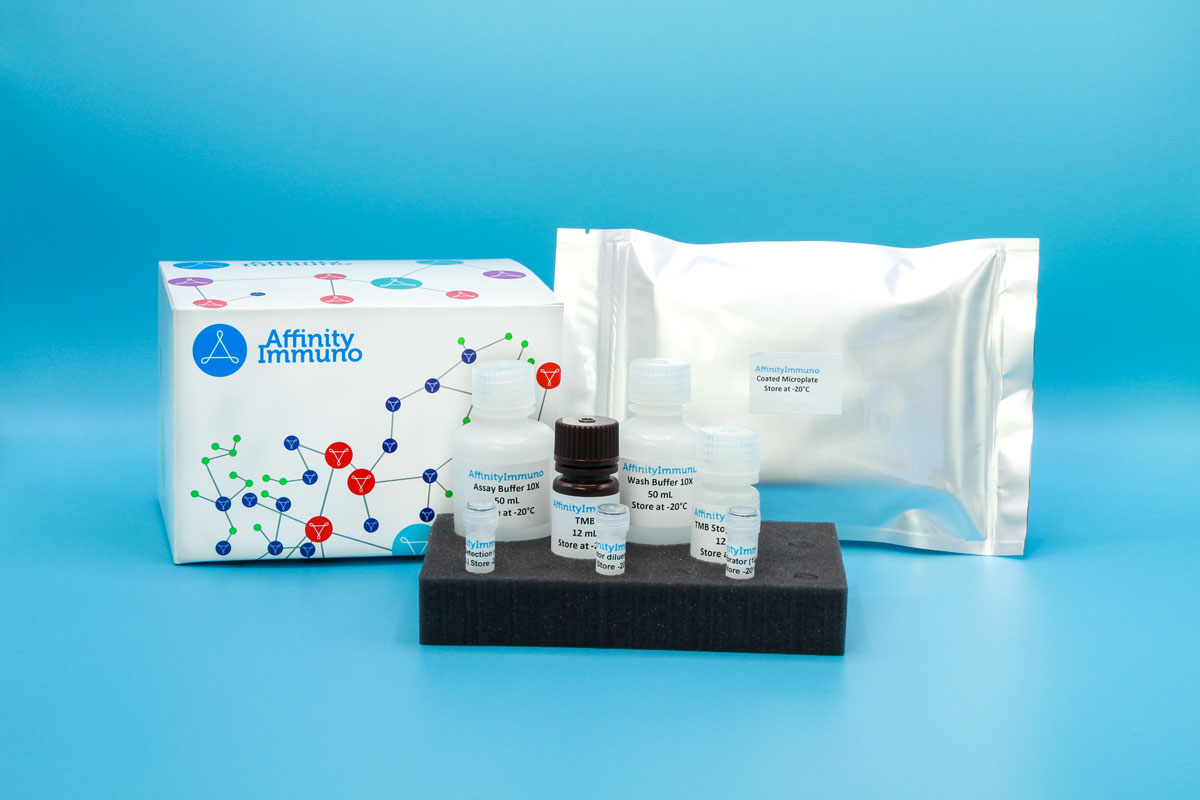
| Components | Pre-Coated Microplate - 12 strips x 8 wells (4°C/-20°C) Standard (Lyophilized) - 2 vials (4°C/-20°C) Biotinylated Antibody (100×) - 120 μL (4°C/-20°C) Streptavidin-HRP (100×) - 120 μL (4°C/-20°C) Standard/Sample Diluent Buffer - 20 mL (4°C/-20°C) Biotinylated Antibody Diluent - 12 mL (4°C/-20°C) HRP Diluent - 12 mL (4°C/-20°C) Wash Buffer (25×) - 20 mL (4°C/-20°C) TMB Substrate Solution - 10 mL (4°C/-20°C (store in dark)) Stop Reagent - 6 mL (4°C/-20°C) Plate Covers - 2 pieces (RT) |
| Storage | 4°C/-20°C |
Introduction
NECTIN4 (PVRL4) encodes a single-pass transmembrane glycoprotein whose extracellular region is built from one V-type and two C2-type immunoglobulin-like domains that mediate trans interactions with neighboring cells, most notably heterophilic pairing with the related family member NECTIN1. Intracellularly, the tail links to the actin-associated scaffold protein afadin, helping organize adherens-type junctions in epithelial tissue. A membrane-proximal cleavage by the ADAM17/TACE sheddase releases a soluble ectodomain fragment that has been recovered from the blood and tumor tissue of breast cancer patients, and elevated Nectin-4 surface expression or shedding has similarly been reported in ovarian and lung malignancies, tracking with more aggressive disease. Germline loss-of-function changes in the gene instead produce an inherited connective-tissue and ectodermal disorder marked by brittle, twisted hair and webbing between the digits, and separately from its adhesion role, this same surface protein is exploited by measles virus as an entry receptor on epithelial cells.
Nectin-4 is the validated target of enfortumab vedotin (Padcev), an approved antibody-drug conjugate for urothelial/bladder cancer, and shed soluble Nectin-4 recovered from blood and tumor tissue is an active area of predictive-biomarker research for identifying patients likely to respond to that therapy — a directly translatable use case for this assay.
Principle of the Assay
This kit utilizes a sandwich enzyme immunoassay format in which the microtiter plate wells are pre-coated with a capture antibody specific to Human Nectin-4 (PVRL4). During the assay, standards or samples are added to the appropriate wells together with a biotin-conjugated detection antibody that also recognizes Human Nectin-4. Avidin conjugated to horseradish peroxidase (HRP) is then added to each well and allowed to incubate. Upon addition of TMB substrate solution, a colorimetric signal develops exclusively in wells containing Human Nectin-4, the biotin-conjugated detection antibody, and the avidin-HRP conjugate. The enzymatic reaction is stopped by the addition of a sulphuric acid stop solution, and the resulting color change is measured spectrophotometrically at 450 nm (± 10 nm). Sample concentrations are determined by comparing the absorbance readings of the samples against a standard curve.