
Human PSCA ELISA Kit | EL-213-16
Cat. No: EL-213-16
$859.99 USD
96 wells
| Target protein | PSCA |
|---|---|
| Gene ID | 8000 |
| Reactivity | Human |
| Detection range | 0.16-10 ng/mL |
| Sample type | Tissue homogenates, cell lysates and other biological fluids. |
| Sample volume | 100 µL |
| Assay time | 3h 20min |
| Precision | Intra-assay CV <8%. Inter-assay CV <10% |
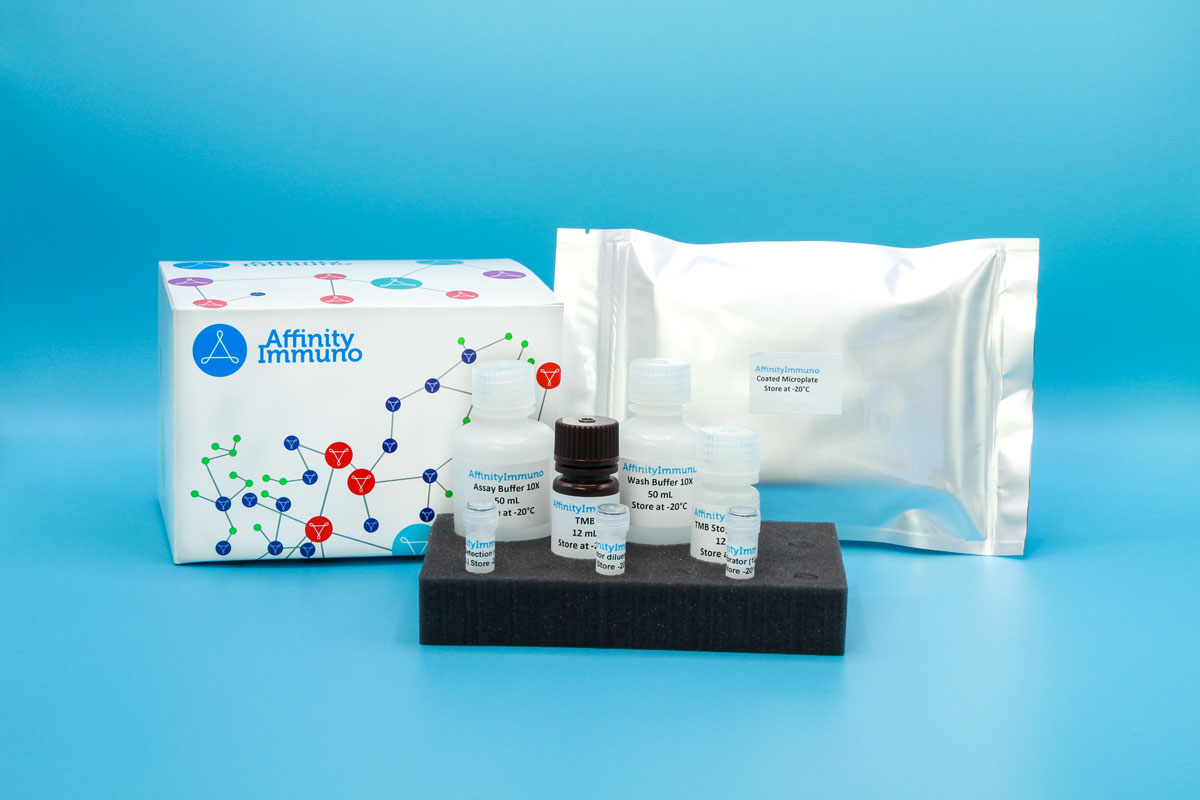
| Components | Pre-Coated Microplate - 12 strips x 8 wells (4°C/-20°C) Standard (Lyophilized) - 2 vials (4°C/-20°C) Biotinylated Antibody (100×) - 120 μL (4°C/-20°C) Streptavidin-HRP (100×) - 120 μL (4°C/-20°C) Standard/Sample Diluent Buffer - 20 mL (4°C/-20°C) Biotinylated Antibody Diluent - 12 mL (4°C/-20°C) HRP Diluent - 12 mL (4°C/-20°C) Wash Buffer (25×) - 20 mL (4°C/-20°C) TMB Substrate Solution - 10 mL (4°C/-20°C (store in dark)) Stop Reagent - 6 mL (4°C/-20°C) Plate Covers - 2 pieces (RT) |
| Storage | 4°C/-20°C |
Introduction
PSCA encodes a small, 123-amino-acid glycosylphosphatidylinositol-anchored surface protein belonging to the Thy-1/Ly-6 family, tethered to the outer cell membrane rather than spanning it. Although its normal biology is still being worked out, laboratory studies suggest it can dampen cell proliferation and can also modulate signaling through nicotinic acetylcholine receptors, specifically blunting nicotine-triggered responses mediated by certain alpha-3/beta-2 and alpha-7 receptor subtypes. Expression is concentrated in the prostate under normal conditions, with lower levels detectable in tissues such as the bladder, stomach, kidney, colon, and placenta, but the gene becomes strongly up-regulated in most prostate tumors, where higher expression tracks with higher-grade disease, seminal vesicle involvement, and skeletal metastasis; elevated levels are also found in some bladder and pancreatic cancers. A common genetic variant that creates an alternative upstream start codon has additionally been linked to susceptibility for certain gastric and bladder malignancies, and this combination of tumor-restricted overexpression with limited normal-tissue distribution has made the protein an attractive target for prostate cancer imaging and radioimmunotherapy.
PSCA’s strong tumor-restricted overexpression, which tracks with higher-grade prostate disease, seminal vesicle involvement, and skeletal metastasis, has made it an attractive target for prostate cancer imaging and radioimmunotherapy research, extending beyond its more limited elevated expression in some bladder and pancreatic cancers.
Principle of the Assay
This kit uses a sandwich enzyme immunoassay format in which the microtiter plate wells are pre-coated with a capture antibody specific to Human PSCA. Standards or samples are pipetted into the appropriate wells along with a biotin-conjugated detection antibody that also recognizes Human PSCA. Avidin conjugated to horseradish peroxidase (HRP) is then added to each well and allowed to incubate, linking enzymatic activity to any captured analyte. Upon addition of TMB substrate solution, only wells containing Human PSCA, the biotin-conjugated antibody, and Avidin-HRP develop a color change. The enzymatic reaction is stopped by the addition of sulphuric acid solution, and absorbance is measured spectrophotometrically at 450 nm ± 10 nm. Sample concentrations are determined by comparing sample optical density values against a standard curve.