
Human PLXNB1 ELISA Kit | EL-213-16122401
Cat. No: EL-213-16122401
$859.99 USD
96 wells
| Target protein | PLXNB1 |
|---|---|
| Gene ID | 5364 |
| Reactivity | Human |
| Detection range | 1.57-100 ng/mL |
| Sample type | tissue homogenates, cell lysates and other biological fluids |
| Sample volume | 100 µL |
| Assay time | 3h 20min |
| Precision | Intra-assay CV <8%. Inter-assay CV <10% |
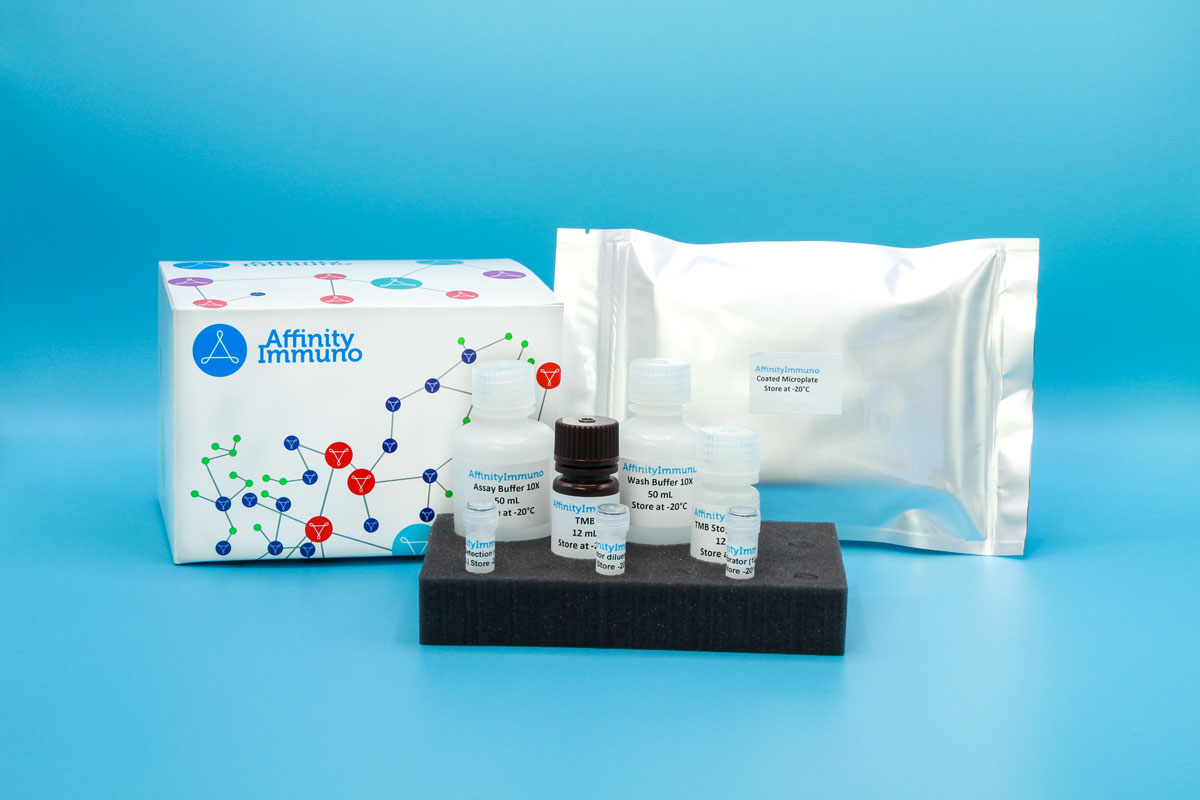
| Components | Pre-Coated Microplate - 12 strips x 8 wells (4°C/-20°C) Standard (Lyophilized) - 2 vials (4°C/-20°C) Biotinylated Antibody (100×) - 120 μL (4°C/-20°C) Streptavidin-HRP (100×) - 120 μL (4°C/-20°C) Standard/Sample Diluent Buffer - 20 mL (4°C/-20°C) Biotinylated Antibody Diluent - 12 mL (4°C/-20°C) HRP Diluent - 12 mL (4°C/-20°C) Wash Buffer (25×) - 20 mL (4°C/-20°C) TMB Substrate Solution - 10 mL (4°C/-20°C (store in dark)) Stop Reagent - 6 mL (4°C/-20°C) Plate Covers - 2 pieces (RT) |
| Storage | 4°C/-20°C |
Introduction
PLXNB1 encodes Plexin-B1, a transmembrane receptor for the semaphorin family ligand SEMA4D/CD100; ligand binding activates the small GTPase RHOA to remodel the actin cytoskeleton, altering cell shape and loosening cell-cell adhesion contacts. On neurons, the same signaling axis, engaged by SEMA4A as well as SEMA4D, contributes to the wiring of inhibitory GABA-releasing synapses and steers axons along their intended paths during development. Plexin-B1 rarely acts alone at the membrane; it partners with co-receptors such as the neuropilins, the MET tyrosine kinase, and ErbB-2 to assemble larger signaling complexes that influence blood vessel growth and the organization of epithelial tissue. Because these pathways can be co-opted during malignant transformation, altered Plexin-B1 signaling has also been associated with tumor growth and with abnormal cell migration and invasion.
Plexin-B1’s partnerships with neuropilins, MET, and ErbB-2 to assemble larger signaling complexes link it to both normal blood vessel growth and tumor invasion when co-opted during malignant transformation, giving this assay relevance to cancer-signaling research alongside its established role in neuronal wiring during development.
Principle of the Assay
This kit uses a sandwich enzyme immunoassay format to detect and quantify Human PLXNB1. The microtiter plate wells are pre-coated with a PLXNB1-specific capture antibody that binds the target analyte present in standards or samples. A biotin-conjugated detection antibody, also specific to Human PLXNB1, is then added and binds a second epitope on the captured analyte. Avidin-conjugated horseradish peroxidase (HRP) is subsequently introduced and binds the biotin, completing the detection complex. Upon addition of TMB substrate solution, a colorimetric signal develops exclusively in wells where PLXNB1, the biotin-conjugated detection antibody, and the avidin-HRP conjugate are all present. The enzymatic reaction is stopped by the addition of a sulphuric acid stop solution, and absorbance is measured spectrophotometrically at 450 nm (± 10 nm). Sample PLXNB1 concentrations are then calculated by referencing the sample optical density values against a standard curve.