
Human PAI-1/SERPINE1 ELISA Kit | EL-213-161901
Cat. No: EL-213-161901
$859.99 USD
96 wells
| Target protein | PAI-1/SERPINE1 |
|---|---|
| Alternative name | SERPINE1 |
| Gene ID | 5054 |
| Reactivity | Human |
| Detection range | 1.56-100 ng/mL |
| Sample type | plasma, tissue homogenates, cell lysates, cell culture supernates and other biological fluids |
| Sample volume | 100 µL |
| Assay time | 3h 20min |
| Precision | Intra-assay CV <8%. Inter-assay CV <10% |
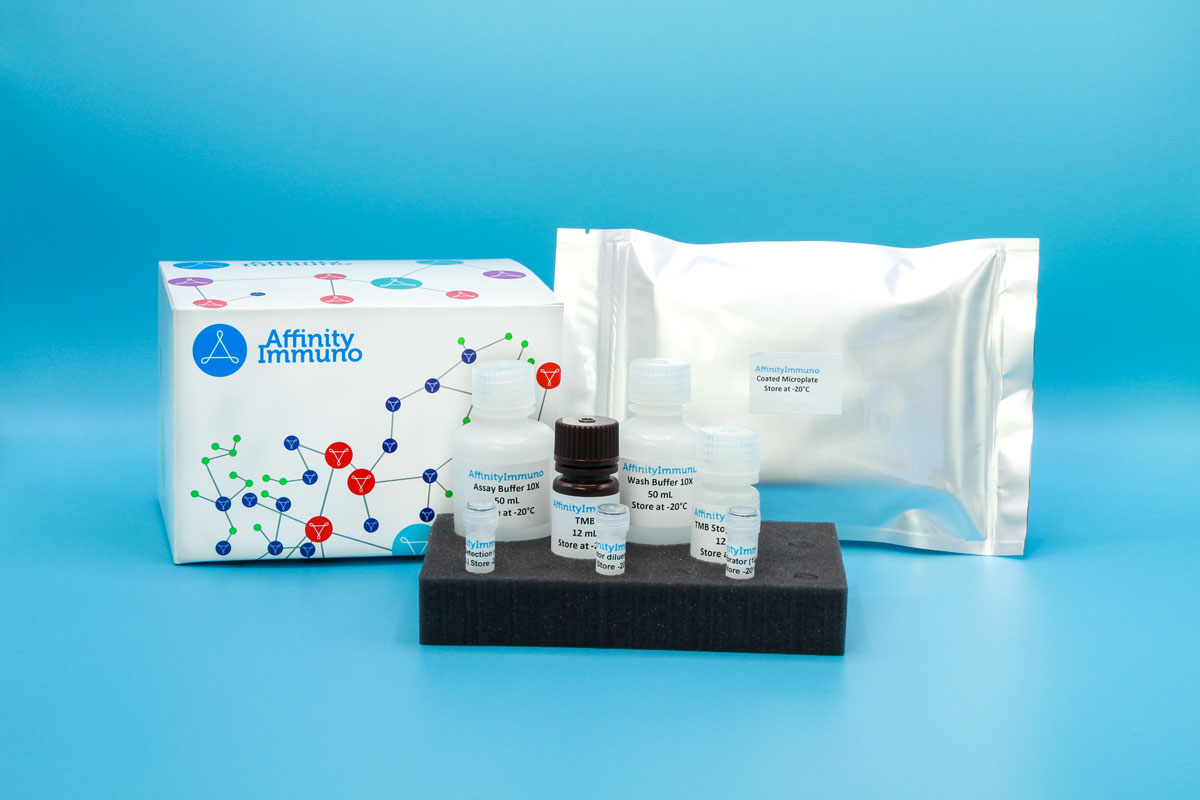
| Components | Pre-Coated Microplate - 12 strips x 8 wells (4°C/-20°C) Standard (Lyophilized) - 2 vials (4°C/-20°C) Biotinylated Antibody (100×) - 120 μL (4°C/-20°C) Streptavidin-HRP (100×) - 120 μL (4°C/-20°C) Standard/Sample Diluent Buffer - 20 mL (4°C/-20°C) Biotinylated Antibody Diluent - 12 mL (4°C/-20°C) HRP Diluent - 12 mL (4°C/-20°C) Wash Buffer (25×) - 20 mL (4°C/-20°C) TMB Substrate Solution - 10 mL (4°C/-20°C (store in dark)) Stop Reagent - 6 mL (4°C/-20°C) Plate Covers - 2 pieces (RT) |
| Storage | 4°C/-20°C |
Introduction
SERPINE1 encodes plasminogen activator inhibitor-1 (PAI-1), a secreted protein of the serpin family that serves as the body’s main brake on clot breakdown. It works by rapidly binding and inactivating tissue-type and urokinase-type plasminogen activators, the enzymes that would otherwise convert plasminogen into the clot-dissolving enzyme plasmin, so PAI-1 activity effectively sets the pace of fibrinolysis. Beyond this role in coagulation biology, PAI-1 also shapes cell behavior more directly by interfering with vitronectin’s ability to bind integrins on the cell surface, which influences how cells attach to their surroundings and migrate, and separate work has tied it to senescence in aging tissue and to matrix remodeling during wound repair. Reflecting its two ends of the spectrum, an inherited deficiency in PAI-1 leads to a bleeding tendency from excessive clot breakdown, whereas chronically elevated PAI-1 is instead associated with a predisposition toward abnormal clotting.
Because PAI-1 sits at the center of the fibrinolysis balance — its deficiency causes a bleeding tendency while chronic elevation favors abnormal clotting — this assay supports thrombosis and cardiovascular-risk research, and PAI-1’s separate links to cellular senescence and wound-healing matrix remodeling extend its relevance into aging biology as well.
Principle of the Assay
This kit uses a sandwich enzyme immunoassay format to detect Human PAI-1 (SERPINE1). Microtiter plate wells are pre-coated with a PAI-1-specific capture antibody that binds the target analyte present in standards or samples. A biotin-conjugated detection antibody, also specific to Human PAI-1, is then added and binds a second epitope on the captured analyte. Avidin conjugated to horseradish peroxidase (HRP) is subsequently introduced and binds the biotin label. Upon addition of TMB substrate solution, a colorimetric signal develops in wells containing PAI-1, the biotin-conjugated detection antibody, and the avidin-HRP conjugate. The enzymatic reaction is stopped by the addition of a sulphuric acid solution, and absorbance is measured spectrophotometrically at 450 nm (± 10 nm). PAI-1 concentration in each sample is determined by interpolating the measured optical density against a standard curve.