
Human p16INK4a ELISA Kit | EL-213-1616
Cat. No: EL-213-1616
$859.99 USD
96 wells
| Target protein | p16INK4a |
|---|---|
| Alternative name | CDKN2A |
| Gene ID | 1029 |
| Reactivity | Human |
| Detection range | 0.63-40 ng/mL |
| Sample type | tissue homogenates, cell lysates and other biological fluids |
| Sample volume | 100 µL |
| Assay time | 3h 20min |
| Precision | Intra-assay CV <8%. Inter-assay CV <10% |
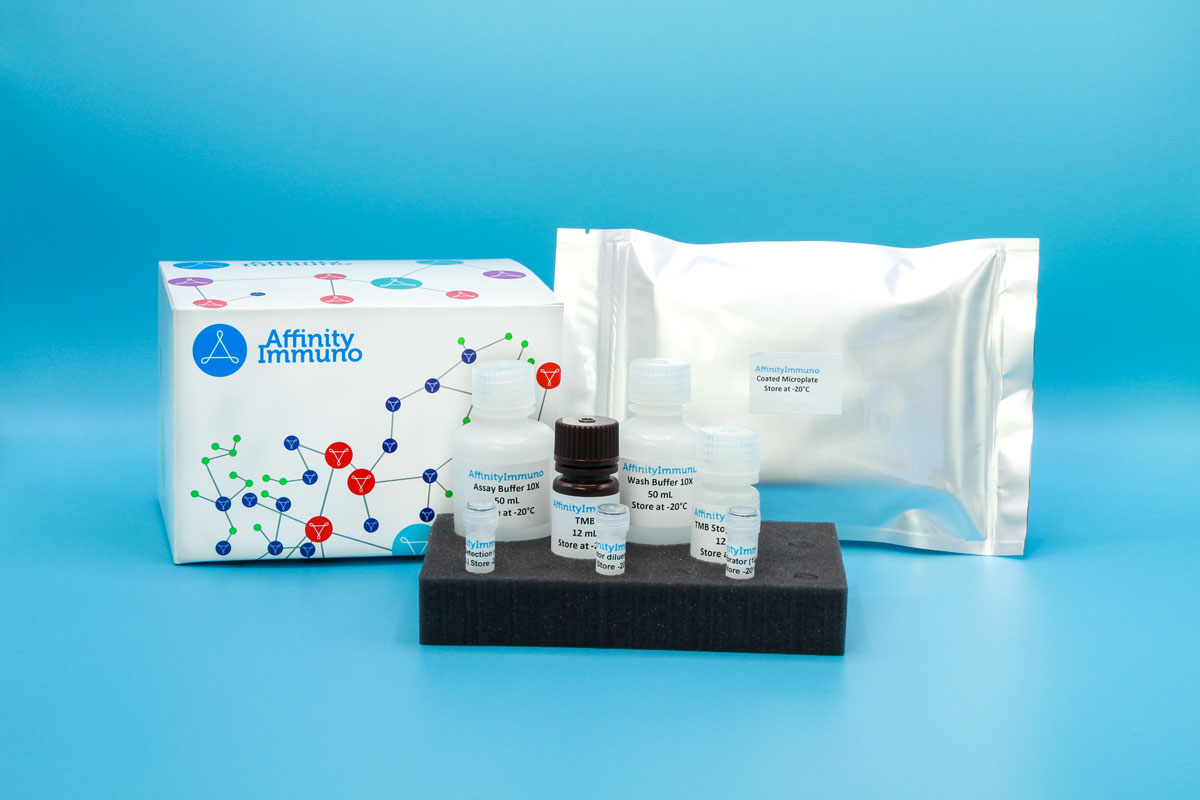
| Components | Pre-Coated Microplate - 12 strips x 8 wells (4°C/-20°C) Standard (Lyophilized) - 2 vials (4°C/-20°C) Biotinylated Antibody (100×) - 120 μL (4°C/-20°C) Streptavidin-HRP (100×) - 120 μL (4°C/-20°C) Standard/Sample Diluent Buffer - 20 mL (4°C/-20°C) Biotinylated Antibody Diluent - 12 mL (4°C/-20°C) HRP Diluent - 12 mL (4°C/-20°C) Wash Buffer (25×) - 20 mL (4°C/-20°C) TMB Substrate Solution - 10 mL (4°C/-20°C (store in dark)) Stop Reagent - 6 mL (4°C/-20°C) Plate Covers - 2 pieces (RT) |
| Storage | 4°C/-20°C |
Introduction
CDKN2A is a locus that, through use of alternate first exons, gives rise to more than one distinct protein, the best known of which is p16INK4a. p16INK4a works as a brake on cell division by physically attaching to the cyclin-dependent kinases CDK4 and CDK6, blocking them from teaming up with cyclin D and thereby stopping them from inactivating the retinoblastoma protein, a step normally required for a cell to pass from G1 into S phase. Its levels climb as cells accumulate DNA damage or oncogenic stress, making p16INK4a one of the principal drivers that pushes a cell into permanent growth arrest, or senescence, rather than continued division, and it is used as a molecular marker of that senescent state and of tissue aging more broadly. Because this brake is so central to preventing uncontrolled proliferation, the CDKN2A locus is one of the most frequently deleted, mutated, or silenced regions in human cancer, and inherited defects in it underlie hereditary melanoma and related melanoma-pancreatic cancer predisposition syndromes.
p16INK4a is the field’s standard marker for identifying senescent cells, and landmark studies showing that clearing p16INK4a-positive cells delays aging-associated disorders have made it central to the rapidly growing senolytic and longevity-therapeutics research space, alongside its long-established role as one of the most frequently altered tumor suppressors in cancer.
Principle of the Assay
This sandwich enzyme immunoassay utilizes a microtiter plate pre-coated with a capture antibody specific to human p16INK4a (CDKN2A). During the first incubation, p16INK4a present in standards or samples is captured by this immobilized antibody. A biotin-conjugated secondary antibody, also specific to human p16INK4a, is then added and binds a distinct epitope on the captured analyte, forming a sandwich complex. Avidin conjugated to horseradish peroxidase (HRP) is subsequently added to each well, where it binds the biotin moiety. Following addition of TMB substrate, only wells containing the complete sandwich complex — captured p16INK4a, biotin-conjugated detection antibody, and avidin-HRP — develop a colorimetric signal. The enzymatic reaction is terminated by addition of a sulphuric acid stop solution, and absorbance is measured at 450 nm (± 10 nm). p16INK4a concentrations in unknown samples are determined by interpolating their absorbance values against a standard curve.