
Human Oxyntomodulin ELISA Kit | EL-213-15
Cat. No: EL-213-15
$859.99 USD
96 wells
| Target protein | Oxyntomodulin |
|---|---|
| Alternative name | GCG |
| Gene ID | 2641 |
| Reactivity | Human |
| Detection range | 7.82-500 ng/mL |
| Sample type | Serum, plasma and other biological fluids |
| Sample volume | 50 µL |
| Assay time | 2h 20min |
| Precision | Intra-assay CV <8%. Inter-assay CV <10% |
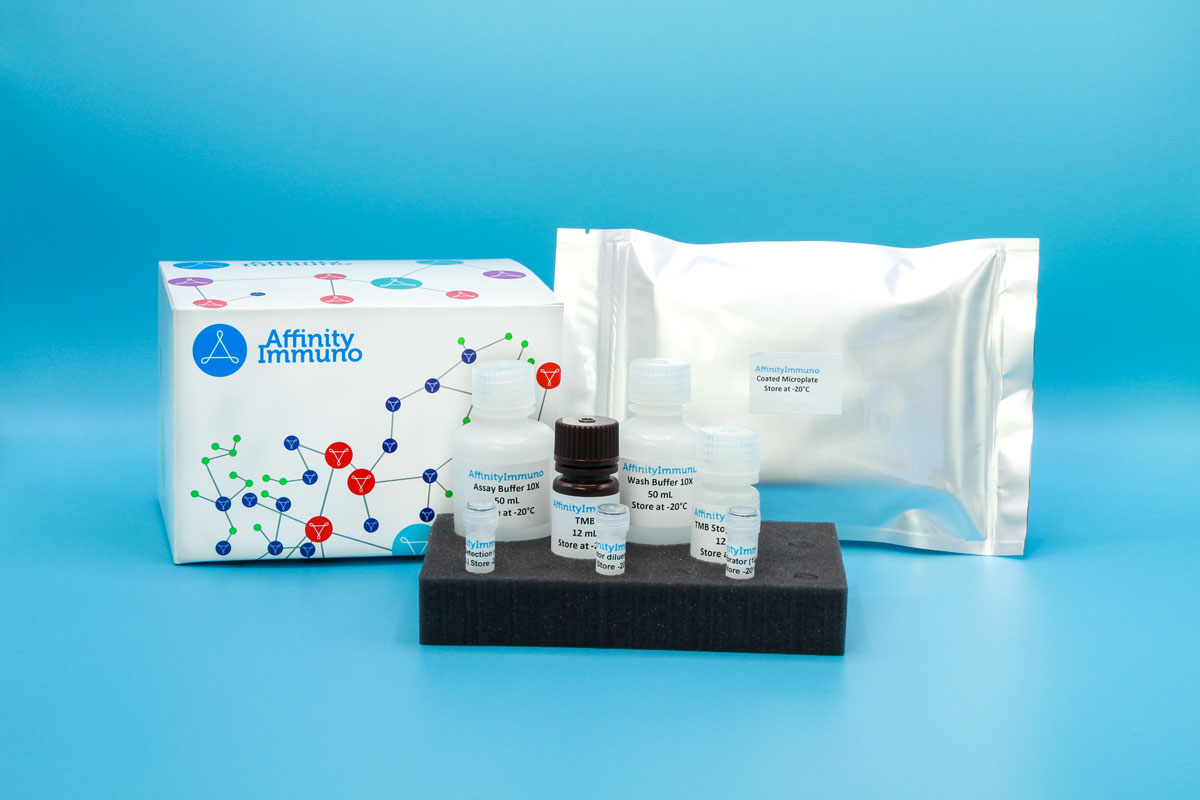
| Components | Pre-Coated Microplate - 12 strips x 8 wells (4°C/-20°C) Standard (Lyophilized) - 2 vials (4°C/-20°C) Biotinylated-Conjugate (100×) - 60 μL (4°C/-20°C) Streptavidin-HRP (100×) - 120 μL (4°C/-20°C) Standard/Sample Diluent Buffer - 20 mL (4°C/-20°C) Biotinylated-Conjugate Diluent - 10 mL (4°C/-20°C) HRP Diluent - 12 mL (4°C/-20°C) Wash Buffer (25×) - 20 mL (4°C/-20°C) TMB Substrate Solution - 10 mL (4°C/-20°C (store in dark)) Stop Reagent - 6 mL (4°C/-20°C) Plate Covers - 2 pieces (RT) |
| Storage | 4°C/-20°C |
Introduction
Oxyntomodulin is a 37-residue peptide generated when the proglucagon precursor, encoded by the GCG gene, is cleaved in intestinal L cells; its sequence duplicates the 29 amino acids of glucagon but carries an additional eight-residue extension at the carboxy terminus that distinguishes it from its parent hormone. Released after meals alongside GLP-1, oxyntomodulin acts as a dual agonist at both the glucagon receptor and the GLP-1 receptor, slowing gastric emptying, damping gastric acid output, and blunting appetite. These combined actions on food intake and energy expenditure have made oxyntomodulin and its analogs of interest for weight-management and metabolic research. Because it shares nearly its entire sequence with glucagon, reliable measurement depends on antibodies that recognize its unique C-terminal extension rather than the glucagon core it has in common with other proglucagon-derived peptides.
As a natural dual agonist at both the glucagon and GLP-1 receptors, oxyntomodulin is a template molecule behind the current wave of dual and triple gut-hormone receptor agonists in obesity and metabolic-disease drug development, making this assay relevant to that fast-moving research area in addition to basic appetite-regulation studies.
Principle of the Assay
This kit uses a competitive inhibition enzyme immunoassay format to measure Human Oxyntomodulin (OXM). The microtiter plate is pre-coated with Human OXM, and standards or samples are added to the wells simultaneously with a biotin-conjugated antibody specific to Human OXM. Free OXM present in the standard or sample competes with the plate-bound OXM for this limited supply of biotin-conjugated antibody, meaning that higher concentrations of free OXM result in less antibody binding to the plate. Streptavidin-conjugated Horseradish Peroxidase (HRP) is then added to each well and incubated, linking enzymatic activity to the plate-bound antibody. TMB substrate solution is subsequently added to produce a colorimetric signal, and the reaction is terminated by the addition of a sulphuric acid stop solution. Absorbance is measured spectrophotometrically at 450 nm (± 10 nm). Because signal is inversely proportional to analyte concentration, OXM levels in unknown samples are determined by comparing sample optical density values against the standard curve.