
Human osteocrin ELISA Kit | EL-213-152
Cat. No: EL-213-152
$859.99 USD
96 wells
| Target protein | osteocrin |
|---|---|
| Alternative name | OSTN |
| Gene ID | 344901 |
| Reactivity | Human |
| Detection range | 15.63-1000 pg/mL |
| Sample type | serum, plasma, tissue homogenates and other biological fluids |
| Sample volume | 100 µL |
| Assay time | 3h 20min |
| Precision | Intra-assay CV <8%. Inter-assay CV <10% |
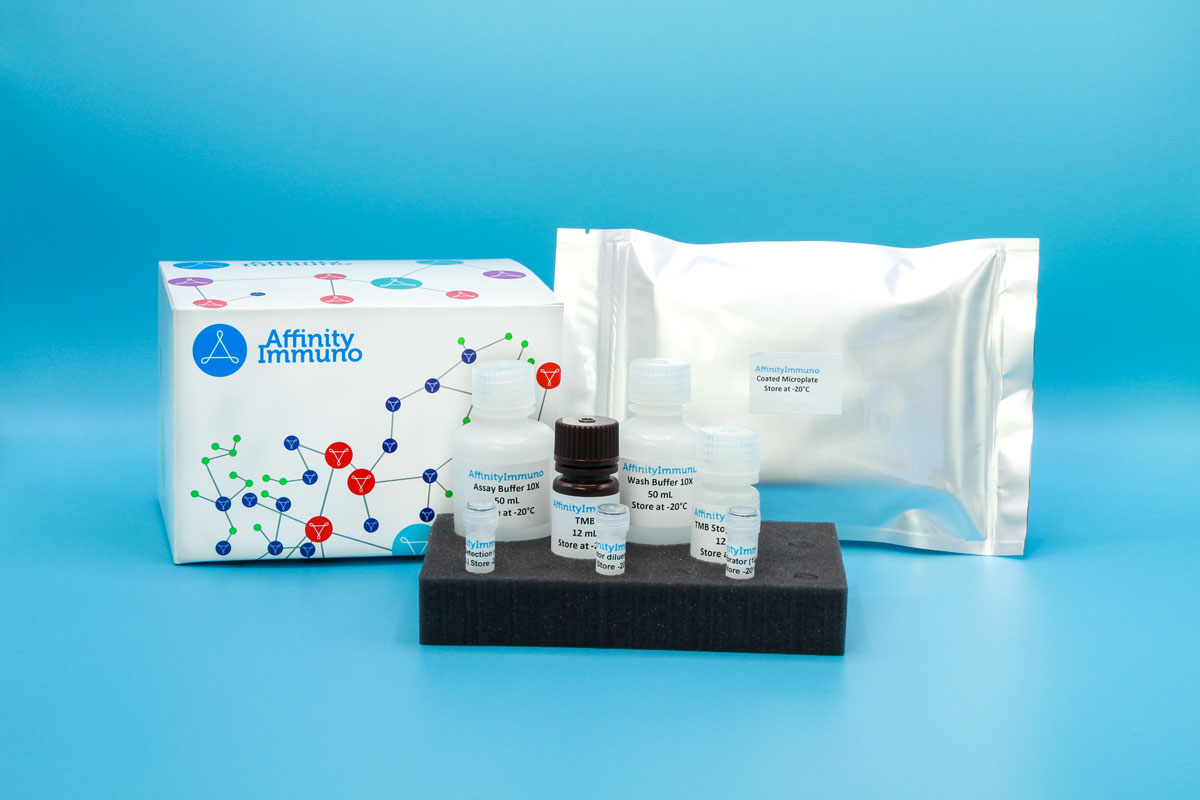
| Components | Pre-Coated Microplate - 12 strips x 8 wells (4°C/-20°C) Standard (Lyophilized) - 2 vials (4°C/-20°C) Biotinylated Antibody (100×) - 120 μL (4°C/-20°C) Streptavidin-HRP (100×) - 120 μL (4°C/-20°C) Standard/Sample Diluent Buffer - 20 mL (4°C/-20°C) Biotinylated Antibody Diluent - 12 mL (4°C/-20°C) HRP Diluent - 12 mL (4°C/-20°C) Wash Buffer (25×) - 20 mL (4°C/-20°C) TMB Substrate Solution - 10 mL (4°C/-20°C (store in dark)) Stop Reagent - 6 mL (4°C/-20°C) Plate Covers - 2 pieces (RT) |
| Storage | 4°C/-20°C |
Introduction
Osteocrin, the product of the OSTN gene, is a small secreted hormone that appears to work as a natural antagonist of the clearance receptor NPR3/NPR-C. By competing for this receptor, it limits the removal of natriuretic peptides from circulation and local tissue, thereby raising cGMP-dependent signaling. This mechanism links osteocrin to both skeletal growth, where amplified natriuretic peptide activity favors longitudinal bone elongation, and to brain development, where the same signaling pathway restrains dendritic branching in the maturing cerebral cortex following neuronal activity. Because of these dual roles in the skeleton and nervous system, osteocrin, also known as musclin, is being explored as a circulating marker relevant to bone, muscle, and metabolic status.
Osteocrin’s unusual mechanism — extending natriuretic peptide signaling by blocking its own clearance receptor — links skeletal growth and activity-dependent dendritic branching in the developing cortex, giving this assay dual relevance to bone/muscle metabolic research and to neurodevelopmental studies of natriuretic peptide signaling in the brain.
Principle of the Assay
This kit uses a sandwich enzyme immunoassay format in which the microtiter plate wells are pre-coated with a capture antibody specific to human osteocrin (OSTN). Standards or samples are added to the appropriate wells along with a biotin-conjugated detection antibody that also recognizes human OSTN, allowing the target to be bound simultaneously by both antibodies. Avidin conjugated to horseradish peroxidase (HRP) is then added to each well and allowed to incubate, linking enzymatic activity to the captured complex via the biotin label. Upon addition of TMB substrate solution, a colorimetric signal develops exclusively in wells containing human OSTN, biotin-conjugated antibody, and avidin-HRP. The enzymatic reaction is stopped by the addition of a sulphuric acid solution, and absorbance is measured spectrophotometrically at 450 nm (± 10 nm). Sample concentrations are determined by comparing the optical density of each sample against a standard curve generated from the provided standards.