
Human NT-4 ELISA Kit | EL-213-142004
Cat. No: EL-213-142004
$859.99 USD
96 wells
| Target protein | NT-4 |
|---|---|
| Alternative name | NTF4 |
| Gene ID | 4909 |
| Reactivity | Human |
| Detection range | 0.32-20 ng/mL |
| Sample type | serum, plasma, tissue homogenates, cell lysates, cell culture supernates and other biological fluids |
| Sample volume | 100 µL |
| Assay time | 3h 20min |
| Precision | Intra-assay CV <8%. Inter-assay CV <10% |
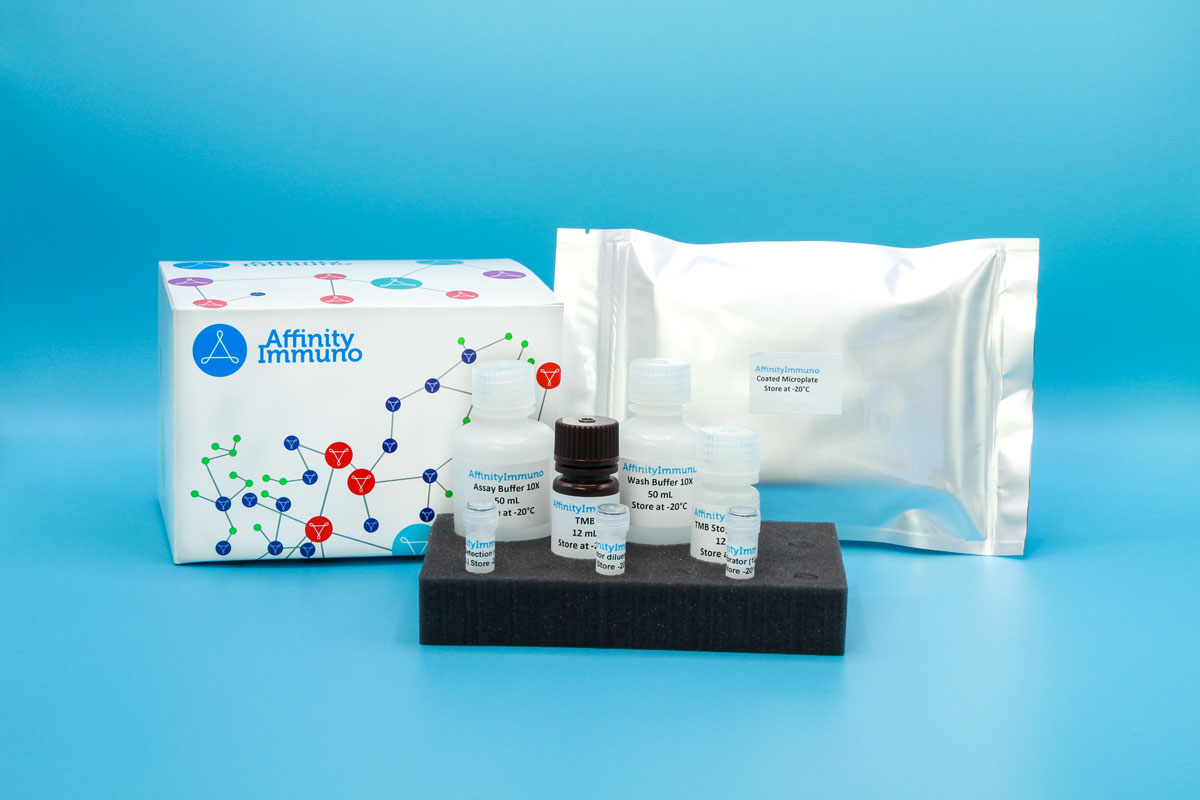
| Components | Pre-Coated Microplate - 12 strips x 8 wells (4°C/-20°C) Standard (Lyophilized) - 2 vials (4°C/-20°C) Biotinylated Antibody (100×) - 120 μL (4°C/-20°C) Streptavidin-HRP (100×) - 120 μL (4°C/-20°C) Standard/Sample Diluent Buffer - 20 mL (4°C/-20°C) Biotinylated Antibody Diluent - 12 mL (4°C/-20°C) HRP Diluent - 12 mL (4°C/-20°C) Wash Buffer (25×) - 20 mL (4°C/-20°C) TMB Substrate Solution - 10 mL (4°C/-20°C (store in dark)) Stop Reagent - 6 mL (4°C/-20°C) Plate Covers - 2 pieces (RT) |
| Storage | 4°C/-20°C |
Introduction
NTF4 gives rise to neurotrophin-4 (NT-4), a small secreted signaling protein in the same family as nerve growth factor and BDNF that supports the survival and maturation of specific groups of neurons. It is synthesized as a longer precursor and released as a paired, homodimeric protein that can also team up with BDNF into mixed dimers, and it acts by binding and activating the TrkB receptor on target neurons. NT-4 appears especially important for keeping certain peripheral sympathetic sensory neurons alive, and separate reports describe a protective effect on brain tissue after ischemic injury as well as a role in tooth enamel cell maturation. Interestingly, animals engineered to lack NT-4 develop largely normally with only minor neuronal deficits, in contrast to the more severe consequences of losing other neurotrophins such as NGF or BDNF, suggesting its functions are at least partly redundant with those of related family members.
As a TrkB-receptor ligand that can form mixed dimers with BDNF, NT-4 is studied both for its role sustaining peripheral sensory neuron survival and for its more modest, partly redundant contribution relative to NGF and BDNF — a nuance the current page already captures honestly and is worth keeping rather than overselling NT-4’s standalone importance.
Principle of the Assay
This kit utilizes a sandwich enzyme immunoassay format. The microtiter plate wells are pre-coated with a capture antibody specific to Human NT-4, which binds the target analyte present in standards or samples. A biotin-conjugated detection antibody, also specific to Human NT-4, is then added and binds a second epitope on the captured analyte. Avidin conjugated to horseradish peroxidase (HRP) is subsequently added to each well and allowed to incubate, linking enzymatic activity to the captured complex. Upon addition of TMB substrate solution, a colorimetric signal develops exclusively in wells containing Human NT-4, the biotin-conjugated antibody, and avidin-HRP. The enzymatic reaction is terminated by the addition of a sulphuric acid stop solution, and absorbance is measured spectrophotometrically at 450 nm (± 10 nm). Sample concentrations are determined by comparing sample optical density values against a standard curve.