
Human NRP1 ELISA Kit | EL-213-14181601
Cat. No: EL-213-14181601
$859.99 USD
96 wells
| Target protein | NRP1 |
|---|---|
| Gene ID | 8829 |
| Reactivity | Human |
| Detection range | 62.5-4000 pg/mL |
| Sample type | serum, plasma, tissue homogenates and other biological fluids |
| Sample volume | 100 µL |
| Assay time | 3h 20min |
| Precision | Intra-assay CV <8%. Inter-assay CV <10% |
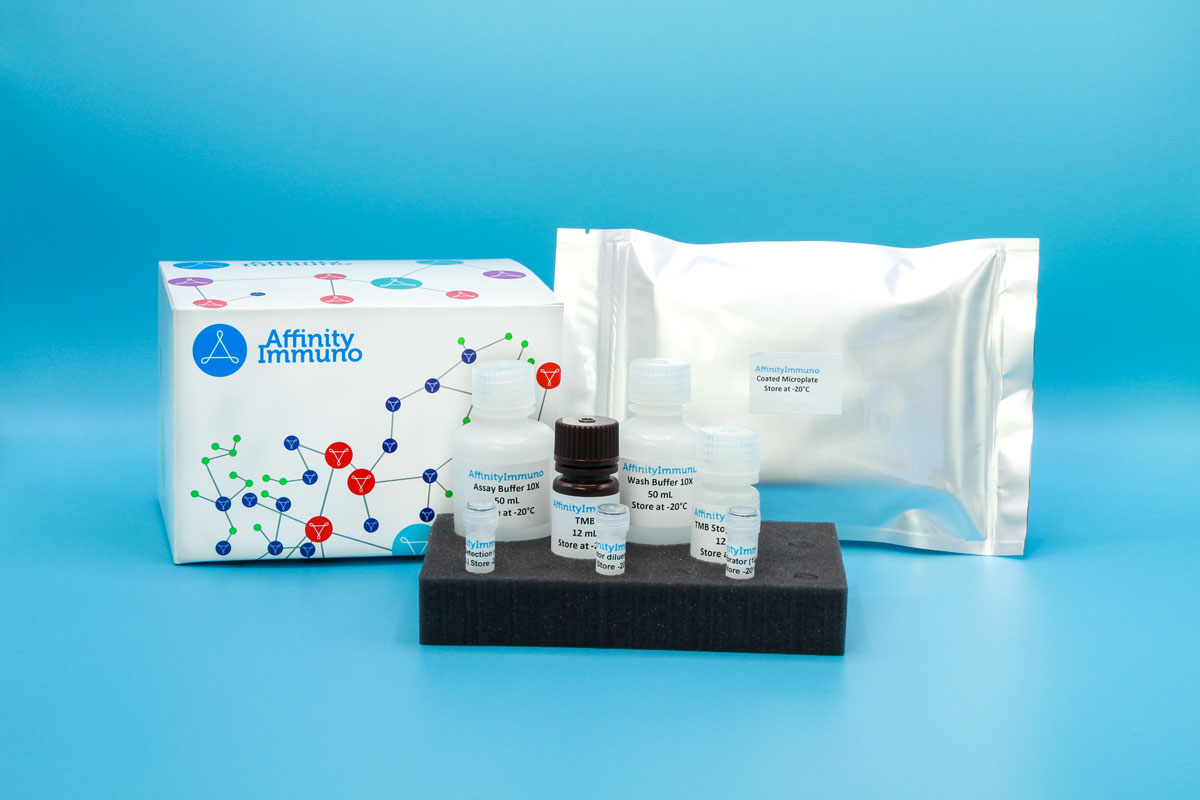
| Components | Pre-Coated Microplate - 12 strips x 8 wells (4°C/-20°C) Standard (Lyophilized) - 2 vials (4°C/-20°C) Biotinylated Antibody (100×) - 120 μL (4°C/-20°C) Streptavidin-HRP (100×) - 120 μL (4°C/-20°C) Standard/Sample Diluent Buffer - 20 mL (4°C/-20°C) Biotinylated Antibody Diluent - 12 mL (4°C/-20°C) HRP Diluent - 12 mL (4°C/-20°C) Wash Buffer (25×) - 20 mL (4°C/-20°C) TMB Substrate Solution - 10 mL (4°C/-20°C (store in dark)) Stop Reagent - 6 mL (4°C/-20°C) Plate Covers - 2 pieces (RT) |
| Storage | 4°C/-20°C |
Introduction
Neuropilin-1 (NRP1) is a large, roughly 130-140 kDa single-pass transmembrane glycoprotein whose extracellular region is built from tandem complement-binding (CUB) domains, coagulation factor V/VIII-like domains, and a MAM domain, followed by a short transmembrane segment and a small cytoplasmic tail. It was first characterized as a receptor that helps guide axons by binding class 3 semaphorins during nervous system development, and it separately functions as a co-receptor that enhances VEGF-A165 signaling through VEGFR2 to drive blood vessel growth. Beyond development and angiogenesis, NRP1 is expressed on endothelial cells, dendritic cells, regulatory T cells, and many tumor cell types, where it also engages latent TGF-beta1 and helps promote regulatory T cell activity, and it acts as a host-cell entry co-factor exploited by SARS-CoV-2. Because of this involvement in vascular growth, immune regulation, and tumor biology, NRP1 is studied both as a cancer therapeutic target and as a marker of endothelial and immune cell activity.
NRP1’s dual identity as a VEGF-A/VEGFR2 co-receptor driving tumor angiogenesis and as a host-cell entry co-factor exploited by SARS-CoV-2 gives this assay relevance to both cancer angiogenesis/immunotherapy research and viral entry research, on top of its original characterization guiding axon growth during nervous system development.
Principle of the Assay
This kit uses a sandwich enzyme immunoassay format to measure Human NRP1. The microtiter plate wells are pre-coated with a capture antibody specific to Human NRP1. During the assay, standards or samples are added to the appropriate wells together with a biotin-conjugated detection antibody, also specific to Human NRP1, allowing the target analyte to be simultaneously bound by both antibodies. Avidin conjugated to horseradish peroxidase (HRP) is then added to each well and incubated, linking enzymatic activity to the captured complex via the biotin–avidin interaction. Upon addition of TMB substrate solution, a colorimetric signal develops only in wells containing Human NRP1, the biotin-conjugated antibody, and the avidin-HRP conjugate. The enzymatic reaction is stopped by the addition of sulfuric acid stop solution, and absorbance is measured spectrophotometrically at 450 nm (± 10 nm). Human NRP1 concentrations in the samples are determined by comparing sample optical density values against a standard curve.