
Human neurogranin ELISA Kit | EL-213-14
Cat. No: EL-213-14
$859.99 USD
96 wells
| Target protein | neurogranin |
|---|---|
| Alternative name | NRGN |
| Gene ID | 4900 |
| Reactivity | Human |
| Detection range | 0.16-10 ng/mL |
| Sample type | tissue homogenates, cell lysates and other biological fluids |
| Sample volume | 100 µL |
| Assay time | 3h 20min |
| Precision | Intra-assay CV <8%. Inter-assay CV <10% |
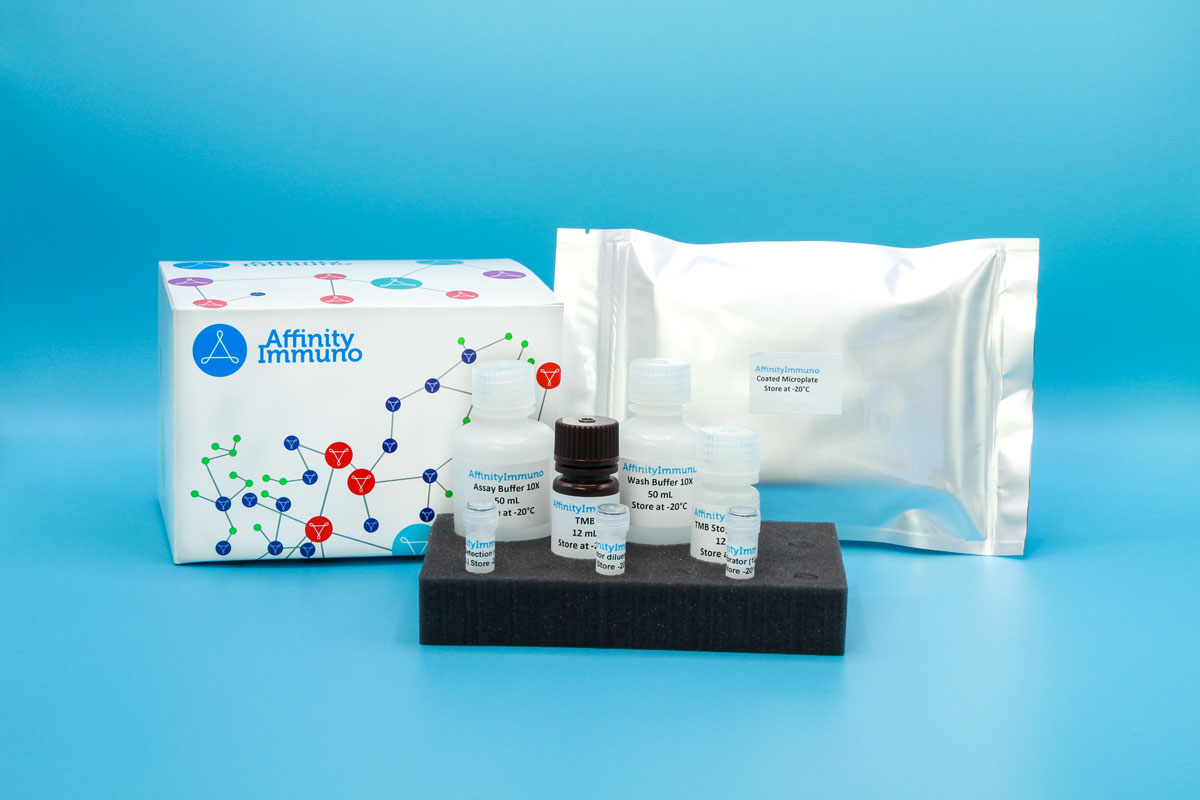
| Components | Pre-Coated Microplate - 12 strips x 8 wells (4°C/-20°C) Standard (Lyophilized) - 2 vials (4°C/-20°C) Biotinylated Antibody (100×) - 120 μL (4°C/-20°C) Streptavidin-HRP (100×) - 120 μL (4°C/-20°C) Standard/Sample Diluent Buffer - 20 mL (4°C/-20°C) Biotinylated Antibody Diluent - 12 mL (4°C/-20°C) HRP Diluent - 12 mL (4°C/-20°C) Wash Buffer (25×) - 20 mL (4°C/-20°C) TMB Substrate Solution - 10 mL (4°C/-20°C (store in dark)) Stop Reagent - 6 mL (4°C/-20°C) Plate Covers - 2 pieces (RT) |
| Storage | 4°C/-20°C |
Introduction
Neurogranin, the protein product of NRGN, is a small postsynaptic protein concentrated in the dendritic spines of forebrain neurons, where it acts as a substrate for protein kinase C. In its unphosphorylated state it binds and sequesters calmodulin; when synaptic activity drives calcium influx through NMDA receptors, calmodulin is released, either via phosphorylation of neurogranin or direct calcium-driven dissociation, freeing the calmodulin pool to activate downstream signaling important for synaptic plasticity and memory formation. Because neurogranin expression appears to be influenced by thyroid hormone signaling in the developing brain, changes in this gene’s activity have been proposed to contribute to the cognitive effects seen in hypothyroidism. Reflecting its concentration in synaptic terminals, neurogranin leaks into cerebrospinal fluid as synapses degenerate, and rising CSF levels are used to track progression of neurodegenerative conditions such as Alzheimer disease.
Rising CSF neurogranin is one of the more established synaptic-loss biomarkers used alongside amyloid, tau, and GFAP in Alzheimer’s disease research panels — though it’s worth noting honestly that some studies have found it non-specific to Alzheimer’s dementia versus other neurodegenerative conditions, which is useful context for framing this as a synaptic-degeneration marker rather than an Alzheimer’s-specific one.
Principle of the Assay
This kit uses a sandwich enzyme immunoassay format. The microtiter plate is pre-coated with a capture antibody specific to human neurogranin (NRGN); standards or samples are added to the appropriate wells along with a biotin-conjugated detection antibody that also recognizes human NRGN. Avidin conjugated to horseradish peroxidase (HRP) is then added to each well and allowed to incubate. Upon addition of TMB substrate solution, a colorimetric signal develops exclusively in wells where human NRGN, the biotin-conjugated detection antibody, and the avidin-HRP conjugate are all present. The enzymatic reaction is stopped by the addition of a sulphuric acid stop solution, and the resulting color change is measured spectrophotometrically at 450 nm (± 10 nm). Sample NRGN concentrations are determined by comparing the optical densities of the samples against a standard curve.