
Human Nectin-2 ELISA Kit | EL-213-1402
Cat. No: EL-213-1402
$859.99 USD
96 wells
| Target protein | Nectin-2 |
|---|---|
| Gene ID | 5819 |
| Reactivity | Human |
| Detection range | 15.625-1000 pg/mL |
| Sample type | Serum, plasma |
| Sample volume | 100 µL |
| Assay time | 3h 20min |
| Precision | Intra-assay CV <8%. Inter-assay CV <10% |
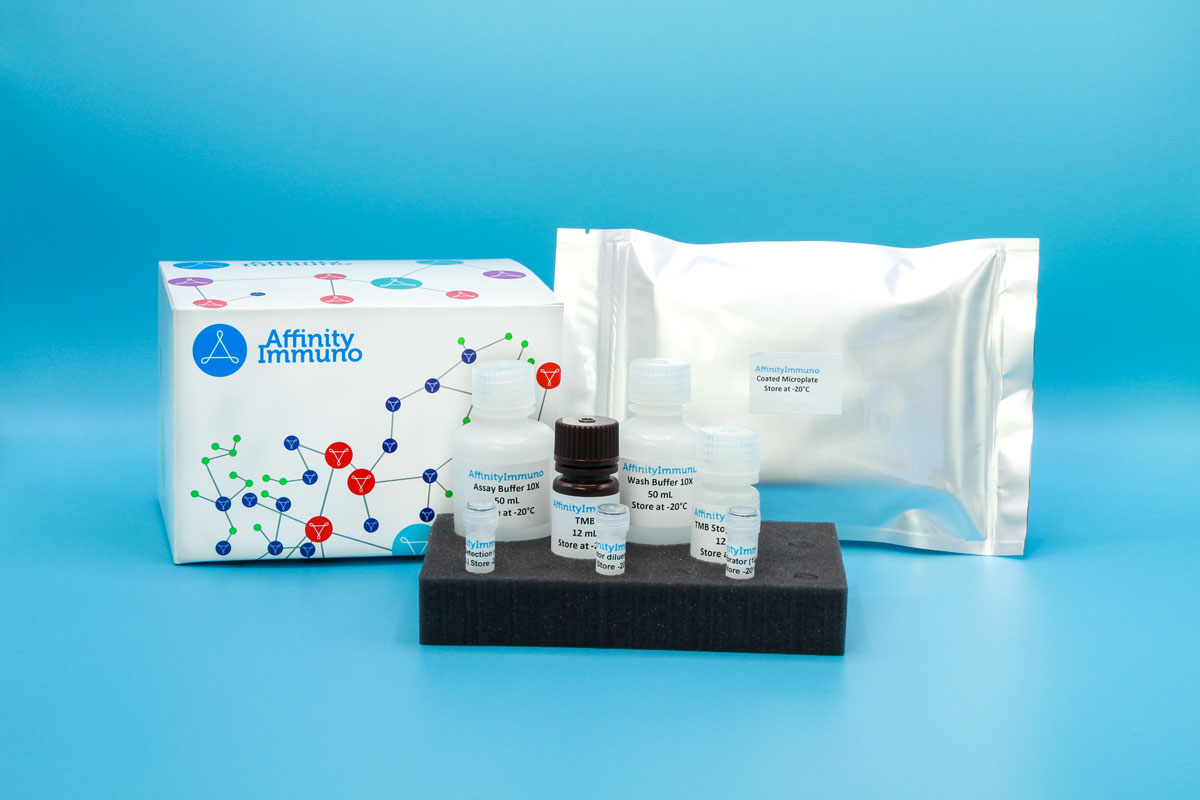
| Components | Pre-Coated Microplate - 12 strips x 8 wells (4°C/-20°C) Standard (Lyophilized) - 2 vials (4°C/-20°C) Biotinylated Antibody (100×) - 120 μL (4°C/-20°C) Streptavidin-HRP (100×) - 120 μL (4°C/-20°C) Standard/Sample Diluent Buffer - 20 mL (4°C/-20°C) Biotinylated Antibody Diluent - 12 mL (4°C/-20°C) HRP Diluent - 12 mL (4°C/-20°C) Wash Buffer (25×) - 20 mL (4°C/-20°C) TMB Substrate Solution - 10 mL (4°C/-20°C (store in dark)) Stop Reagent - 6 mL (4°C/-20°C) Plate Covers - 2 pieces (RT) |
| Storage | 4°C/-20°C |
Introduction
NECTIN2 encodes Nectin-2, also widely known by its immune designation CD112, a cell-surface glycoprotein of the nectin family that helps stitch epithelial cells together at junctions and is broadly expressed across blood, vascular, and neural cell types. Depending on which partner it engages, Nectin-2 can either encourage or dampen T-cell activity: pairing with CD226 boosts T-cell proliferation and cytokine output, while binding to a different partner, PVRIG, pulls the response back down, so the two interactions compete for influence over the same cell. On natural killer cells and related lymphocytes, this same adhesion function supports the close cell-to-cell contact needed for cytotoxic activity and for leukocytes to cross blood vessel walls and enter tissue. Nectin-2 additionally serves as an entry receptor for certain herpesviruses, including select herpes simplex virus strains and pseudorabies virus, though not for wild-type HSV-1 or for poliovirus.
Nectin-2’s competing engagement of the activating receptor CD226 and the inhibitory checkpoint PVRIG — now targeted by the clinical-stage antibody COM701 — places it alongside CD155 as a second ligand hub in the emerging DNAM-1/TIGIT/PVRIG immune-checkpoint network, making this assay a natural companion to our CD226, CD155, TIGIT, and CD96 kits for studying that axis as a whole.
Principle of the Assay
This kit is based on a sandwich enzyme immunoassay format. The microtiter plate wells are pre-coated with a capture antibody specific to Human Nectin-2 (NECT2). During the assay, standards or samples are added to the appropriate wells along with a biotin-conjugated detection antibody that also recognizes Human Nectin-2. Avidin conjugated to horseradish peroxidase (HRP) is then introduced into each well and allowed to incubate, linking the enzymatic reporter to the captured analyte complex. Upon addition of TMB substrate solution, a colorimetric signal develops exclusively in wells containing Human Nectin-2, the biotin-conjugated detection antibody, and Avidin-HRP. The enzymatic reaction is stopped by the addition of a sulphuric acid solution, and the resulting color change is measured spectrophotometrically at 450 nm (± 10 nm). Sample concentrations are determined by comparing the optical density values of the samples against a standard curve.