
Human mesothelin/MSLN ELISA Kit | EL-213-13
Cat. No: EL-213-13
$859.99 USD
96 wells
| Target protein | mesothelin/MSLN |
|---|---|
| Alternative name | MSLN |
| Gene ID | 10232 |
| Reactivity | Human |
| Detection range | 0.16-10 ng/mL |
| Sample type | serum, plasma, tissue homogenates and other biological fluids |
| Sample volume | 100 µL |
| Assay time | 3h 20min |
| Precision | Intra-assay CV <8%. Inter-assay CV <10% |
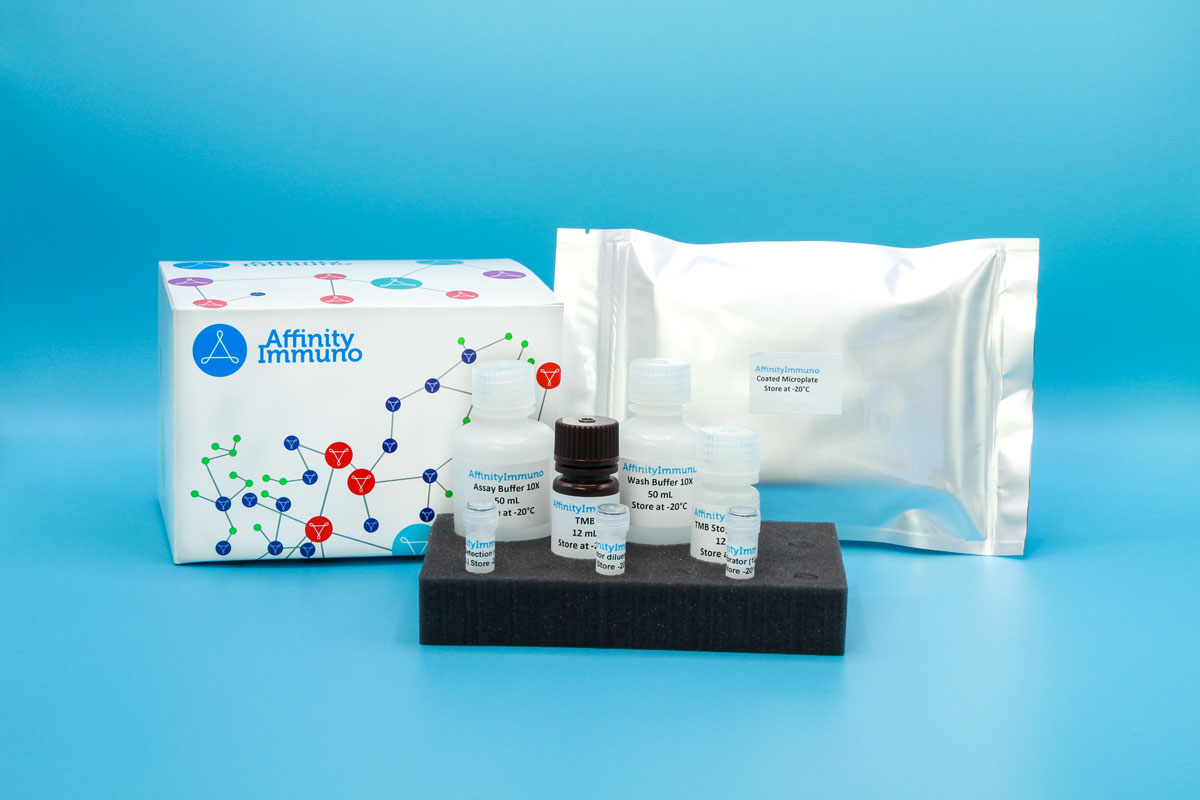
| Components | Pre-Coated Microplate - 12 strips x 8 wells (4°C/-20°C) Standard (Lyophilized) - 2 vials (4°C/-20°C) Biotinylated Antibody (100×) - 120 μL (4°C/-20°C) Streptavidin-HRP (100×) - 120 μL (4°C/-20°C) Standard/Sample Diluent Buffer - 20 mL (4°C/-20°C) Biotinylated Antibody Diluent - 12 mL (4°C/-20°C) HRP Diluent - 12 mL (4°C/-20°C) Wash Buffer (25×) - 20 mL (4°C/-20°C) TMB Substrate Solution - 10 mL (4°C/-20°C (store in dark)) Stop Reagent - 6 mL (4°C/-20°C) Plate Covers - 2 pieces (RT) |
| Storage | 4°C/-20°C |
Introduction
MSLN gives rise to a single precursor protein that is cleaved into two distinct products: megakaryocyte-potentiating factor, a soluble factor that promotes colony formation by bone-marrow megakaryocytes, and mesothelin itself, a glycosylphosphatidylinositol-anchored surface protein normally restricted to the thin mesothelial layer lining the pleura, the peritoneum, and the pericardium. On the cell surface, mesothelin helps organize contacts with the surrounding extracellular matrix, supporting normal tissue architecture, and a shed, soluble form circulates that may further influence how tumors interact with their microenvironment. This protein becomes markedly overexpressed in several cancers, most notably malignant mesothelioma and ovarian and pancreatic carcinomas, along with certain squamous cell tumors, where it has been implicated in processes such as epithelial-to-mesenchymal transition and matrix remodeling that favor invasion and immune escape. Because of this restricted normal distribution paired with high tumor expression, mesothelin has become a widely pursued target for antibody-based and cell-based cancer therapeutics.
Mesothelin’s restricted normal distribution paired with high tumor expression has driven an active drug-development pipeline including the antibody-drug conjugate anetumab ravtansine (studied in mesothelioma and ovarian cancer) and mesothelin-targeted CAR-T cell therapies, giving this assay direct relevance to translational oncology and biomarker research in those indications.
Principle of the Assay
This kit uses a sandwich enzyme immunoassay format to detect human mesothelin (MSLN). The microtiter plate wells are pre-coated with an MSLN-specific capture antibody that binds the target analyte present in standards or samples. A biotin-conjugated detection antibody, also specific to human MSLN, is then added and binds a second epitope on the captured analyte. Avidin-conjugated horseradish peroxidase (HRP) is subsequently introduced and binds the biotin label. Upon addition of TMB substrate, a colorimetric signal develops exclusively in wells where MSLN, the biotin-conjugated detection antibody, and avidin-HRP are all present. The enzymatic reaction is stopped with a sulphuric acid solution, and absorbance is measured at 450 nm (± 10 nm). MSLN concentrations in unknown samples are then determined by interpolating their optical density values against a standard curve.