
Human LOXL2 ELISA Kit | EL-213-12152402
Cat. No: EL-213-12152402
$859.99 USD
96 wells
| Target protein | LOXL2 |
|---|---|
| Gene ID | 4017 |
| Reactivity | Human |
| Detection range | 0.16-10 ng/mL |
| Sample type | serum, plasma, tissue homogenates and other biological fluids |
| Sample volume | 100 µL |
| Assay time | 3h 20min |
| Precision | Intra-assay CV <8%. Inter-assay CV <10% |
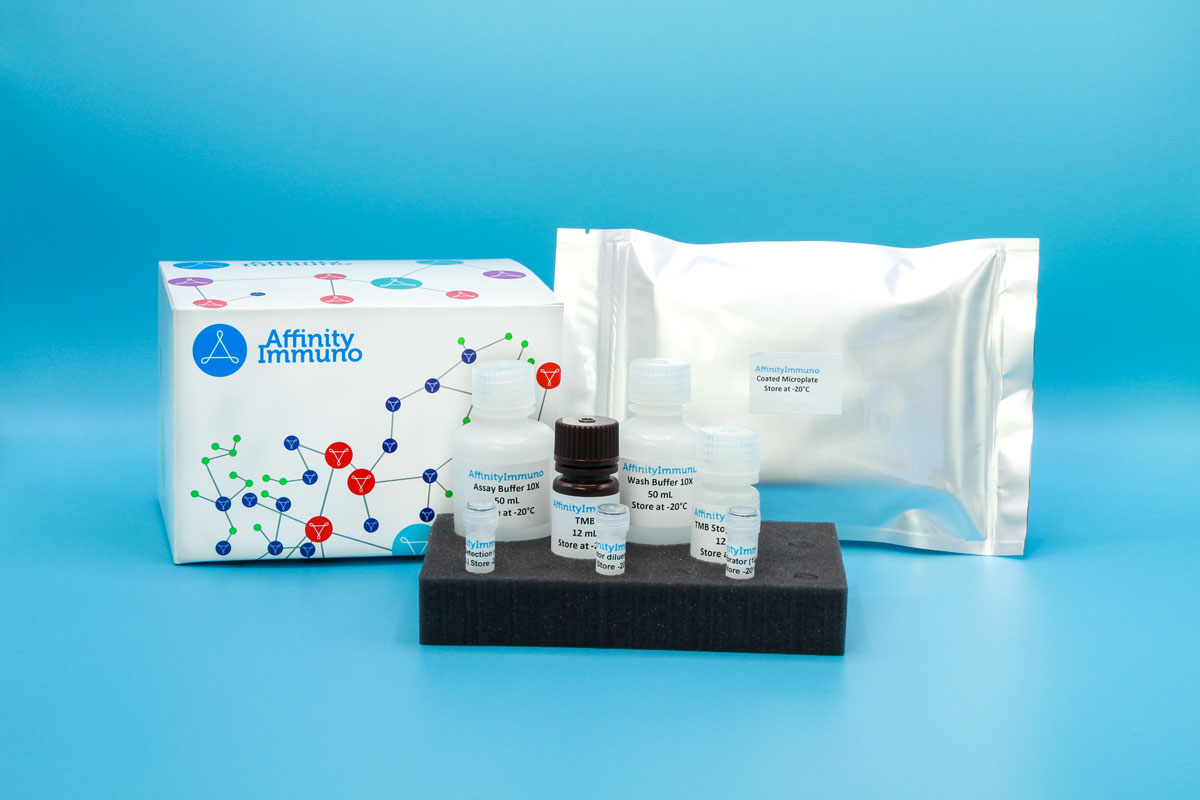
| Components | Pre-Coated Microplate - 12 strips x 8 wells (4°C/-20°C) Standard (Lyophilized) - 2 vials (4°C/-20°C) Biotinylated Antibody (100×) - 120 μL (4°C/-20°C) Streptavidin-HRP (100×) - 120 μL (4°C/-20°C) Standard/Sample Diluent Buffer - 20 mL (4°C/-20°C) Biotinylated Antibody Diluent - 12 mL (4°C/-20°C) HRP Diluent - 12 mL (4°C/-20°C) Wash Buffer (25×) - 20 mL (4°C/-20°C) TMB Substrate Solution - 10 mL (4°C/-20°C (store in dark)) Stop Reagent - 6 mL (4°C/-20°C) Plate Covers - 2 pieces (RT) |
| Storage | 4°C/-20°C |
Introduction
LOXL2 encodes a secreted, copper-dependent amine oxidase that chemically modifies lysine residues on collagen and elastin, generating the crosslinks that give connective tissue its structural strength. Beyond this extracellular matrix role, the enzyme can also act inside the nucleus, where it removes methyl marks from histone H3 and from the transcription factor TAF10 to repress specific sets of genes. Through interaction with the transcriptional repressor SNAI1, LOXL2 helps silence E-cadherin and push epithelial cells toward a more migratory, mesenchymal state, a process implicated in tumor invasion and fibrotic tissue remodeling. Elevated LOXL2 activity has consequently been associated with progression of several solid tumors and with pathological fibrosis in organs such as the heart.
LOXL2 has an instructive research history worth noting honestly: the anti-LOXL2 antibody simtuzumab failed to show efficacy in idiopathic pulmonary fibrosis and NASH-related cirrhosis trials, but LOXL2 itself remains an active biomarker candidate — recent work has explored it as a predictor of hepatocellular carcinoma risk after hepatitis C clearance, and newer small-molecule LOXL2 inhibitors are back in preclinical fibrosis research.
Principle of the Assay
This kit uses a sandwich enzyme immunoassay format in which the microtiter plate wells are pre-coated with a capture antibody specific to Human LOXL2. Standards or samples are pipetted into the appropriate wells along with a biotin-conjugated detection antibody that also targets Human LOXL2. Avidin conjugated to horseradish peroxidase (HRP) is then added to each well and allowed to incubate. Upon addition of TMB substrate solution, a colorimetric signal develops exclusively in wells where Human LOXL2, the biotin-conjugated antibody, and the avidin-HRP conjugate are all present. The enzymatic reaction is stopped by addition of a sulphuric acid solution, and absorbance is measured spectrophotometrically at 450 nm ± 10 nm. Human LOXL2 concentrations in the samples are subsequently determined by referencing the sample optical density values against a standard curve.