
Human LILRA3 ELISA Kit | EL-213-1291203
Cat. No: EL-213-1291203
$859.99 USD
96 wells
| Target protein | LILRA3 |
|---|---|
| Gene ID | 11026 |
| Reactivity | Human |
| Detection range | 0.32-20 ng/mL |
| Sample type | serum, plasma, tissue homogenates and other biological fluids |
| Sample volume | 100 µL |
| Assay time | 3h 20min |
| Precision | Intra-assay CV <8%. Inter-assay CV <10% |
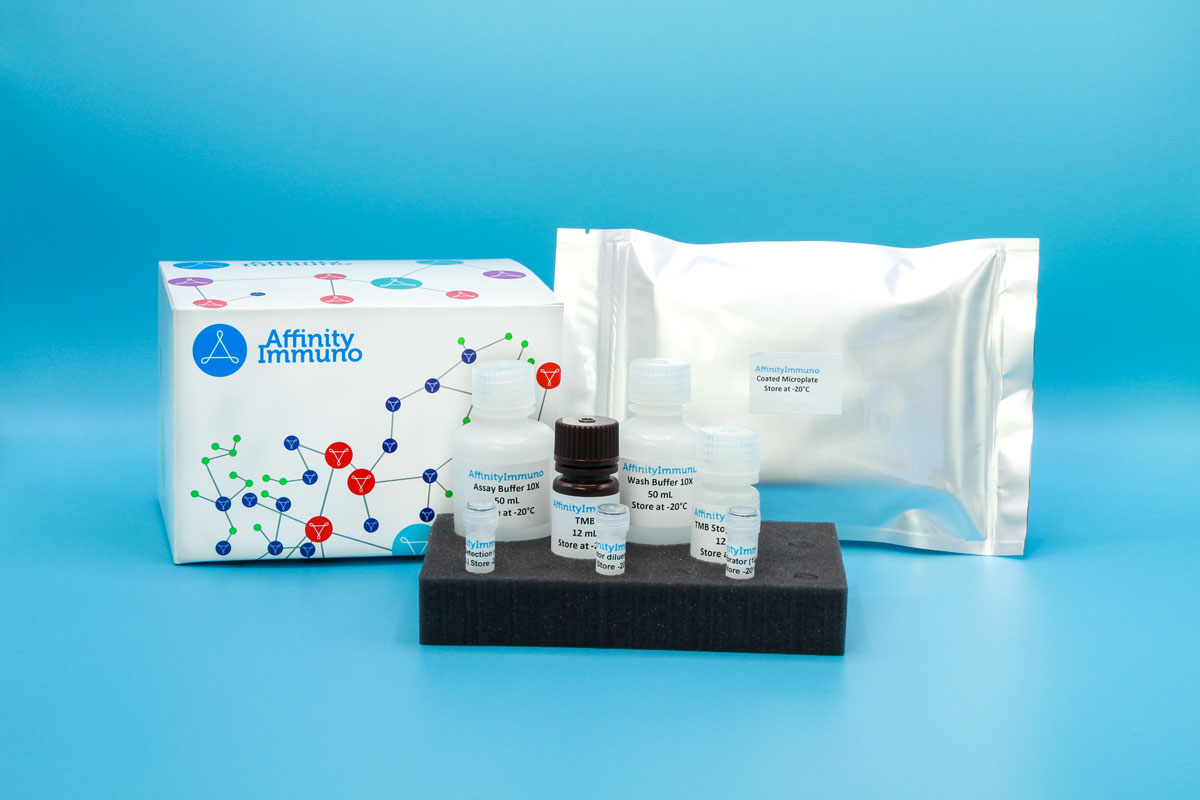
| Components | Pre-Coated Microplate - 12 strips x 8 wells (4°C/-20°C) Standard (Lyophilized) - 2 vials (4°C/-20°C) Biotinylated Antibody (100×) - 120 μL (4°C/-20°C) Streptavidin-HRP (100×) - 120 μL (4°C/-20°C) Standard/Sample Diluent Buffer - 20 mL (4°C/-20°C) Biotinylated Antibody Diluent - 12 mL (4°C/-20°C) HRP Diluent - 12 mL (4°C/-20°C) Wash Buffer (25×) - 20 mL (4°C/-20°C) TMB Substrate Solution - 10 mL (4°C/-20°C (store in dark)) Stop Reagent - 6 mL (4°C/-20°C) Plate Covers - 2 pieces (RT) |
| Storage | 4°C/-20°C |
Introduction
LILRA3 belongs to the leukocyte immunoglobulin-like receptor family, whose transmembrane members on monocytes, B cells, dendritic cells, and NK cells recognize class I HLA molecules and deliver mostly inhibitory signals. Unlike its relatives, LILRA3 lacks a membrane anchor and is secreted as a soluble protein, allowing it to bind circulating and cell-surface HLA class I molecules, albeit with somewhat lower affinity than membrane-bound family members such as LILRB1 and LILRB2. By occupying these HLA ligands, secreted LILRA3 is thought to compete with membrane-anchored LILRs for the same binding sites, potentially dampening the inhibitory signaling those receptors would otherwise deliver, and it has also been shown to bind monocytes directly and suppress LPS-triggered TNF release. The LILRA3 gene lies within a polymorphic cluster of related receptor genes on chromosome 19, and a common deletion that removes the entire gene is carried by a substantial proportion of the population, making LILRA3 one of the more structurally variable genes in this immune receptor family.
Because a common deletion removes the entire LILRA3 gene in a substantial portion of the population, this assay is particularly useful for immunogenetics research correlating circulating LILRA3 levels with genotype, alongside functional studies of how this soluble decoy competes with membrane-bound LILR family members for HLA class I binding.
Principle of the Assay
This kit uses a sandwich enzyme immunoassay format. The microtiter plate wells are pre-coated with a capture antibody specific to Human LILRA3, which binds the target analyte present in standards or samples added during the first incubation step. A biotin-conjugated detection antibody, also specific to Human LILRA3, is then introduced to bind a second epitope on the captured analyte. Avidin-conjugated horseradish peroxidase (HRP) is subsequently added to each well, linking to the biotin label. Upon addition of TMB substrate solution, a colorimetric signal develops exclusively in wells containing Human LILRA3, the biotin-conjugated detection antibody, and Avidin-HRP. The enzymatic reaction is stopped by the addition of sulphuric acid solution, and absorbance is measured at 450 nm (± 10 nm). Sample concentrations are determined by comparing the optical density of each sample against a standard curve.