
Human I-FABP/FABP2 ELISA Kit | EL-213-902
Cat. No: EL-213-902
$859.99 USD
96 wells
| Target protein | I-FABP/FABP2 |
|---|---|
| Alternative name | FABP2 |
| Gene ID | 2169 |
| Reactivity | Human |
| Detection range | 0.16-10 ng/mL |
| Sample type | serum, plasma, tissue homogenates, cell lysates, cell culture supernates and other biological fluids |
| Sample volume | 100 µL |
| Assay time | 3h 20min |
| Precision | Intra-assay CV <8%. Inter-assay CV <10% |
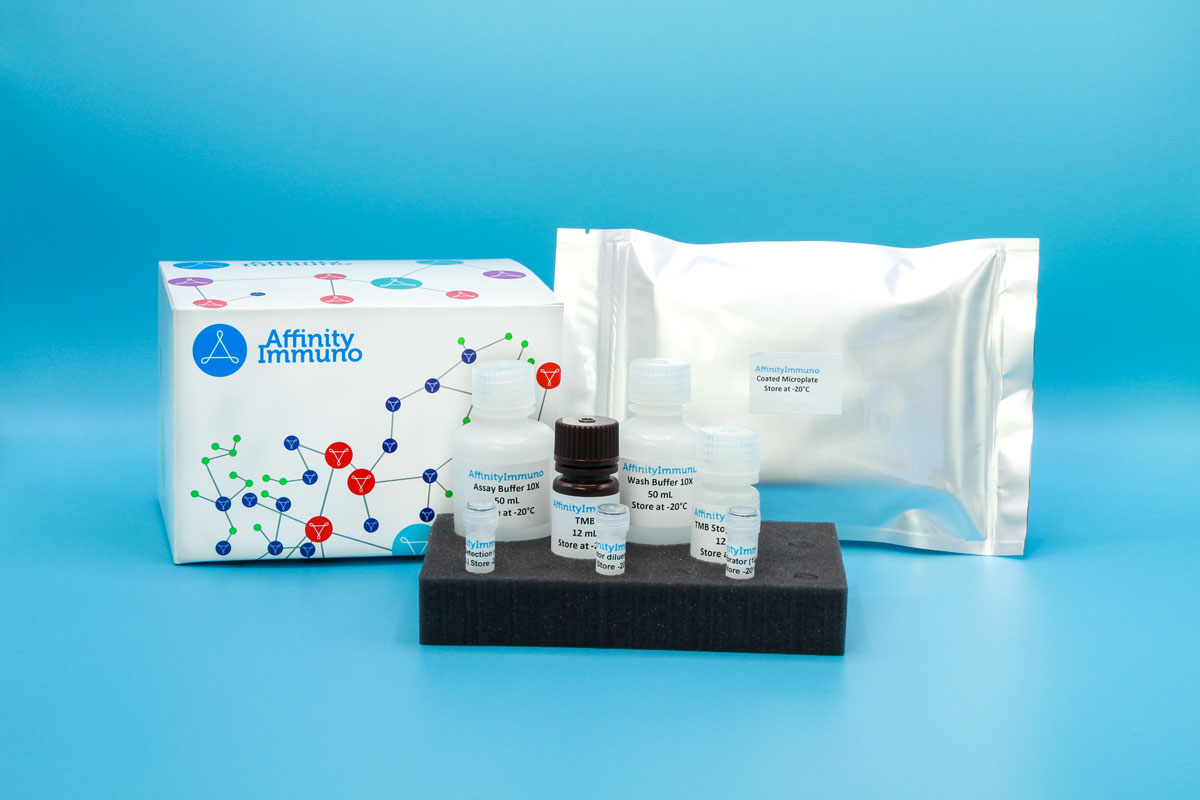
| Components | Pre-Coated Microplate - 12 strips x 8 wells (4°C/-20°C) Standard (Lyophilized) - 2 vials (4°C/-20°C) Biotinylated Antibody (100×) - 120 μL (4°C/-20°C) Streptavidin-HRP (100×) - 120 μL (4°C/-20°C) Standard/Sample Diluent Buffer - 20 mL (4°C/-20°C) Biotinylated Antibody Diluent - 12 mL (4°C/-20°C) HRP Diluent - 12 mL (4°C/-20°C) Wash Buffer (25×) - 20 mL (4°C/-20°C) TMB Substrate Solution - 10 mL (4°C/-20°C (store in dark)) Stop Reagent - 6 mL (4°C/-20°C) Plate Covers - 2 pieces (RT) |
| Storage | 4°C/-20°C |
Introduction
FABP2, commonly called intestinal fatty acid-binding protein (I-FABP), is a small cytosolic carrier protein made by absorptive cells lining the small bowel. Its job is to bind dietary long-chain fatty acids inside the cell and ferry them toward sites of metabolism or packaging into lipoproteins, with a notable preference for saturated over unsaturated chains. Beyond straightforward lipid handling, the protein has been proposed to act as a sensor that helps enterocytes keep track of local fatty acid supply and overall energy balance. Because I-FABP is so abundant in mature enterocytes and is released into circulation when the intestinal epithelium is damaged, measuring it in blood or urine has become a common way to gauge acute gut mucosal injury, and gene variants have separately been linked to differences in lipid handling and insulin response.
I-FABP is being actively studied as a sensitive and specific biomarker for necrotizing enterocolitis in preterm infants, often alongside other markers such as L-FABP and TFF-3, giving this assay clear relevance to neonatal and critical-care gut-injury research in addition to general intestinal permeability studies.
Principle of the Assay
This kit utilizes a sandwich enzyme immunoassay format in which the microtiter plate wells are pre-coated with a capture antibody specific to Human I-FABP/FABP2. Standards or samples are added to the appropriate wells along with a biotin-conjugated detection antibody that also recognizes Human I-FABP/FABP2. Avidin conjugated to horseradish peroxidase (HRP) is then added to each well and allowed to incubate. Upon addition of TMB substrate solution, only wells containing Human I-FABP/FABP2, the biotin-conjugated detection antibody, and avidin-HRP will undergo a color change. The enzymatic reaction is stopped by the addition of a sulphuric acid stop solution, and the resulting color is measured spectrophotometrically at 450 nm ± 10 nm. Sample concentrations are determined by comparing the optical density of each sample against a standard curve.