
Human HER3/ERBB3 ELISA Kit | EL-213-851803
Cat. No: EL-213-851803
$859.99 USD
96 wells
| Target protein | HER3/ERBB3 |
|---|---|
| Alternative name | ERBB3 |
| Gene ID | 2065 |
| Reactivity | Human |
| Detection range | 78.13-5000 pg/mL |
| Sample type | Serum, plasma, tissue homogenates and other biological fluids. |
| Sample volume | 100 µL |
| Assay time | 3h 20min |
| Precision | Intra-assay CV <8%. Inter-assay CV <10% |
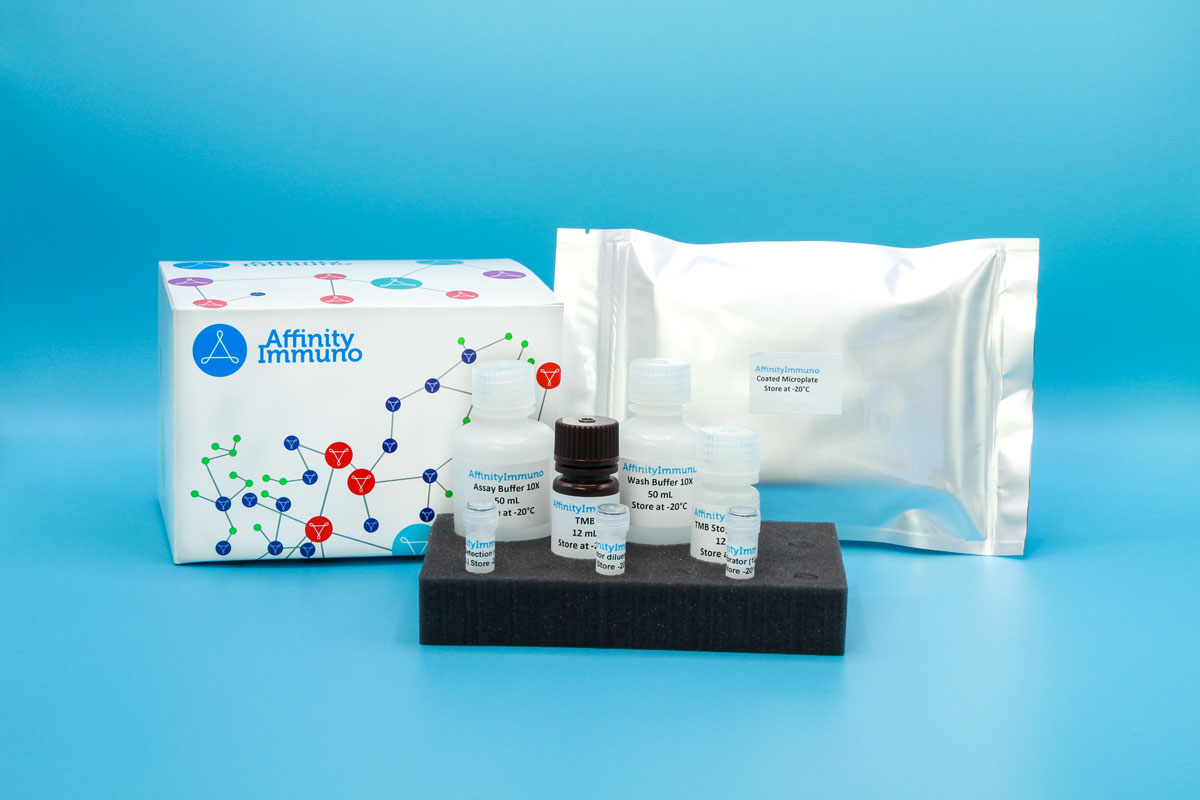
| Components | Pre-Coated Microplate - 12 strips x 8 wells (4°C/-20°C) Standard (Lyophilized) - 2 vials (4°C/-20°C) Biotinylated Antibody (100×) - 120 μL (4°C/-20°C) Streptavidin-HRP (100×) - 120 μL (4°C/-20°C) Standard/Sample Diluent Buffer - 20 mL (4°C/-20°C) Biotinylated Antibody Diluent - 12 mL (4°C/-20°C) HRP Diluent - 12 mL (4°C/-20°C) Wash Buffer (25×) - 20 mL (4°C/-20°C) TMB Substrate Solution - 10 mL (4°C/-20°C (store in dark)) Stop Reagent - 6 mL (4°C/-20°C) Plate Covers - 2 pieces (RT) |
| Storage | 4°C/-20°C |
Introduction
ERBB3 (HER3) encodes a receptor tyrosine kinase belonging to the EGFR/ErbB family, but its intracellular domain lacks catalytic kinase activity, so it functions as a signaling partner rather than an autonomous enzyme. It carries a binding site for the ligand neuregulin-1, and engagement by this or related ligands drives pairing with catalytically active family members such as EGFR or HER2, triggering downstream proliferation and differentiation cascades including PI3K/AKT signaling. Amplification or overexpression of ERBB3 has been documented across a range of solid tumors, including breast, prostate, bladder, and gastrointestinal malignancies, making it a target of interest in oncology research. Separately, rare inherited loss-of-function variants in the same gene have been linked to congenital neuromuscular contracture and visceral neuropathy syndromes, underscoring its additional developmental role outside of cancer biology.
HER3 has become a validated oncology drug target through patritumab deruxtecan (HER3-DXd), an antibody-drug conjugate studied extensively in EGFR-mutated non-small cell lung cancer, adding a fast-moving translational-oncology use case to HER3’s established role as an amplified/overexpressed signaling partner across breast, prostate, bladder, and GI tumors.
Principle of the Assay
This kit utilizes a sandwich enzyme immunoassay format in which the microtiter plate wells are pre-coated with a capture antibody specific to Human HER3/ERBB3. During the assay, standards or samples are introduced into the appropriate wells alongside a biotin-conjugated detection antibody that also targets Human HER3/ERBB3. Avidin conjugated to horseradish peroxidase (HRP) is then added to each well and allowed to incubate. Upon addition of TMB substrate solution, a colorimetric signal develops exclusively in wells where Human HER3/ERBB3, the biotin-conjugated detection antibody, and the avidin-HRP conjugate are all present. The enzymatic reaction is halted by addition of a sulphuric acid stop solution, and the resulting color change is measured spectrophotometrically at 450 nm (± 10 nm). HER3/ERBB3 concentrations in unknown samples are subsequently determined by referencing sample optical density values against a standard curve.