
Human GPC3 ELISA Kit | EL-213-716303
Cat. No: EL-213-716303
$859.99 USD
96 wells
| Target protein | GPC3 |
|---|---|
| Gene ID | 2719 |
| Reactivity | Human |
| Detection range | 0.16-10 ng/mL |
| Sample type | Serum, plasma, tissue homogenates and other biological fluids |
| Sample volume | 100 µL |
| Assay time | 3h 20min |
| Precision | Intra-assay CV <8%. Inter-assay CV <10% |
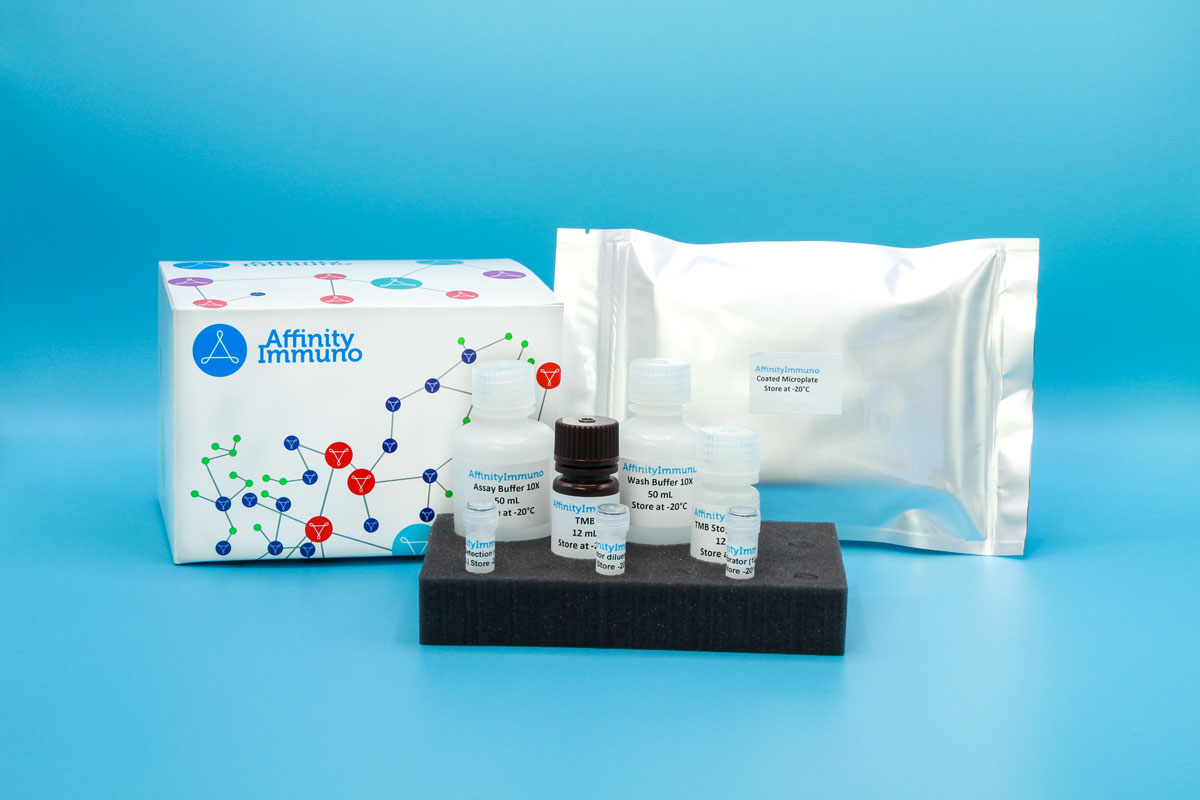
| Components | Pre-Coated Microplate - 12 strips x 8 wells (4°C/-20°C) Standard (Lyophilized) - 2 vials (4°C/-20°C) Biotinylated Antibody (100×) - 120 μL (4°C/-20°C) Streptavidin-HRP (100×) - 120 μL (4°C/-20°C) Standard/Sample Diluent Buffer - 20 mL (4°C/-20°C) Biotinylated Antibody Diluent - 12 mL (4°C/-20°C) HRP Diluent - 12 mL (4°C/-20°C) Wash Buffer (25×) - 20 mL (4°C/-20°C) TMB Substrate Solution - 10 mL (4°C/-20°C (store in dark)) Stop Reagent - 6 mL (4°C/-20°C) Plate Covers - 2 pieces (RT) |
| Storage | 4°C/-20°C |
Introduction
GPC3 encodes Glypican-3, a roughly 70-kilodalton core protein decorated with heparan sulfate chains and tethered to the outer cell membrane through a GPI anchor, placing it among a family of proteoglycans implicated in controlling cell growth and division. It exerts opposing effects on two major developmental signaling pathways: at the cell surface it competes with the receptor Patched for binding to Hedgehog ligands, dampening that pathway, while it simultaneously promotes Wnt signaling by helping the Frizzled receptor engage its Wnt ligands, and it can also bind the tetraspanin CD81 in a way that alters nuclear transcriptional repression by HHEX. These activities make it important for shaping limb and kidney development, supporting coronary vessel formation, and guiding cell movements during early gastrulation, and its ability to bind and block the enzyme DPP4 has additionally been linked to apoptosis induction in some cell types. Loss of the gene through deletion causes Simpson-Golabi-Behmel overgrowth syndrome, whereas in adults the same protein is re-expressed at very high, near tumor-specific levels in hepatocellular carcinoma, making it one of the more reliable biomarkers for that cancer.
GPC3’s near tumor-specific re-expression in hepatocellular carcinoma has made it both a widely studied serological/histological diagnostic marker and, more recently, the target of antibody-drug conjugates now in development for HCC therapy, giving this assay direct relevance to both liquid-biopsy and drug-development research.
Principle of the Assay
This kit uses a sandwich enzyme immunoassay format in which the microtiter plate wells are pre-coated with a capture antibody specific to Human GPC3. Standards or samples are added to the appropriate wells together with a biotin-conjugated detection antibody that also recognizes Human GPC3. Avidin conjugated to horseradish peroxidase (HRP) is then added to each well and allowed to incubate, linking enzymatic activity to any captured analyte. Upon addition of TMB substrate solution, a colorimetric signal develops only in wells containing Human GPC3, the biotin-conjugated antibody, and Avidin-HRP. The enzyme-substrate reaction is stopped by the addition of sulphuric acid solution, and the resulting color change is measured spectrophotometrically at 450 nm ± 10 nm. Human GPC3 concentration in each sample is determined by comparing the sample optical density values against a standard curve.