
Human GLP-2 ELISA Kit | EL-213-7121602
Cat. No: EL-213-7121602
$859.99 USD
96 wells
| Target protein | GLP-2 |
|---|---|
| Alternative name | GCG |
| Gene ID | 2641 |
| Reactivity | Human |
| Detection range | 156.25-10000 pg/mL |
| Sample type | serum, plasma, cell lysates, cell culture supernates and other biological fluids |
| Sample volume | 50 µL |
| Assay time | 2h 20min |
| Precision | Intra-assay CV <8%. Inter-assay CV <10% |
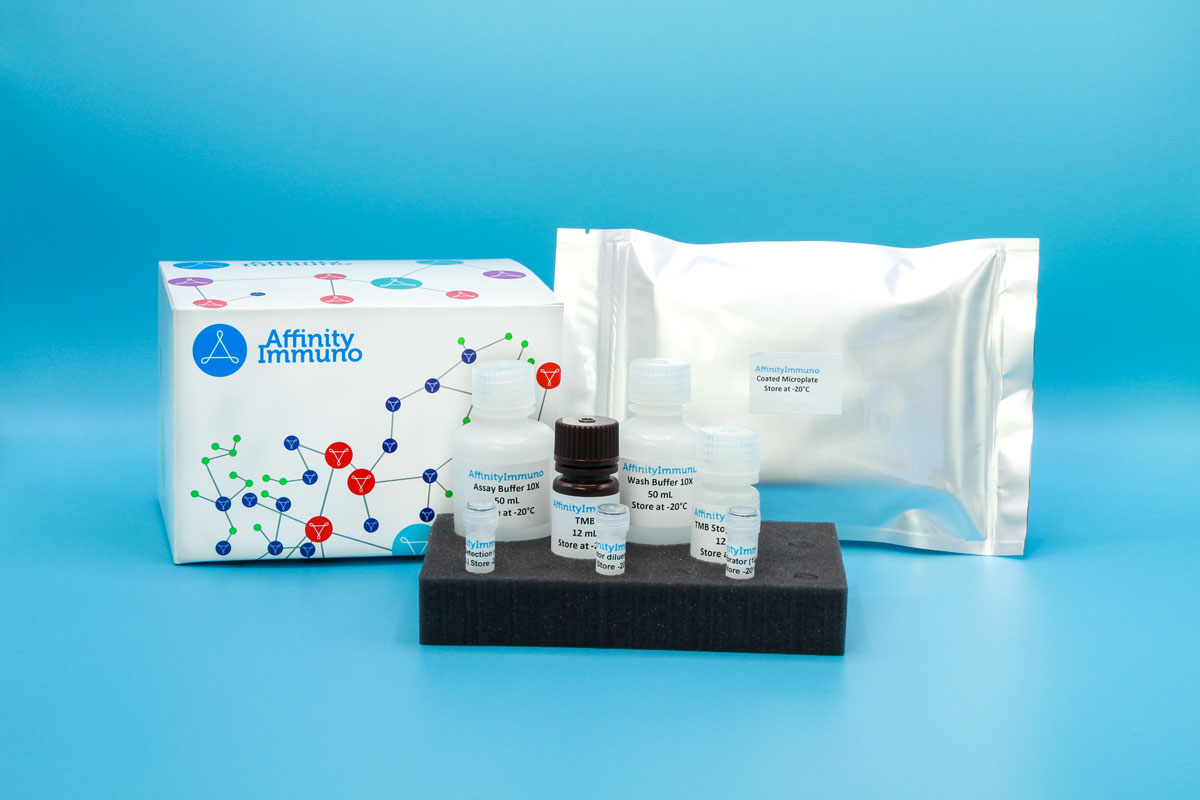
| Components | Pre-Coated Microplate - 12 strips x 8 wells (4°C/-20°C) Standard (Lyophilized) - 2 vials (4°C/-20°C) Biotinylated-Conjugate (100×) - 60 μL (4°C/-20°C) Streptavidin-HRP (100×) - 120 μL (4°C/-20°C) Standard/Sample Diluent Buffer - 20 mL (4°C/-20°C) Biotinylated-Conjugate Diluent - 10 mL (4°C/-20°C) HRP Diluent - 12 mL (4°C/-20°C) Wash Buffer (25×) - 20 mL (4°C/-20°C) TMB Substrate Solution - 10 mL (4°C/-20°C (store in dark)) Stop Reagent - 6 mL (4°C/-20°C) Plate Covers - 2 pieces (RT) |
| Storage | 4°C/-20°C |
Introduction
GLP-2 is a 33-amino-acid peptide hormone produced, together with glucagon and GLP-1, from the proteolytic processing of proglucagon, the product of the GCG gene. It is co-secreted with GLP-1 by enteroendocrine L-cells concentrated in the distal small intestine and colon whenever dietary fat or carbohydrate reaches the gut lumen. Acting on receptors distributed from the stomach to the colon, GLP-2 drives expansion of the intestinal mucosa by increasing crypt cell proliferation and villus height while limiting enterocyte loss, and it tightens the gut barrier by reducing mucosal permeability and boosting nutrient uptake capacity. Because of this trophic, gut-restricted activity, GLP-2 has become a marker and research tool for studying digestive disorders such as inflammatory bowel disease, where intestinal barrier function and nutrient absorption are compromised.
GLP-2’s role expanding intestinal mucosa and tightening gut barrier function underlies its use as a research tool in short bowel syndrome and inflammatory bowel disease studies, complementing the related incretin hormone GLP-1 that dominates current metabolic-disease research and drug development.
Principle of the Assay
This kit utilizes a competitive inhibition enzyme immunoassay format to measure Human GLP-2. Microtiter plate wells are pre-coated with Human GLP-2, and standards or samples are introduced simultaneously with a biotin-conjugated antibody specific to Human GLP-2. Free GLP-2 present in the standard or sample competes with the plate-bound GLP-2 for a limited supply of this antibody, meaning that higher analyte concentrations result in less antibody binding to the plate. Streptavidin-conjugated Horseradish Peroxidase (HRP) is then added to each well and allowed to incubate, linking enzymatic activity to the plate-bound biotin-antibody complex. TMB substrate solution is subsequently added to initiate the colorimetric reaction, which is terminated by the addition of a sulphuric acid stop solution. Absorbance is measured spectrophotometrically at 450 nm (± 10 nm), and sample GLP-2 concentrations are determined by comparing sample optical density values against the standard curve, where signal is inversely proportional to analyte concentration.