
Human GLB1 ELISA Kit | EL-213-712201
Cat. No: EL-213-712201
$859.99 USD
96 wells
| Target protein | GLB1 |
|---|---|
| Gene ID | 2720 |
| Reactivity | Human |
| Detection range | 125-8000 pg/mL |
| Sample type | serum, plasma, tissue homogenates, cell lysates and other biological fluids |
| Sample volume | 100 µL |
| Assay time | 3h 20min |
| Precision | Intra-assay CV <8%. Inter-assay CV <10% |
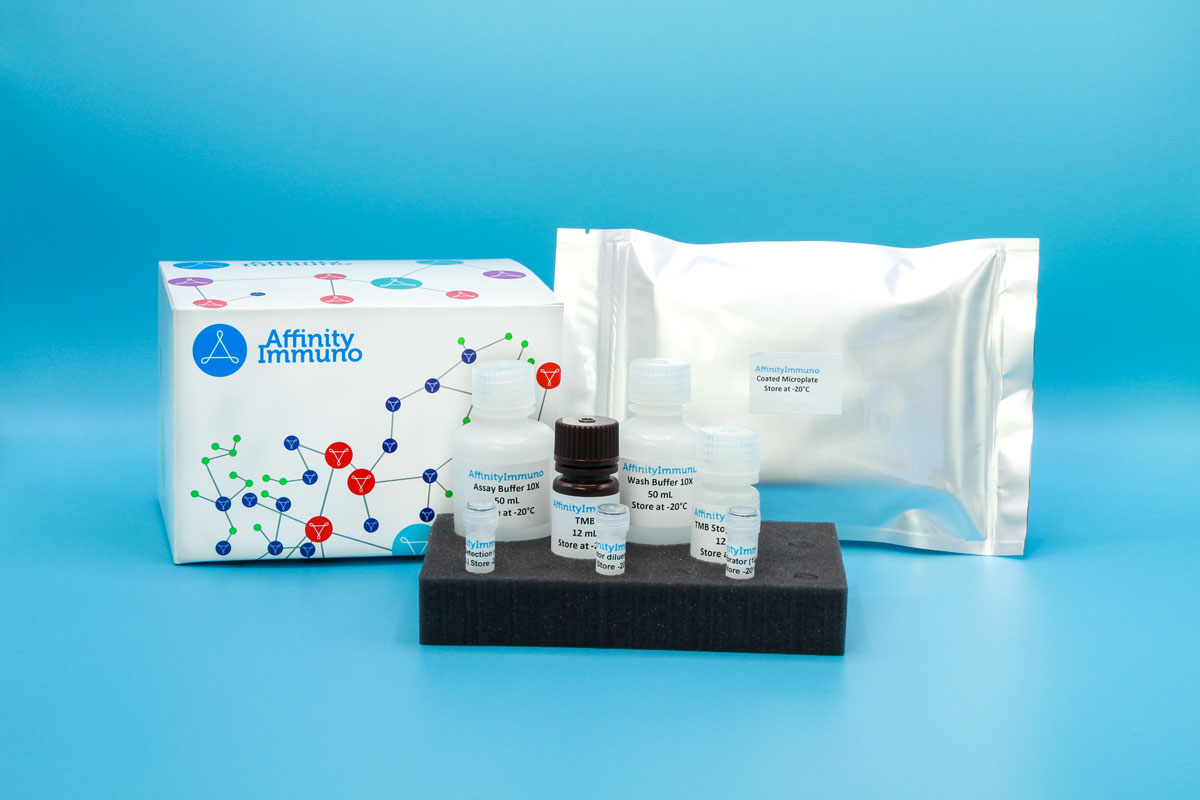
| Components | Pre-Coated Microplate - 12 strips x 8 wells (4°C/-20°C) Standard (Lyophilized) - 2 vials (4°C/-20°C) Biotinylated Antibody (100×) - 120 μL (4°C/-20°C) Streptavidin-HRP (100×) - 120 μL (4°C/-20°C) Standard/Sample Diluent Buffer - 20 mL (4°C/-20°C) Biotinylated Antibody Diluent - 12 mL (4°C/-20°C) HRP Diluent - 12 mL (4°C/-20°C) Wash Buffer (25×) - 20 mL (4°C/-20°C) TMB Substrate Solution - 10 mL (4°C/-20°C (store in dark)) Stop Reagent - 6 mL (4°C/-20°C) Plate Covers - 2 pieces (RT) |
| Storage | 4°C/-20°C |
Introduction
GLB1 codes for a lysosomal enzyme, beta-galactosidase, that trims terminal galactose sugars off gangliosides and other complex glycoconjugates as part of the cell’s routine breakdown and recycling of these molecules. The gene’s transcripts are alternatively processed, and one resulting protein is proteolytically matured into the active hydrolytic enzyme housed in lysosomes. Separately, an alternatively spliced product of the same gene lacks catalytic activity altogether and instead moonlights outside the lysosome as a structural partner in building elastic fibers, matching a previously described elastin-binding protein found on the surface of several connective-tissue and immune cell types. Because the enzymatic form is essential for clearing these substrates, inherited mutations that impair its activity cause the lysosomal storage disorders GM1-gangliosidosis and Morquio B syndrome, both marked by progressive accumulation of undegraded material in tissues.
Because impaired GLB1 activity directly causes the lysosomal storage disorders GM1-gangliosidosis and Morquio B syndrome, this assay supports rare-disease research tracking enzyme levels, in addition to studies of the non-catalytic splice variant’s separate structural role in elastic fiber assembly.
Principle of the Assay
This kit utilizes a sandwich enzyme immunoassay format. Microtiter plate wells are pre-coated with a capture antibody specific to Human GLB1, which binds the target analyte present in standards or samples. A biotin-conjugated detection antibody specific to Human GLB1 is then introduced, recognizing a second epitope on the captured analyte. Avidin conjugated to horseradish peroxidase (HRP) is subsequently added to each well and allowed to incubate, linking enzymatic activity to the captured complex via biotin–avidin interaction. Upon addition of TMB substrate solution, wells containing Human GLB1, the biotin-conjugated detection antibody, and Avidin-HRP undergo a colorimetric change. The enzymatic reaction is terminated by addition of a sulphuric acid stop solution, and absorbance is measured spectrophotometrically at 450 nm (± 10 nm). GLB1 concentrations in the samples are determined by comparing sample optical density values against a standard curve.