
Human GDF15 ELISA Kit | EL-213-74615
Cat. No: EL-213-74615
$859.99 USD
96 wells
| Target protein | GDF15 |
|---|---|
| Gene ID | 9518 |
| Reactivity | Human |
| Detection range | 46.88-3000 pg/mL |
| Assay time | 20min |
| Precision | Intra-assay CV <8%. Inter-assay CV <10% |
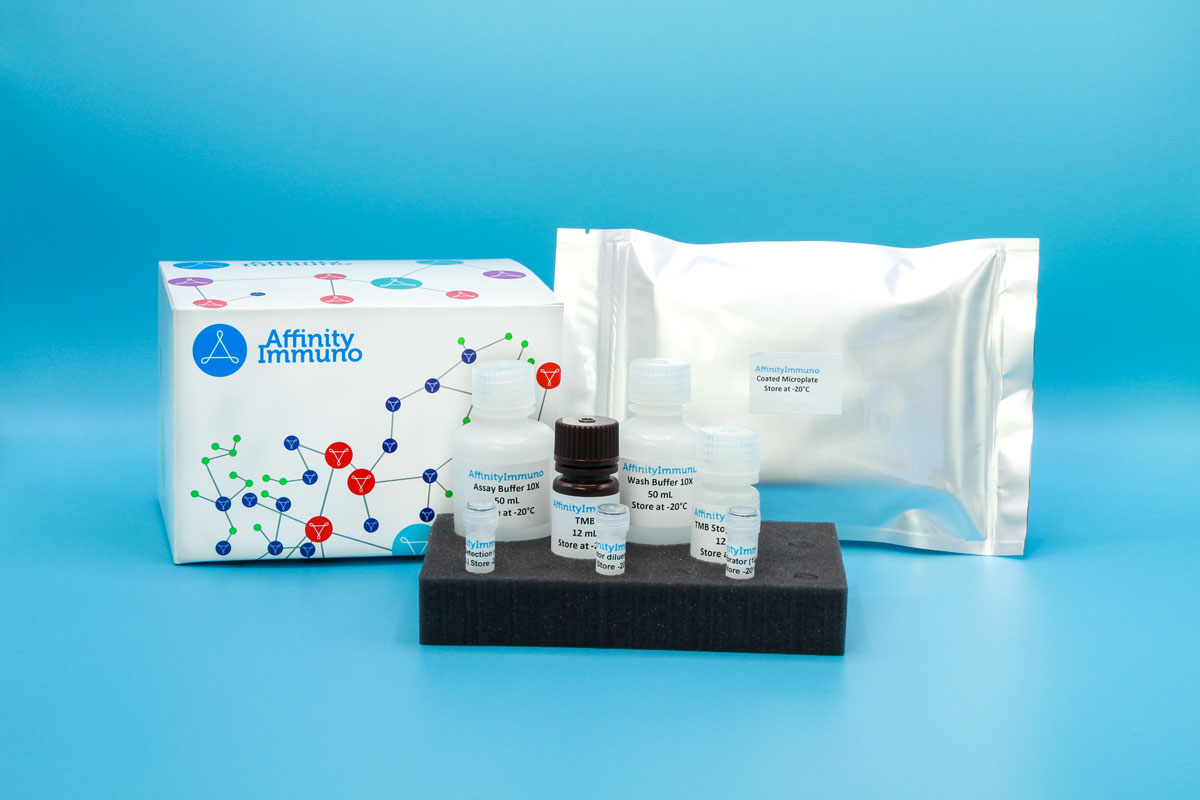
| Components | Pre-Coated Microplate - 12 strips x 8 wells (4°C/-20°C) Standard Microplate - 2 strips x 8 wells (4°C/-20°C) HRP Conjugate Antibody (100×) - 70 μL (4°C/-20°C (store in dark)) Standard/Sample Diluent Buffer - 24 mL (4°C/-20°C) HRP Conjugate Diluent - 10 mL (4°C/-20°C) Wash Buffer (25×) - 24 mL (4°C/-20°C) TMB Substrate Solution - 12 mL (4°C/-20°C (store in dark)) Stop Reagent - 7 mL (4°C/-20°C) Plate Covers - 2 pieces (4°C/-20°C) Instruction Manual - 1 (RT) |
| Storage | 4°C/-20°C |
Introduction
GDF15 is a stress-induced hormone that, despite belonging structurally to the TGF-beta superfamily, signals through its own dedicated receptor system: circulating GDF15 binds GFRAL, a receptor expressed on neurons in the brainstem area postrema and nucleus tractus solitarius, which in turn engages the RET co-receptor to trigger downstream ERK signaling. This brainstem circuit converts cellular stress signals – tissue injury, hypoxia, inflammation, oxidative stress, or drug exposure – into an aversive response marked by nausea, reduced appetite, and weight loss. GDF15 is synthesized as a precursor that is proteolytically cleaved into a disulfide-linked mature dimer, and elevated circulating levels have been documented in cancer-associated cachexia, cardiovascular and metabolic stress states, and pregnancy, where high early-pregnancy levels are linked to the severity of nausea and vomiting, including hyperemesis gravidarum.
GDF15’s role as a p53-inducible cellular stress signal has extended its research relevance beyond cancer cachexia into obesity and metabolic disease, where GDF15/GFRAL-pathway agonists are being explored as a complement to GLP-1 therapies for appetite and weight regulation — a fast-growing area of pharmaceutical interest.
Principle of the Assay
This kit uses a sandwich enzyme immunoassay format in which the microtiter plate wells are pre-coated with a capture antibody specific to Human GDF15. Standards or samples are added to the appropriate wells, followed by an HRP-conjugated detection antibody also specific to Human GDF15. Upon addition of TMB substrate solution, only wells containing the target analyte bound to the HRP-conjugated antibody produce a colorimetric signal. The enzymatic reaction is stopped by the addition of sulfuric acid stop solution, and absorbance is measured at 450 nm (± 10 nm). Sample concentrations are determined by comparing the optical density of each sample against a standard curve generated from the provided GDF15 standards.