
Human Gasdermin E ELISA Kit | EL-213-07
Cat. No: EL-213-07
$859.99 USD
96 wells
| Target protein | Gasdermin E |
|---|---|
| Alternative name | GSDME |
| Gene ID | 1687 |
| Reactivity | Human |
| Detection range | 0.16-10 ng/mL |
| Sample type | Tissue homogenates and other biological fluids |
| Sample volume | 100 µL |
| Assay time | 3h 20min |
| Precision | Intra-assay CV <8%. Inter-assay CV <10% |
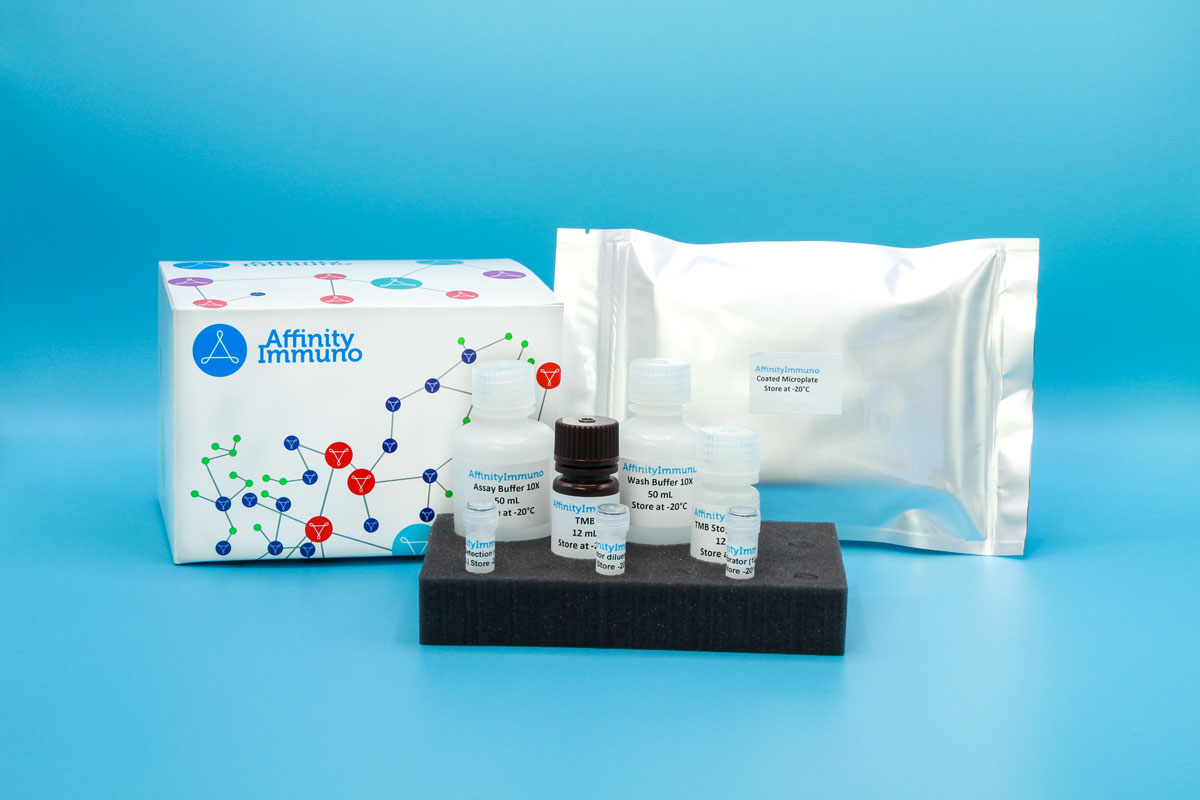
| Components | Pre-Coated Microplate - 12 strips x 8 wells (4°C/-20°C) Standard (Lyophilized) - 2 vials (4°C/-20°C) Biotinylated Antibody (100×) - 120 μL (4°C/-20°C) Streptavidin-HRP (100×) - 120 μL (4°C/-20°C) Standard/Sample Diluent Buffer - 20 mL (4°C/-20°C) Biotinylated Antibody Diluent - 12 mL (4°C/-20°C) HRP Diluent - 12 mL (4°C/-20°C) Wash Buffer (25×) - 20 mL (4°C/-20°C) TMB Substrate Solution - 10 mL (4°C/-20°C (store in dark)) Stop Reagent - 6 mL (4°C/-20°C) Plate Covers - 2 pieces (RT) |
| Storage | 4°C/-20°C |
Introduction
GSDME (also known as DFNA5) was first identified through its link to inherited hearing loss, but it is now understood chiefly as an executioner of a lytic, inflammatory form of cell death called pyroptosis. The protein sits inertly in cells until it is cut, either by caspase-3 during what would otherwise be a quiet apoptotic death or by granzyme B delivered from a cytotoxic natural killer or T cell, and this cleavage frees an N-terminal fragment that seeks out the inner face of the plasma membrane. There, the fragment inserts itself and assembles into large ring-shaped pores roughly ten to fifteen nanometers across, rupturing the cell and releasing mature inflammatory cytokines such as IL-1 beta in the process, effectively converting a silent death into an inflammatory one. This switch can work to a tumor’s disadvantage, since granzyme-driven pyroptosis of cancer cells helps recruit and activate anti-tumor immune responses, giving GSDME a tumor-suppressive character even though its original discovery had nothing to do with cancer biology.
Because granzyme-driven cleavage of GSDME converts tumor cell death into an inflammatory, immune-activating process, this assay is relevant to the fast-growing pyroptosis-immunotherapy research field studying how to harness programmed cell death pathways to boost anti-tumor immune responses.
Principle of the Assay
This kit uses a sandwich enzyme immunoassay format to measure Human Gasdermin E (GSDME). Microtiter plate wells are pre-coated with a GSDME-specific capture antibody that binds the target analyte present in standards or samples. A biotin-conjugated detection antibody, also specific to Human GSDME, is then added and binds a second epitope on the captured analyte. Avidin conjugated to horseradish peroxidase (HRP) is subsequently introduced and binds the biotin label. Upon addition of TMB substrate solution, a colorimetric signal develops exclusively in wells containing GSDME, the biotin-conjugated detection antibody, and avidin-HRP. The enzymatic reaction is stopped by the addition of sulphuric acid solution, and absorbance is read at 450 nm (± 10 nm). GSDME concentrations in unknown samples are determined by referencing their optical density values against a standard curve.