
Human Galectin-9 ELISA Kit | EL-213-709
Cat. No: EL-213-709
$859.99 USD
96 wells
| Target protein | Galectin-9 |
|---|---|
| Alternative name | LGALS9 |
| Gene ID | 3965 |
| Reactivity | Human |
| Detection range | 0.16-10 ng/mL |
| Sample type | serum, plasma, tissue homogenates, cell lysates, cell culture supernates and other biological fluids |
| Sample volume | 100 µL |
| Assay time | 3h 20min |
| Precision | Intra-assay CV <8%. Inter-assay CV <10% |
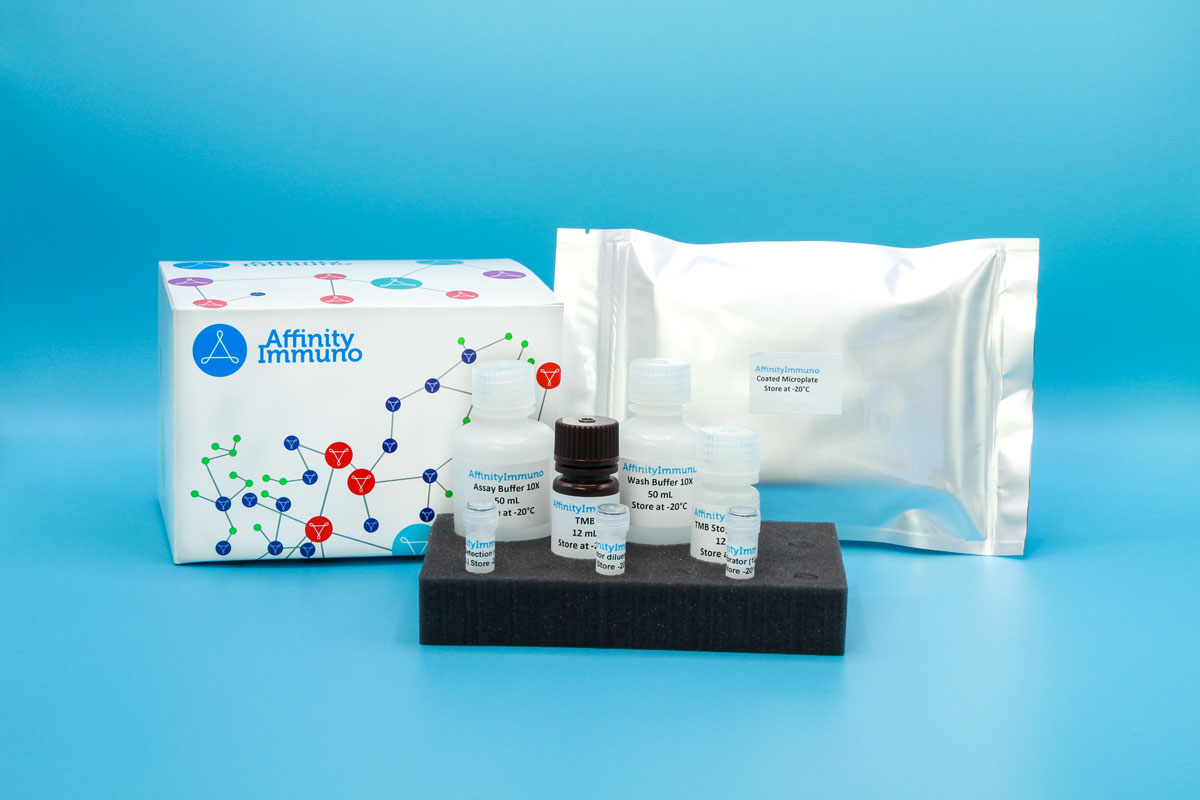
| Components | Pre-Coated Microplate - 12 strips x 8 wells (4°C/-20°C) Standard (Lyophilized) - 2 vials (4°C/-20°C) Biotinylated Antibody (100×) - 120 μL (4°C/-20°C) Streptavidin-HRP (100×) - 120 μL (4°C/-20°C) Standard/Sample Diluent Buffer - 20 mL (4°C/-20°C) Biotinylated Antibody Diluent - 12 mL (4°C/-20°C) HRP Diluent - 12 mL (4°C/-20°C) Wash Buffer (25×) - 20 mL (4°C/-20°C) TMB Substrate Solution - 10 mL (4°C/-20°C (store in dark)) Stop Reagent - 6 mL (4°C/-20°C) Plate Covers - 2 pieces (RT) |
| Storage | 4°C/-20°C |
Introduction
Galectin-9 is a roughly 40 kDa tandem-repeat member of the galectin family of beta-galactoside-binding lectins, expressed as long, medium, and short splice variants across tissues including the thymus, spleen, liver, and lymph nodes. Its best-characterized immune function is as a ligand for TIM-3 on T-helper type 1 and cytotoxic T cells, an interaction that drives apoptosis of those cells and, together with binding to CD44, helps stabilize and expand regulatory T cells by reinforcing FOXP3 expression. Beyond direct T-cell effects, galectin-9 activates mast cells and dendritic cells to release inflammatory cytokines and chemokines, promotes dendritic cell maturation and migration, and dampens natural killer cell cytotoxicity, giving it a broad role in shaping innate and adaptive immune responses. Its expression is notably elevated in Hodgkin lymphoma tissue, where it has been proposed to help Hodgkin and Reed-Sternberg cells interact with surrounding immune cells and may contribute to the immunodeficiency often observed alongside the disease.
Galectin-9’s TIM-3-mediated suppression of anti-tumor T cells has made it a clinical-stage immunotherapy target in its own right — PureTech’s LYT-200 has received FDA Fast Track designation in head and neck cancer — positioning this assay for both checkpoint-axis research and Hodgkin lymphoma biology, where galectin-9 is notably overexpressed.
Principle of the Assay
This kit uses a sandwich enzyme immunoassay format in which the microtiter plate wells are pre-coated with a capture antibody specific to Human Galectin-9. During the assay, standards or samples are added to the appropriate wells together with a biotin-conjugated detection antibody, also specific to Human Galectin-9, which binds a distinct epitope on the captured analyte. Avidin conjugated to horseradish peroxidase (HRP) is then added to each well and allowed to incubate, linking enzymatic activity to the captured immune complex via the biotin–avidin interaction. Upon addition of TMB substrate solution, a colorimetric signal develops exclusively in wells containing Human Galectin-9, the biotin-conjugated antibody, and avidin-HRP. The enzymatic reaction is stopped by the addition of a sulphuric acid stop solution, and absorbance is measured spectrophotometrically at 450 nm (± 10 nm). Human Galectin-9 concentrations in unknowns are then determined by comparing sample optical density values against a standard curve.