
Human Flt3L ELISA Kit | EL-213-603
Cat. No: EL-213-603
$859.99 USD
96 wells
| Target protein | Flt3L |
|---|---|
| Alternative name | FLT3LG |
| Gene ID | 2323 |
| Reactivity | Human |
| Detection range | 31.25-2000 pg/mL |
| Sample type | serum, plasma, tissue homogenates and other biological fluids |
| Sample volume | 100 µL |
| Assay time | 3h 20min |
| Precision | Intra-assay CV <8%. Inter-assay CV <10% |
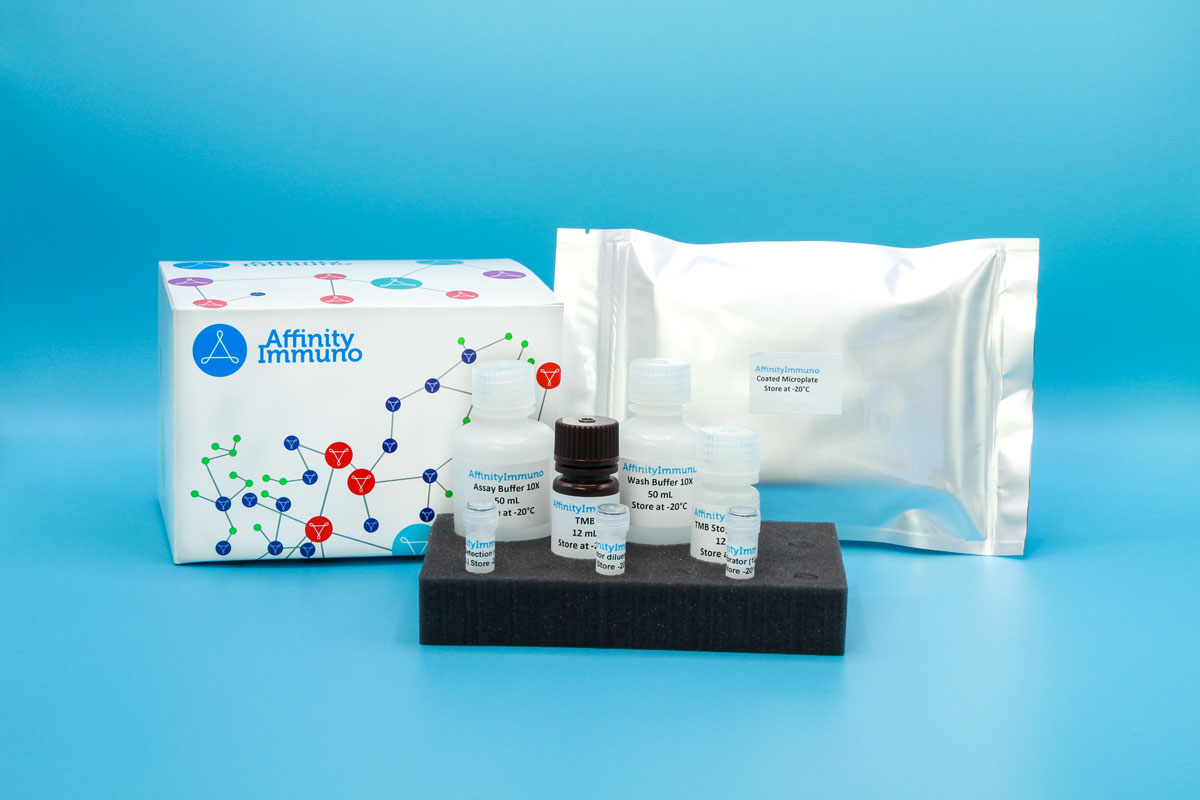
| Components | Pre-Coated Microplate - 12 strips x 8 wells (4°C/-20°C) Standard (Lyophilized) - 2 vials (4°C/-20°C) Biotinylated Antibody (100×) - 120 μL (4°C/-20°C) Streptavidin-HRP (100×) - 120 μL (4°C/-20°C) Standard/Sample Diluent Buffer - 20 mL (4°C/-20°C) Biotinylated Antibody Diluent - 12 mL (4°C/-20°C) HRP Diluent - 12 mL (4°C/-20°C) Wash Buffer (25×) - 20 mL (4°C/-20°C) TMB Substrate Solution - 10 mL (4°C/-20°C (store in dark)) Stop Reagent - 6 mL (4°C/-20°C) Plate Covers - 2 pieces (RT) |
| Storage | 4°C/-20°C |
Introduction
FLT3LG encodes a small secreted cytokine of roughly 18-19 kDa that signals through the FLT3 receptor tyrosine kinase displayed on early blood-forming progenitor cells in the bone marrow; together with other colony-stimulating factors and interleukins it drives their expansion, engaging downstream PI3K-Akt signaling to support cell survival and growth. This ligand is particularly critical for generating dendritic cells, the sentinel cells that bridge innate and adaptive immunity, with an outsized role in producing plasmacytoid dendritic cells and the CD8-positive/CD103-positive classical dendritic cell lineages, and it is likewise needed for normal B-lymphocyte development. Inherited loss of this gene causes a severe immunodeficiency featuring poor growth, chronic diarrhea, recurrent infections, disseminated warts from uncontrolled papillomavirus, and a bone marrow depleted of CD34-positive stem cells, with circulating dendritic cells, monocytes, and B lymphocytes falling to low numbers as well. Clinically, the FLT3 receptor this ligand activates is also a well-known driver of acute myeloid leukemia when mutated, underscoring the pathway’s central role in myeloid and lymphoid cell output.
Recombinant Flt3L (CDX-301) has been tested clinically as a dendritic-cell-expanding vaccine adjuvant to boost cancer vaccine responses, giving this assay relevance to vaccine-development research in addition to its role studying the FLT3 receptor pathway that, when mutated, is a well-known driver of acute myeloid leukemia.
Principle of the Assay
This kit uses a sandwich enzyme immunoassay format in which the microtiter plate wells are pre-coated with a capture antibody specific to Human Flt3L. Standards or samples are added to the appropriate wells along with a biotin-conjugated detection antibody that also recognizes Human Flt3L. Avidin conjugated to horseradish peroxidase (HRP) is then added and allowed to incubate, binding to the biotin-conjugated detection antibody. Upon addition of TMB substrate solution, a colorimetric signal develops only in wells where Human Flt3L, the biotin-conjugated antibody, and the avidin-HRP conjugate are all present. The enzymatic reaction is stopped by the addition of a sulphuric acid solution, and absorbance is measured spectrophotometrically at 450 nm (± 10 nm). Human Flt3L concentrations in the samples are determined by referencing the resulting optical density values against a standard curve.