
Human FGF23 ELISA Kit | EL-213-67623
Cat. No: EL-213-67623
$859.99 USD
96 wells
| Target protein | FGF23 |
|---|---|
| Gene ID | 8074 |
| Reactivity | Human |
| Detection range | 15.63-1000 pg/mL |
| Sample type | serum, plasma, tissue homogenates, cell lysates, cell culture supernates and other biological fluids |
| Sample volume | 100 µL |
| Assay time | 3h 20min |
| Precision | Intra-assay CV <8%. Inter-assay CV <10% |
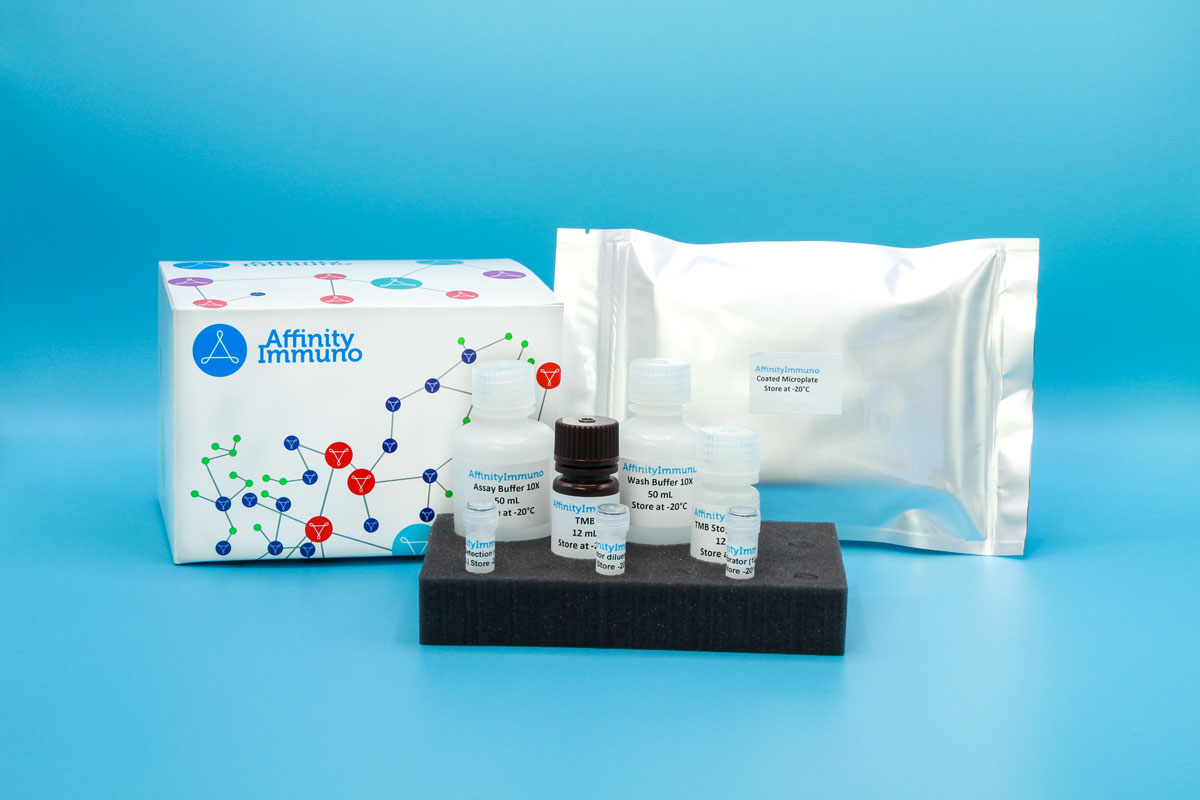
| Components | Pre-Coated Microplate - 12 strips x 8 wells (4°C/-20°C) Standard (Lyophilized) - 2 vials (4°C/-20°C) Biotinylated Antibody (100×) - 120 μL (4°C/-20°C) Streptavidin-HRP (100×) - 120 μL (4°C/-20°C) Standard/Sample Diluent Buffer - 20 mL (4°C/-20°C) Biotinylated Antibody Diluent - 12 mL (4°C/-20°C) HRP Diluent - 12 mL (4°C/-20°C) Wash Buffer (25×) - 20 mL (4°C/-20°C) TMB Substrate Solution - 10 mL (4°C/-20°C (store in dark)) Stop Reagent - 6 mL (4°C/-20°C) Plate Covers - 2 pieces (RT) |
| Storage | 4°C/-20°C |
Introduction
FGF23 is a hormone produced chiefly by osteocytes and osteoblasts in bone that governs how much phosphate the kidneys retain or excrete. Working through a receptor complex that requires the co-receptor Klotho, it lowers expression of the renal sodium-phosphate transporter SLC34A1, driving phosphate loss in urine, and it further restrains active vitamin D synthesis and parathyroid hormone release. FGF23 also acts locally in bone to limit osteoblast maturation and matrix mineralization, helping balance skeletal growth with mineral handling. Mutations that block the normal cleavage and inactivation of FGF23 cause autosomal dominant hypophosphatemic rickets, while other mutations in the gene underlie the opposite disorder, familial tumoral calcinosis, in which phosphate and calcium accumulate in soft tissue.
FGF23 is both a diagnostic marker and a validated drug target: burosumab, an anti-FGF23 antibody, is approved for X-linked hypophosphatemia, and post-treatment FGF23 monitoring is used in that clinical research setting alongside broader studies of the two opposing mineral disorders — hypophosphatemic rickets and familial tumoral calcinosis — that FGF23 mutations can cause.
Principle of the Assay
This kit uses a sandwich enzyme immunoassay format to measure Human FGF23. The microtiter plate wells are pre-coated with a capture antibody specific to Human FGF23. During the assay, standards or samples are added to the appropriate wells along with a biotin-conjugated detection antibody that also recognizes Human FGF23. Avidin conjugated to horseradish peroxidase (HRP) is then added to each well and allowed to incubate. Upon addition of TMB substrate solution, a colorimetric signal develops exclusively in wells containing Human FGF23, the biotin-conjugated detection antibody, and the avidin-HRP conjugate. The enzymatic reaction is stopped by the addition of a sulphuric acid stop solution, and absorbance is measured spectrophotometrically at 450 nm (± 10 nm). Sample concentrations of Human FGF23 are subsequently determined by referencing the optical density values against a standard curve.