
Human FGF21 ELISA Kit | EL-213-67621
Cat. No: EL-213-67621
$859.99 USD
96 wells
| Target protein | FGF21 |
|---|---|
| Gene ID | 26291 |
| Reactivity | Human |
| Detection range | 7.82-500 pg/mL |
| Sample type | serum, plasma, tissue homogenates, cell lysates, cell culture supernates and other biological fluids |
| Sample volume | 100 µL |
| Assay time | 3h 20min |
| Precision | Intra-assay CV <8%. Inter-assay CV <10% |
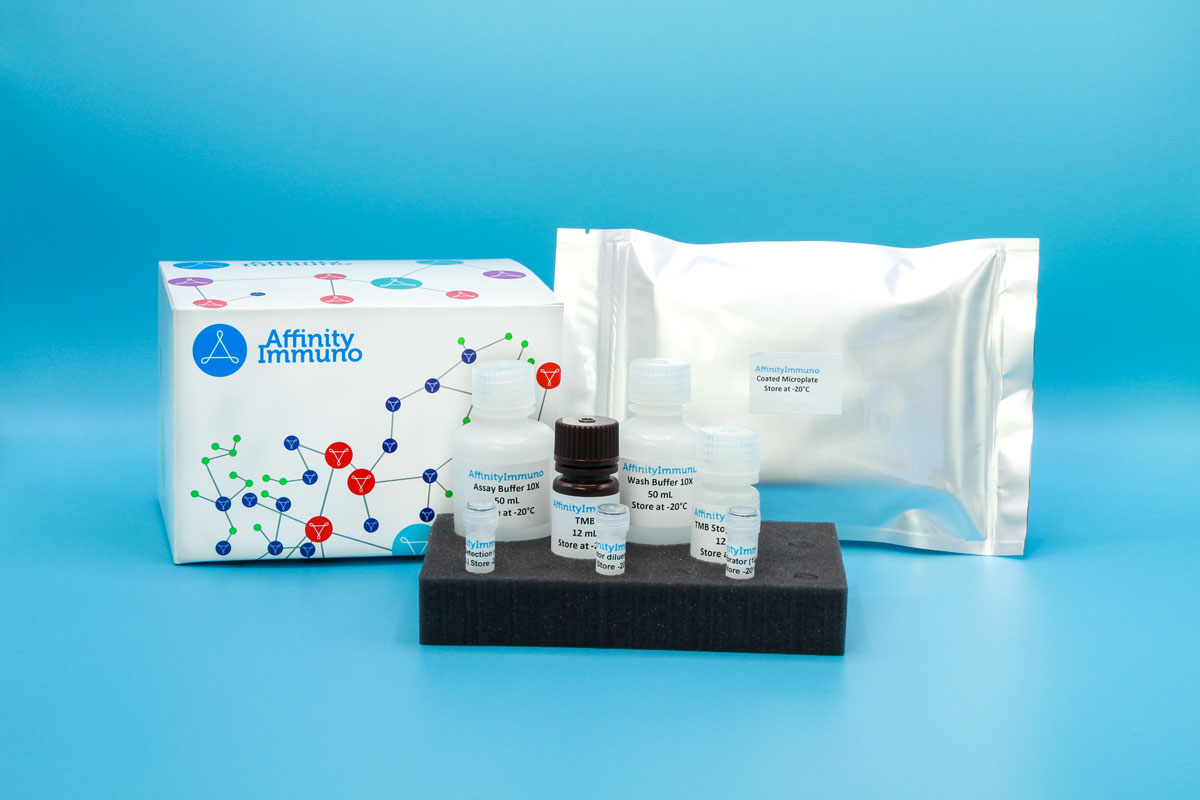
| Components | Pre-Coated Microplate - 12 strips x 8 wells (4°C/-20°C) Standard (Lyophilized) - 2 vials (4°C/-20°C) Biotinylated Antibody (100×) - 120 μL (4°C/-20°C) Streptavidin-HRP (100×) - 120 μL (4°C/-20°C) Standard/Sample Diluent Buffer - 20 mL (4°C/-20°C) Biotinylated Antibody Diluent - 12 mL (4°C/-20°C) HRP Diluent - 12 mL (4°C/-20°C) Wash Buffer (25×) - 20 mL (4°C/-20°C) TMB Substrate Solution - 10 mL (4°C/-20°C (store in dark)) Stop Reagent - 6 mL (4°C/-20°C) Plate Covers - 2 pieces (RT) |
| Storage | 4°C/-20°C |
Introduction
FGF21 belongs to the fibroblast growth factor family but behaves atypically, circulating as a hormone rather than acting locally, and it does not require heparin for receptor engagement. Made primarily by the liver, it signals through a receptor complex built from an FGF receptor together with the co-receptor beta-Klotho, and this pairing drives glucose uptake into fat cells by boosting the GLUT1 transporter. Through this pathway FGF21 helps set whole-body glucose and lipid balance, and administering the recombinant protein in animal models lowers blood glucose, triglycerides, and cholesterol while improving sensitivity to insulin. Because of these effects, FGF21 is studied as a potential therapeutic strategy for metabolic disorders such as type 2 diabetes.
FGF21-pathway agonists such as efruxifermin and pegozafermin are in late-stage development for metabolic dysfunction-associated steatohepatitis (MASH), so circulating FGF21 measurement supports both pharmacodynamic monitoring in that drug-development pipeline and broader research into insulin sensitivity and lipid metabolism.
Principle of the Assay
This kit uses a sandwich enzyme immunoassay format in which the microtiter plate wells are pre-coated with a capture antibody specific to Human FGF21. Standards or samples are added to the appropriate wells along with a biotin-conjugated detection antibody that also recognizes Human FGF21. Avidin conjugated to horseradish peroxidase (HRP) is then added to each well and allowed to incubate. Upon addition of TMB substrate solution, a colorimetric signal develops only in wells where Human FGF21, the biotin-conjugated detection antibody, and avidin-HRP are all present. The enzymatic reaction is stopped by the addition of a sulphuric acid stop solution, and absorbance is measured spectrophotometrically at 450 nm (± 10 nm). Human FGF21 concentrations in the samples are then determined by comparing sample optical density values against a standard curve.