
Human FGF19 ELISA Kit | EL-213-67619
Cat. No: EL-213-67619
$859.99 USD
96 wells
| Target protein | FGF19 |
|---|---|
| Gene ID | 9965 |
| Reactivity | Human |
| Detection range | 15.63-1000 pg/mL |
| Sample type | serum, plasma, tissue homogenates, cell lysates, cell culture supernates and other biological fluids |
| Sample volume | 100 µL |
| Assay time | 3h 20min |
| Precision | Intra-assay CV <8%. Inter-assay CV <10% |
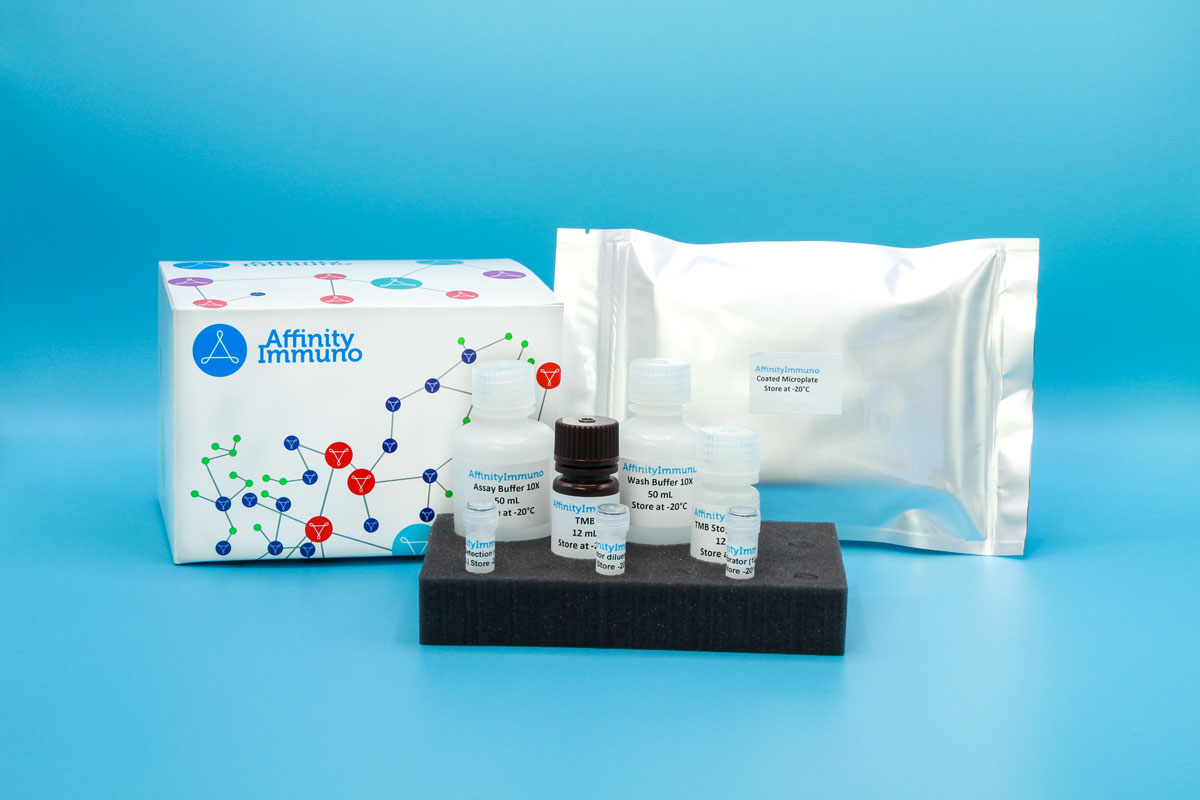
| Components | Pre-Coated Microplate - 12 strips x 8 wells (4°C/-20°C) Standard (Lyophilized) - 2 vials (4°C/-20°C) Biotinylated Antibody (100×) - 120 μL (4°C/-20°C) Streptavidin-HRP (100×) - 120 μL (4°C/-20°C) Standard/Sample Diluent Buffer - 20 mL (4°C/-20°C) Biotinylated Antibody Diluent - 12 mL (4°C/-20°C) HRP Diluent - 12 mL (4°C/-20°C) Wash Buffer (25×) - 20 mL (4°C/-20°C) TMB Substrate Solution - 10 mL (4°C/-20°C (store in dark)) Stop Reagent - 6 mL (4°C/-20°C) Plate Covers - 2 pieces (RT) |
| Storage | 4°C/-20°C |
Introduction
FGF19 is an intestine-derived hormone released after meals that travels to the liver to help regulate bile acid production. Acting through a receptor complex formed by FGFR4 and its co-receptor beta-klotho, it activates JNK and ERK1/2 signaling to suppress CYP7A1, the enzyme that starts bile acid synthesis from cholesterol. Beyond the liver, FGF19 promotes hepatic glycogen and protein synthesis and stimulates glucose uptake by fat cells, linking gut-derived signals to whole-body metabolic control. Its expression is normally limited to a few tissues, including the fetal brain, gallbladder and intestine, which is why circulating FGF19 is studied as a marker of enterohepatic signaling and metabolic disease.
As the postprandial signal that suppresses hepatic bile-acid synthesis, FGF19 is studied both as a marker of enterohepatic (gut-liver axis) signaling in bile-acid diarrhea and cholestatic disease research, and alongside its metabolic relatives FGF21 and FGF23 in broader endocrine fibroblast growth factor panels.
Principle of the Assay
This kit uses a sandwich enzyme immunoassay format to detect and quantify Human FGF19. The microtiter plate wells are pre-coated with a capture antibody specific to Human FGF19. During the assay, standards or samples are added to the appropriate wells along with a biotin-conjugated detection antibody that also recognizes Human FGF19. Avidin conjugated to horseradish peroxidase (HRP) is then added to each well and allowed to incubate, linking enzymatic activity to any captured analyte. Upon addition of TMB substrate solution, a colorimetric signal develops exclusively in wells where Human FGF19, the biotin-conjugated antibody, and the avidin-HRP conjugate are all present. The enzymatic reaction is stopped by the addition of a sulphuric acid solution, and absorbance is measured spectrophotometrically at 450 nm (± 10 nm). Human FGF19 concentrations in the samples are determined by comparing sample optical density values against a standard curve.