
Human cystatin C ELISA Kit | EL-213-03
Cat. No: EL-213-03
$859.99 USD
96 wells
| Target protein | cystatin C |
|---|---|
| Alternative name | CST3 |
| Gene ID | 1471 |
| Reactivity | Human |
| Detection range | 78.1-5000 pg/mL |
| Assay time | 20min |
| Precision | Intra-assay CV <8%. Inter-assay CV <10% |
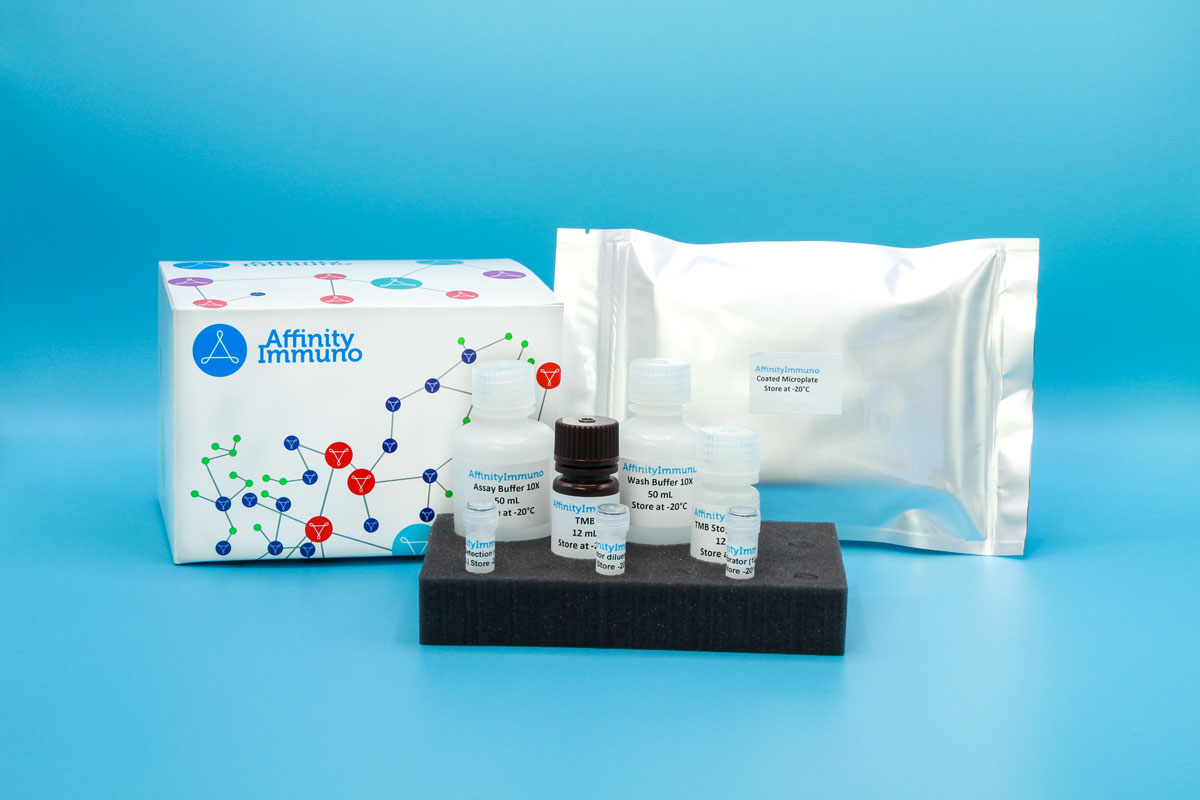
| Components | Pre-Coated Microplate - 12 strips x 8 wells (4°C/-20°C) Standard Microplate - 2 strips x 8 wells (4°C/-20°C) HRP Conjugate Antibody (100×) - 70 μL (4°C/-20°C (store in dark)) Standard/Sample Diluent Buffer - 24 mL (4°C/-20°C) HRP Conjugate Diluent - 10 mL (4°C/-20°C) Wash Buffer (25×) - 24 mL (4°C/-20°C) TMB Substrate Solution - 12 mL (4°C/-20°C (store in dark)) Stop Reagent - 7 mL (4°C/-20°C) Plate Covers - 2 pieces (4°C/-20°C) Instruction Manual - 1 (RT) |
| Storage | 4°C/-20°C |
Introduction
Cystatin C is a small, roughly 13 kDa secreted protein expressed constitutively by nearly every nucleated cell in the body and released into blood, cerebrospinal fluid, and other body fluids at high, stable concentrations. Its core biochemical role is inhibiting cysteine proteases, including lysosomal cathepsins, which lets it act as a local brake on proteolytic activity in tissues and also gives it some antimicrobial activity by restricting viral replication. Because it is filtered and cleared by the kidney at a fairly constant rate regardless of muscle mass, diet, or sex, cystatin C has become a widely used clinical marker for estimating glomerular filtration rate, often as a complement or alternative to creatinine. Beyond the kidney, altered cystatin C biology is tied to vascular disease – reduced expression is seen in smooth muscle of atherosclerotic and aneurysmal vessel walls – and rare mutations cause a hereditary form of cerebral amyloid angiopathy in which the protein misfolds and accumulates in blood vessel walls, leading to intracranial hemorrhage.
Because cystatin C clearance is largely unaffected by muscle mass, diet, or sex, it’s incorporated (often alongside creatinine) into modern equations for estimating glomerular filtration rate, making this assay directly relevant to nephrology and cardiovascular-risk research beyond its original discovery as a protease inhibitor.
Principle of the Assay
This kit uses a sandwich enzyme immunoassay format. The microtiter plate is pre-coated with a capture antibody specific to human cystatin C, which immobilizes the target analyte from standards or samples added to each well. An HRP-conjugated detection antibody, also specific to human cystatin C, is then added and binds a second epitope on the captured analyte. Following the addition of TMB substrate solution, wells containing the cystatin C–HRP-antibody complex develop a colored product. The enzymatic reaction is stopped by the addition of sulfuric acid stop solution, and absorbance is measured at 450 ± 10 nm. Sample cystatin C concentrations are determined by comparing well absorbance values against a standard curve.