
Human CHI3L1 ELISA Kit | EL-213-38903
Cat. No: EL-213-38903
$859.99 USD
96 wells
| Target protein | CHI3L1 |
|---|---|
| Gene ID | 1116 |
| Reactivity | Human |
| Detection range | 0.78-50 ng/mL |
| Sample type | Serum, plasma, tissue homogenates and other biological fluids. |
| Sample volume | 100 µL |
| Assay time | 3h 20min |
| Precision | Intra-assay CV <8%. Inter-assay CV <10% |
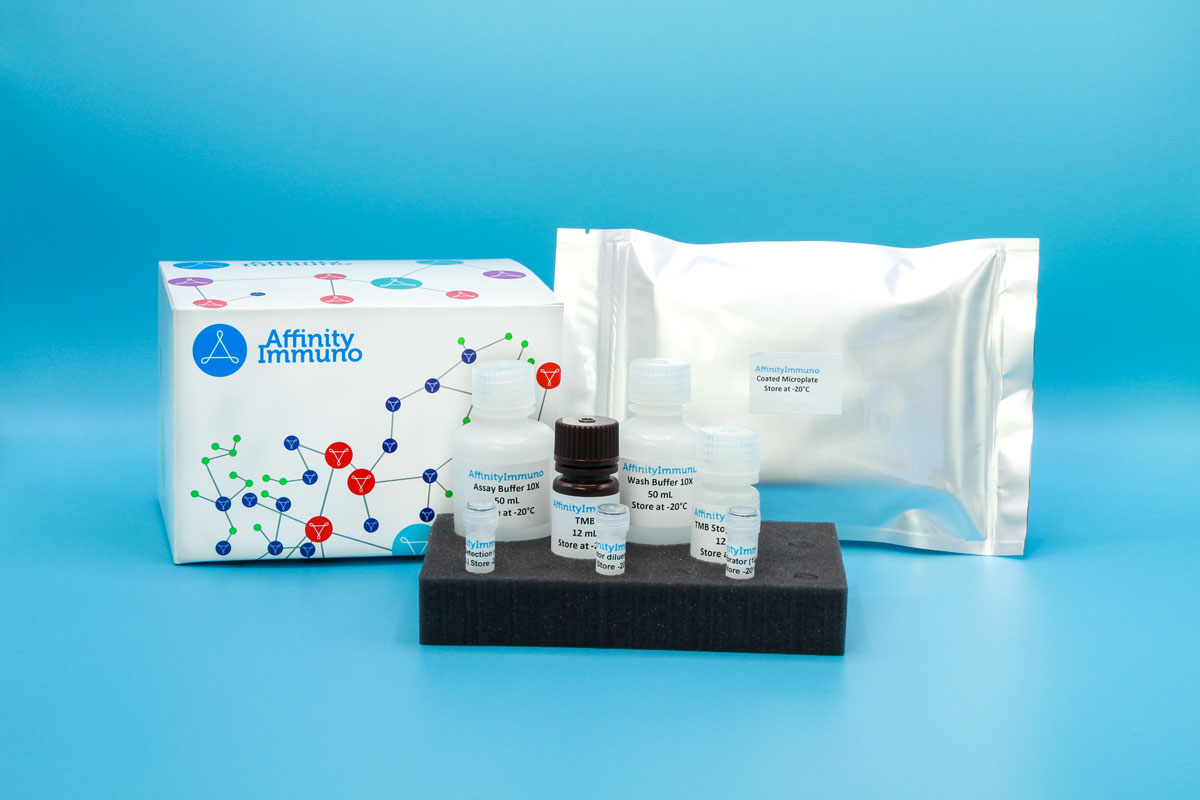
| Components | Pre-Coated Microplate - 12 strips x 8 wells (4°C/-20°C) Standard (Lyophilized) - 2 vials (4°C/-20°C) Biotinylated Antibody (100×) - 120 μL (4°C/-20°C) Streptavidin-HRP (100×) - 120 μL (4°C/-20°C) Standard/Sample Diluent Buffer - 20 mL (4°C/-20°C) Biotinylated Antibody Diluent - 12 mL (4°C/-20°C) HRP Diluent - 12 mL (4°C/-20°C) Wash Buffer (25×) - 20 mL (4°C/-20°C) TMB Substrate Solution - 10 mL (4°C/-20°C (store in dark)) Stop Reagent - 6 mL (4°C/-20°C) Plate Covers - 2 pieces (RT) |
| Storage | 4°C/-20°C |
Introduction
CHI3L1 encodes a secreted glycoprotein, commonly called YKL-40, that belongs structurally to the chitinase family but has lost the catalytic residue needed to break down chitin, leaving it able to bind carbohydrate without enzymatic activity. It is released by activated macrophages, neutrophils, chondrocytes and synovial cells, and it shapes processes including tissue remodeling, angiogenesis and Th2-skewed inflammatory responses such as those triggered by IL-13. In the airway and gut, YKL-40 influences allergen sensitization, dendritic cell recruitment, macrophage polarization toward a repair phenotype, and defense against invading bacteria. Because circulating YKL-40 rises with tissue injury and chronic inflammation, it is measured as a biomarker in conditions spanning asthma, rheumatoid arthritis, liver fibrosis and several malignancies.
Serum YKL-40 has been studied as a non-invasive marker of liver fibrosis severity in non-alcoholic fatty liver disease, adding a hepatology use case alongside its established role as an inflammation biomarker in asthma, rheumatoid arthritis, and several malignancies.
Principle of the Assay
This kit utilizes a sandwich enzyme immunoassay format to measure Human CHI3L1. The microtiter plate is pre-coated with a CHI3L1-specific capture antibody that binds the target analyte present in standards or samples. A biotin-conjugated detection antibody, also specific to Human CHI3L1, is then added and binds a second epitope on the captured analyte. Avidin-conjugated horseradish peroxidase (HRP) is subsequently introduced and binds the biotin label. Upon addition of TMB substrate, a colorimetric signal develops exclusively in wells where Human CHI3L1, the biotin-conjugated detection antibody, and Avidin-HRP are all present. The enzymatic reaction is stopped by the addition of a sulphuric acid solution, and absorbance is measured spectrophotometrically at 450 nm (± 10 nm). Sample concentrations are calculated by comparing sample optical density values against a standard curve.