
Human CD96 ELISA Kit | EL-213-3496
Cat. No: EL-213-3496
$859.99 USD
96 wells
| Target protein | CD96 |
|---|---|
| Gene ID | 10225 |
| Reactivity | Human |
| Detection range | 78.13-5000 pg/mL |
| Sample type | serum, plasma, tissue homogenates and other biological fluids |
| Sample volume | 100 µL |
| Assay time | 3h 20min |
| Precision | Intra-assay CV <8%. Inter-assay CV <10% |
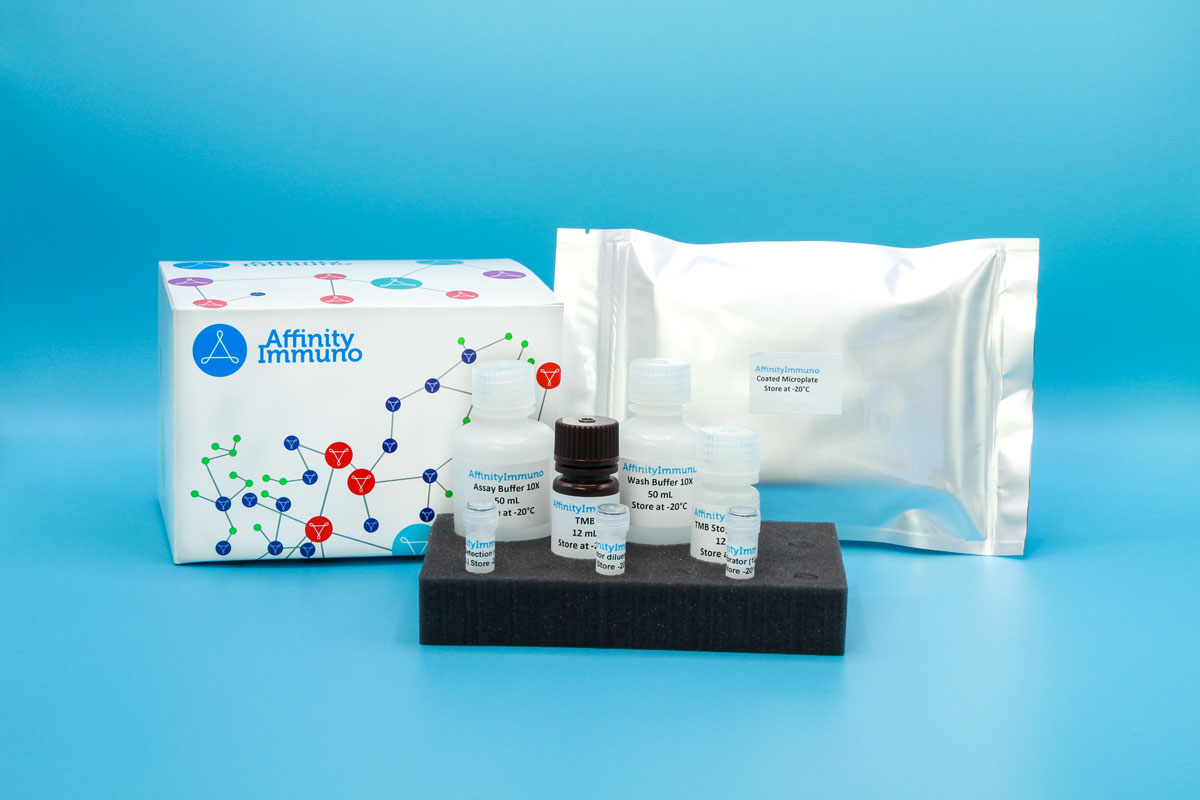
| Components | Pre-Coated Microplate - 12 strips x 8 wells (4°C/-20°C) Standard (Lyophilized) - 2 vials (4°C/-20°C) Biotinylated Antibody (100×) - 120 μL (4°C/-20°C) Streptavidin-HRP (100×) - 120 μL (4°C/-20°C) Standard/Sample Diluent Buffer - 20 mL (4°C/-20°C) Biotinylated Antibody Diluent - 12 mL (4°C/-20°C) HRP Diluent - 12 mL (4°C/-20°C) Wash Buffer (25×) - 20 mL (4°C/-20°C) TMB Substrate Solution - 10 mL (4°C/-20°C (store in dark)) Stop Reagent - 6 mL (4°C/-20°C) Plate Covers - 2 pieces (RT) |
| Storage | 4°C/-20°C |
Introduction
CD96, also called TACTILE, is an immunoglobulin-superfamily glycoprotein displayed on the surface of T cells, NK cells, and NKT cells, with expression rising after these cells become activated. It engages the ligand PVR (CD155) on nearby target cells, strengthening adhesion during the later stages of an immune response after selectins and integrins have already initiated cell engagement, and it may additionally contribute to antigen presentation. A short inhibitory motif in its cytoplasmic tail places CD96 among the checkpoint-like receptors that help keep natural killer cell cytotoxicity in balance, tempering activation once earlier signaling has been established. Rare germline changes in the underlying gene have also been reported in a distinct developmental disorder characterized by craniofacial and skeletal abnormalities, illustrating a function for this protein beyond mature lymphocytes.
CD96 is being explored as one of the next immune-checkpoint targets after PD-1/PD-L1, given its role tempering NK-cell cytotoxicity within the same CD155-centered signaling circuit as TIGIT and CD226, positioning this assay alongside our other checkpoint-cluster kits for combination-pathway research.
Principle of the Assay
This kit uses a sandwich enzyme immunoassay format. The microtiter plate wells are pre-coated with a capture antibody specific to Human CD96 (TACTILE), which binds the target protein present in standards or samples added during the first incubation step. A biotin-conjugated detection antibody, also specific to Human CD96, is then introduced and binds a second epitope on the captured analyte. Avidin conjugated to horseradish peroxidase (HRP) is subsequently added to each well, where it complexes with the biotin label. Upon addition of TMB substrate solution, an enzymatic color reaction occurs exclusively in wells containing Human CD96, the biotin-conjugated detection antibody, and the avidin-HRP conjugate. The reaction is stopped by addition of a sulphuric acid solution, and absorbance is measured spectrophotometrically at 450 nm (± 10 nm). Sample concentrations are determined by comparing measured optical densities against a standard curve.