
Human CD81 ELISA Kit | EL-213-3481
Cat. No: EL-213-3481
$859.99 USD
96 wells
| Target protein | CD81 |
|---|---|
| Gene ID | 975 |
| Reactivity | Human |
| Detection range | 0.32-20 ng/mL |
| Sample type | tissue homogenates, cell lysates and other biological fluids |
| Sample volume | 100 µL |
| Assay time | 3h 20min |
| Precision | Intra-assay CV <8%. Inter-assay CV <10% |
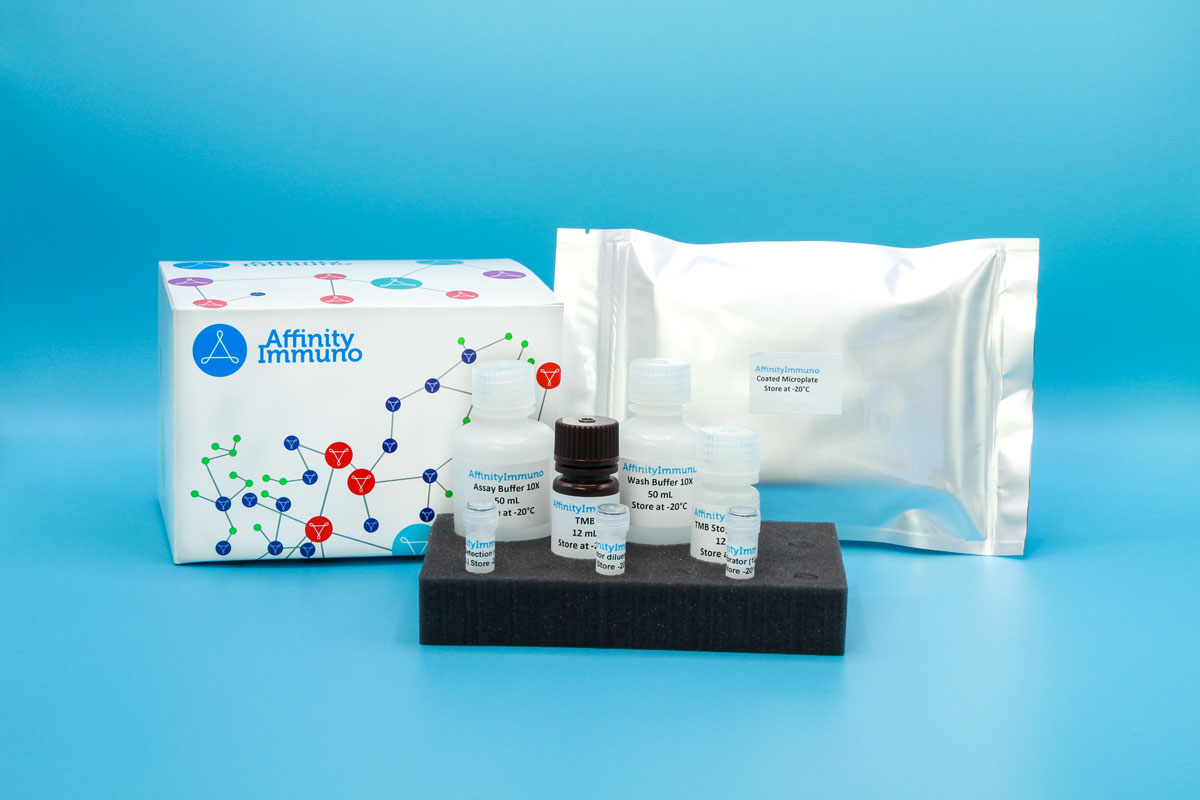
| Components | Pre-Coated Microplate - 12 strips x 8 wells (4°C/-20°C) Standard (Lyophilized) - 2 vials (4°C/-20°C) Biotinylated Antibody (100×) - 120 μL (4°C/-20°C) Streptavidin-HRP (100×) - 120 μL (4°C/-20°C) Standard/Sample Diluent Buffer - 20 mL (4°C/-20°C) Biotinylated Antibody Diluent - 12 mL (4°C/-20°C) HRP Diluent - 12 mL (4°C/-20°C) Wash Buffer (25×) - 20 mL (4°C/-20°C) TMB Substrate Solution - 10 mL (4°C/-20°C (store in dark)) Stop Reagent - 6 mL (4°C/-20°C) Plate Covers - 2 pieces (RT) |
| Storage | 4°C/-20°C |
Introduction
CD81, also called TAPA-1, is a small tetraspanin membrane protein with four hydrophobic transmembrane segments that assembles into specialized “tetraspanin-enriched microdomains,” platforms that cluster partner receptors together at the cell surface. On B lymphocytes it escorts the CD19 co-receptor to these microdomains, allowing the CD19/CD21 complex to associate efficiently with the B-cell receptor and lowering the amount of antigen needed to trigger clonal expansion and antibody secretion; on T cells it helps position the CD3 signaling complex at the immune synapse, contributing to costimulation and skewing responses toward a T-helper-2 phenotype. The same tetraspanin scaffold also governs several cell-fusion events, promoting sperm-egg fusion during fertilization while restraining unwanted fusion of macrophages into giant cells and of progenitor cells into bone-resorbing osteoclasts. Clinically, CD81 doubles as an entry receptor hijacked by hepatitis C virus in liver cells, and inherited loss-of-function changes in the gene cause a primary antibody-deficiency syndrome marked by impaired B-cell differentiation and recurrent bacterial infections.
CD81 is hijacked by hepatitis C virus as a liver-cell entry receptor, making it relevant to antiviral research, while its role organizing tetraspanin-enriched microdomains has separately made it one of the standard markers used alongside CD9 and CD63 to identify and quantify exosomes in extracellular-vesicle studies.
Principle of the Assay
This kit employs a sandwich enzyme immunoassay to measure Human CD81 (TAPA1). Microtiter plate wells are pre-coated with a capture antibody specific to Human TAPA1, which binds the target analyte present in standards or samples added to the wells. A biotin-conjugated detection antibody, also specific to Human TAPA1, is then introduced to form a sandwich complex on the plate. Avidin conjugated to horseradish peroxidase (HRP) is subsequently added to each well and binds the biotin-conjugated detection antibody. Upon addition of TMB substrate solution, a colorimetric signal develops only in wells where Human TAPA1, the biotin-conjugated antibody, and the avidin-HRP conjugate are all present. The enzymatic reaction is stopped by addition of a sulphuric acid stop solution, and absorbance is measured spectrophotometrically at 450 nm (± 10 nm). Human TAPA1 concentration in each sample is determined by comparing sample absorbance values against a standard curve.