
Human CD70 ELISA Kit | EL-213-3470
Cat. No: EL-213-3470
$859.99 USD
96 wells
| Target protein | CD70 |
|---|---|
| Gene ID | 970 |
| Reactivity | Human |
| Detection range | 0.16-10 ng/mL |
| Sample type | Serum, plasma, tissue homogenates and other biological fluids |
| Sample volume | 100 µL |
| Assay time | 3h 20min |
| Precision | Intra-assay CV <8%. Inter-assay CV <10% |
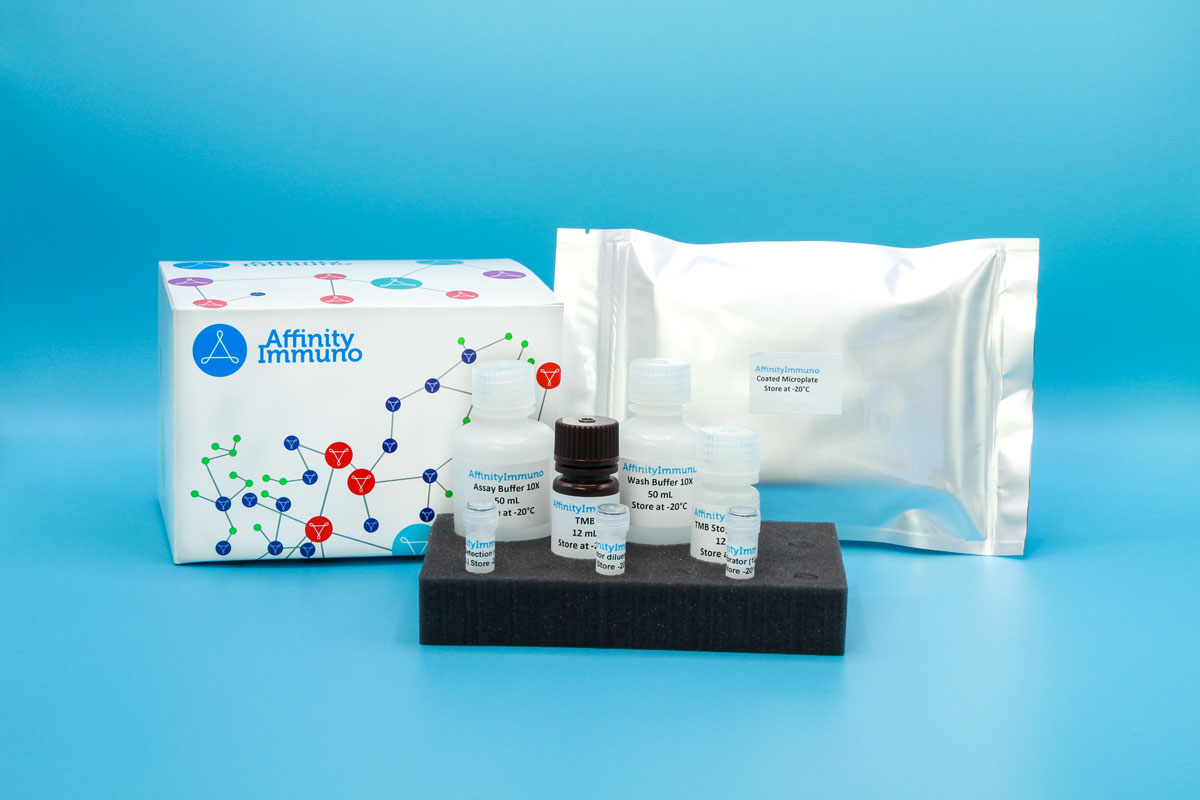
| Components | Pre-Coated Microplate - 12 strips x 8 wells (4°C/-20°C) Standard (Lyophilized) - 2 vials (4°C/-20°C) Biotinylated Antibody (100×) - 120 μL (4°C/-20°C) Streptavidin-HRP (100×) - 120 μL (4°C/-20°C) Standard/Sample Diluent Buffer - 20 mL (4°C/-20°C) Biotinylated Antibody Diluent - 12 mL (4°C/-20°C) HRP Diluent - 12 mL (4°C/-20°C) Wash Buffer (25×) - 20 mL (4°C/-20°C) TMB Substrate Solution - 10 mL (4°C/-20°C (store in dark)) Stop Reagent - 6 mL (4°C/-20°C) Plate Covers - 2 pieces (RT) |
| Storage | 4°C/-20°C |
Introduction
CD70 is a type II transmembrane protein of the tumor necrosis factor family that serves as the ligand for the CD27 receptor, together forming a costimulatory receptor-ligand pair central to lymphocyte activation. Engagement of CD27 by CD70 promotes clonal expansion of costimulated T cells, supports generation of cytotoxic T-cell responses, and contributes more broadly to natural killer cell function and antibody production. Because CD70 expression is tightly restricted to activated lymphocytes rather than resting cells, its appearance on the cell surface serves as a marker of ongoing immune activation. Loss-of-function mutations affecting this CD70-CD27 axis produce an inherited immune disorder marked by heightened vulnerability to Epstein-Barr virus infection and an increased risk of B-cell lymphoma, and sustained CD70/CD27 signaling has separately been implicated in supporting the growth of several tumor types.
Because CD70 expression is tightly restricted to activated lymphocytes but is aberrantly retained on leukemic stem cells in acute myeloid leukemia, it has become a validated therapeutic target — cusatuzumab (anti-CD70) has shown clinical activity eliminating AML stem cells — giving this assay relevance to both immune-activation marker studies and AML translational research.
Principle of the Assay
This kit uses a sandwich enzyme immunoassay format to measure Human CD70 (TNFSF7). The microtiter plate wells are pre-coated with a CD70-specific capture antibody that binds the target analyte present in standards or samples. A biotin-conjugated detection antibody, also specific to Human CD70, is then added and binds a second epitope on the captured analyte. Avidin conjugated to horseradish peroxidase (HRP) is subsequently added to each well and binds the biotin label. Upon addition of TMB substrate solution, a colorimetric signal develops exclusively in wells containing Human CD70, the biotin-conjugated detection antibody, and Avidin-HRP. The enzymatic reaction is stopped by the addition of sulphuric acid solution, and absorbance is read spectrophotometrically at 450 nm (± 10 nm). Sample concentrations are determined by comparing measured optical densities against a standard curve.