
Human CD40 ELISA Kit | EL-213-3440
Cat. No: EL-213-3440
$859.99 USD
96 wells
| Target protein | CD40 |
|---|---|
| Gene ID | 958 |
| Reactivity | Human |
| Detection range | 15.63-1000 pg/mL |
| Sample type | serum, plasma, tissue homogenates and other biological fluids |
| Sample volume | 100 µL |
| Assay time | 3h 20min |
| Precision | Intra-assay CV <8%. Inter-assay CV <10% |
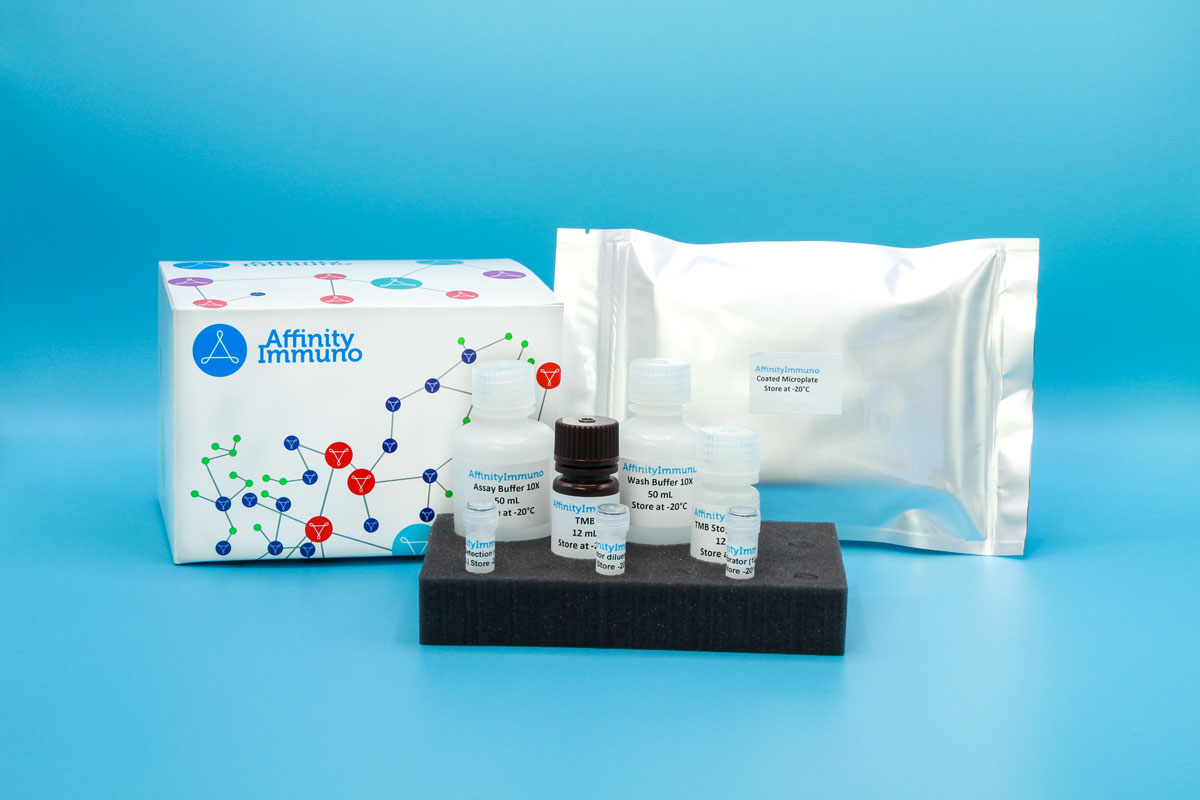
| Components | Pre-Coated Microplate - 12 strips x 8 wells (4°C/-20°C) Standard (Lyophilized) - 2 vials (4°C/-20°C) Biotinylated Antibody (100×) - 120 μL (4°C/-20°C) Streptavidin-HRP (100×) - 120 μL (4°C/-20°C) Standard/Sample Diluent Buffer - 20 mL (4°C/-20°C) Biotinylated Antibody Diluent - 12 mL (4°C/-20°C) HRP Diluent - 12 mL (4°C/-20°C) Wash Buffer (25×) - 20 mL (4°C/-20°C) TMB Substrate Solution - 10 mL (4°C/-20°C (store in dark)) Stop Reagent - 6 mL (4°C/-20°C) Plate Covers - 2 pieces (RT) |
| Storage | 4°C/-20°C |
Introduction
CD40 is a roughly 48 kDa type I transmembrane glycoprotein of the TNF receptor superfamily, expressed on antigen-presenting cells such as B cells, dendritic cells, and monocytes/macrophages, as well as on some epithelial cells, fibroblasts, platelets, and endothelial cells; it is present on essentially all mature B cells but disappears once they differentiate into plasma cells. Its ligand, CD40L (CD154) on activated T cells, triggers CD40 to recruit TRAF adaptor proteins and activate downstream kinase cascades including ERK, which drives B-cell activation, proliferation, and immunoglobulin secretion. This CD40-CD40L interaction is required for germinal center formation, antibody class switching, affinity maturation, and the generation of memory B cells and long-lived plasma cells, making it central to T-cell-dependent antibody responses. Loss-of-function mutations in CD40 cause an autosomal recessive form of hyper-IgM immunodeficiency, in which patients have normal or elevated IgM but little to no IgG, IgA, or IgE and suffer recurrent bacterial infections, and separately, CD40-CD40L signaling has been implicated as an early trigger of microglial activation in Alzheimer’s disease pathology.
Beyond its essential role in antibody class switching and its link to hyper-IgM immunodeficiency and Alzheimer’s-associated microglial activation, CD40 has become a cancer immunotherapy target in its own right, with agonist anti-CD40 antibodies now in clinical development to activate antigen-presenting cells and prime anti-tumor T-cell responses.
Principle of the Assay
This kit uses a sandwich enzyme immunoassay format to measure Human CD40 (TNFRSF5). Microtiter plate wells are pre-coated with a CD40-specific capture antibody that binds the target analyte present in standards or samples. A biotin-conjugated detection antibody, also specific to Human CD40, is then added and binds a second epitope on the captured analyte. Avidin conjugated to horseradish peroxidase (HRP) is subsequently introduced to each well, where it associates with the biotin label. Following incubation, TMB substrate solution is added; wells containing CD40, biotin-conjugated detection antibody, and avidin-HRP conjugate develop a colored reaction product. The enzymatic reaction is stopped by the addition of a sulphuric acid solution, and absorbance is read spectrophotometrically at 450 nm (± 10 nm). Sample CD40 concentrations are determined by comparing sample optical density values against a standard curve.