
Human CD226 ELISA Kit | EL-213-34226
Cat. No: EL-213-34226
$859.99 USD
96 wells
| Target protein | CD226 |
|---|---|
| Gene ID | 10666 |
| Reactivity | Human |
| Detection range | 31.25-2000 pg/mL |
| Sample type | Serum, plasma, tissue homogenates and other biological fluids. |
| Sample volume | 100 µL |
| Assay time | 3h 20min |
| Precision | Intra-assay CV <8%. Inter-assay CV <10% |
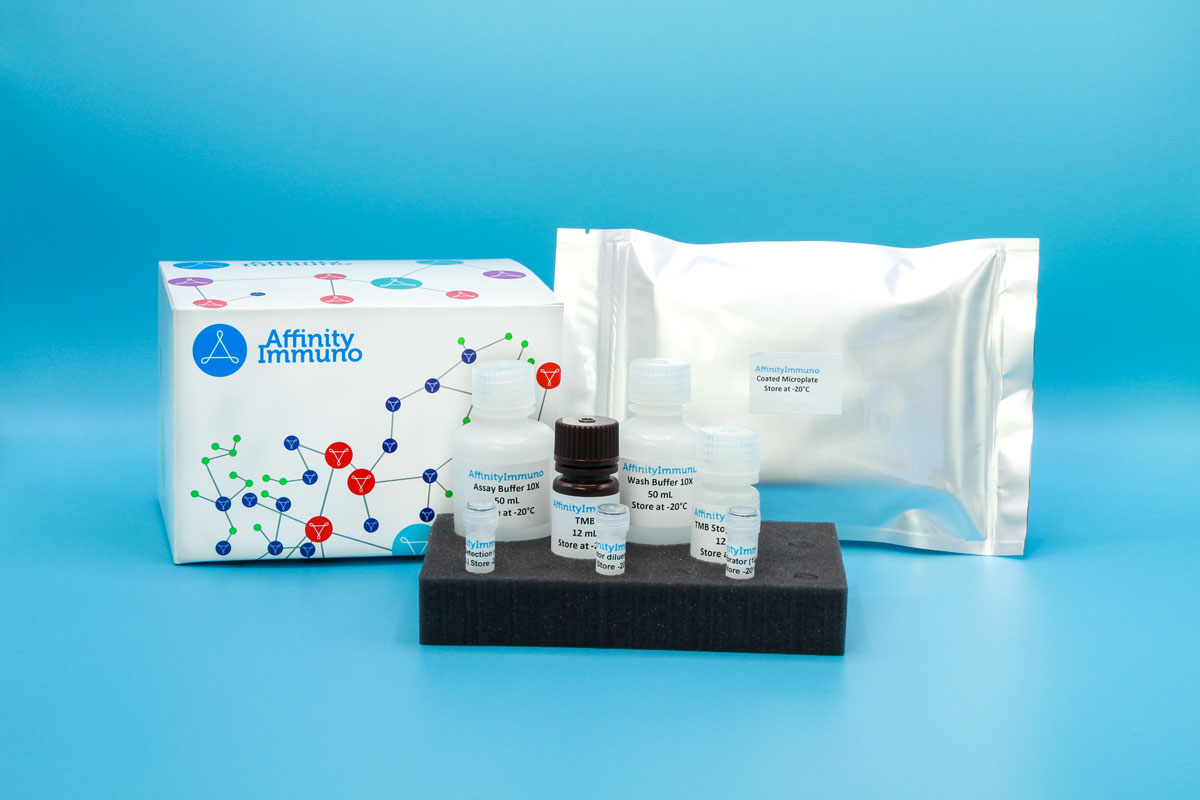
| Components | Pre-Coated Microplate - 12 strips x 8 wells (4°C/-20°C) Standard (Lyophilized) - 2 vials (4°C/-20°C) Biotinylated Antibody (100×) - 120 μL (4°C/-20°C) Streptavidin-HRP (100×) - 120 μL (4°C/-20°C) Standard/Sample Diluent Buffer - 20 mL (4°C/-20°C) Biotinylated Antibody Diluent - 12 mL (4°C/-20°C) HRP Diluent - 12 mL (4°C/-20°C) Wash Buffer (25×) - 20 mL (4°C/-20°C) TMB Substrate Solution - 10 mL (4°C/-20°C (store in dark)) Stop Reagent - 6 mL (4°C/-20°C) Plate Covers - 2 pieces (RT) |
| Storage | 4°C/-20°C |
Introduction
CD226, also referred to as DNAM-1, is a surface receptor built from two immunoglobulin-like domains and displayed on natural killer cells, platelets, monocytes, and a portion of T lymphocytes. It works as a costimulatory molecule: when it engages its binding partners CD155 or CD112 on the surface of infected or malignant cells, downstream signaling through Src-family kinases and adaptor proteins is triggered, sharpening the killing capacity and cytokine output of cytotoxic T cells and NK cells. Separately, CD226 supports adhesion of platelets and megakaryocyte precursors to the vessel wall and contributes to megakaryocyte maturation, linking it to both immune surveillance and blood clotting biology. Interestingly, a soluble, shed form of the receptor has been reported at higher levels in the blood of cancer patients alongside reduced amounts on the surface of their circulating immune cells.
As the activating receptor in the CD155-centered checkpoint triad opposite TIGIT and CD96, CD226/DNAM-1 is studied both for its role sharpening NK/T-cell killing and because a shed soluble form appears elevated in cancer patients alongside reduced surface CD226 on circulating immune cells — a pairing that makes this assay useful for immune-exhaustion monitoring alongside our TIGIT, CD96, and CD155 kits.
Principle of the Assay
This kit uses a sandwich enzyme immunoassay format. The microtiter plate wells come pre-coated with a capture antibody specific to Human CD226. Standards or samples are pipetted into the appropriate wells together with a biotin-conjugated detection antibody that also recognizes Human CD226. Avidin conjugated to horseradish peroxidase (HRP) is then added to each well and allowed to incubate. Upon addition of TMB substrate solution, a colorimetric signal develops exclusively in wells containing Human CD226, the biotin-conjugated antibody, and the avidin-HRP conjugate. The enzymatic reaction is stopped by the addition of a sulphuric acid solution, and the resulting color change is measured spectrophotometrically at 450 nm (± 10 nm). Human CD226 concentrations in the samples are calculated by comparing sample optical density values against a standard curve.