
Human CD133/PROM1 ELISA Kit | EL-213-34133
Cat. No: EL-213-34133
$859.99 USD
96 wells
| Target protein | CD133/PROM1 |
|---|---|
| Alternative name | PROM1 |
| Gene ID | 8842 |
| Reactivity | Human |
| Detection range | 0.16-10 ng/mL |
| Sample type | tissue homogenates, cell lysates and other biological fluids |
| Sample volume | 100 µL |
| Assay time | 3h 20min |
| Precision | Intra-assay CV <8%. Inter-assay CV <10% |
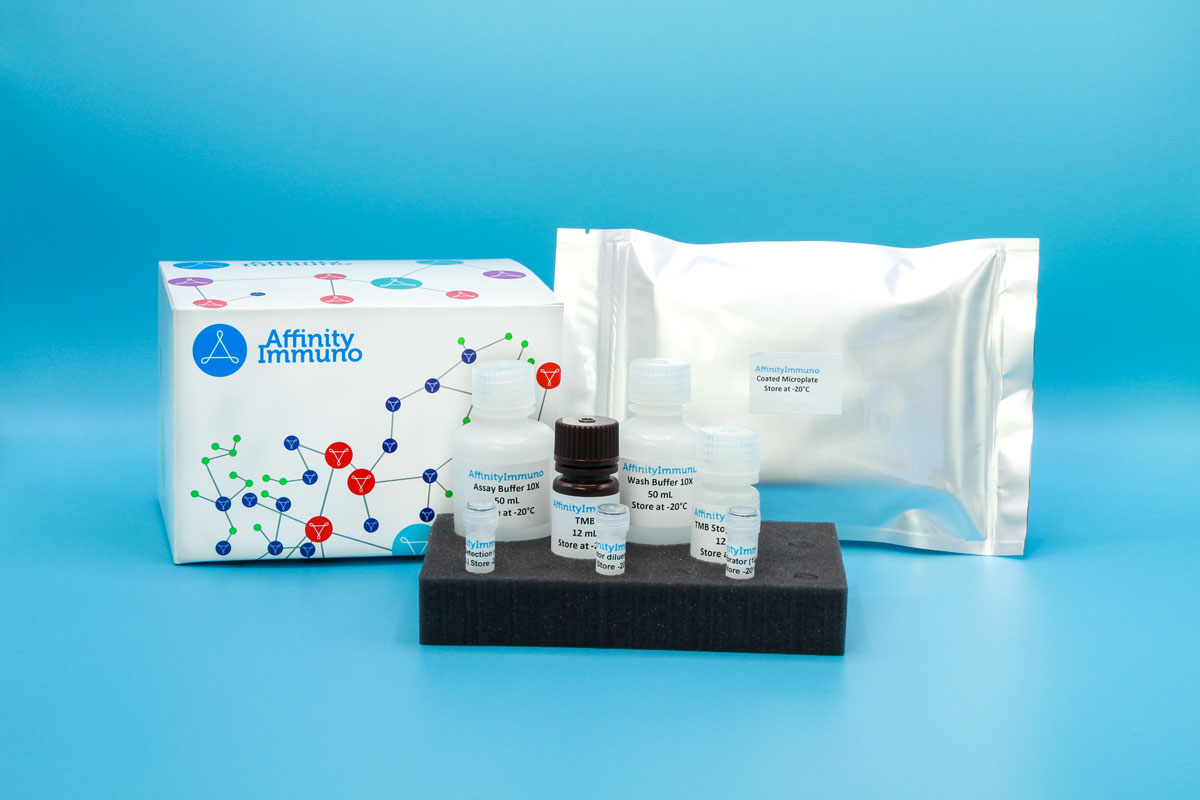
| Components | Pre-Coated Microplate - 12 strips x 8 wells (4°C/-20°C) Standard (Lyophilized) - 2 vials (4°C/-20°C) Biotinylated Antibody (100×) - 120 μL (4°C/-20°C) Streptavidin-HRP (100×) - 120 μL (4°C/-20°C) Standard/Sample Diluent Buffer - 20 mL (4°C/-20°C) Biotinylated Antibody Diluent - 12 mL (4°C/-20°C) HRP Diluent - 12 mL (4°C/-20°C) Wash Buffer (25×) - 20 mL (4°C/-20°C) TMB Substrate Solution - 10 mL (4°C/-20°C (store in dark)) Stop Reagent - 6 mL (4°C/-20°C) Plate Covers - 2 pieces (RT) |
| Storage | 4°C/-20°C |
Introduction
PROM1 encodes CD133, a five-transmembrane-domain glycoprotein that localizes to cholesterol-rich microdomains within membrane protrusions and helps organize the apical surface of polarized epithelial cells. It is widely used as a marker of stem and progenitor populations, including hematopoietic and neural stem cells, and of stem-like subpopulations within several tumor types, where it appears to help maintain an undifferentiated state by engaging PI3K/Akt, MAPK/ERK, Wnt, and TGF-beta signaling networks. During eye development CD133 plays a specific role in shaping photoreceptor outer-segment discs, and inherited mutations that disrupt this function underlie a spectrum of retinal degenerations, including forms of retinitis pigmentosa, cone-rod dystrophy, Stargardt disease, and macular dystrophy. Regulation of the gene through several tissue-specific promoters allows this single protein to serve distinct purposes across stem cell biology, cancer, and retinal physiology.
CD133 is one of the most widely used markers for isolating and studying stem-like subpopulations within tumors, including in glioblastoma, colorectal, and pancreatic cancer research, making circulating or tissue CD133 a candidate marker for tracking cancer-stem-cell burden alongside its established use in hematopoietic and neural stem cell studies.
Principle of the Assay
This kit uses a sandwich enzyme immunoassay format to measure human CD133/PROM1. Wells of the microtiter plate are pre-coated with a capture antibody specific to human PROM1, which binds the target analyte present in standards or samples. A biotin-conjugated detection antibody, also specific to human PROM1, is then added and binds a distinct epitope on the captured analyte. Avidin conjugated to horseradish peroxidase (HRP) is subsequently introduced and binds the biotin moiety, completing the detection complex. Upon addition of TMB substrate solution, a colorimetric signal develops only in wells where human PROM1, the biotin-conjugated detection antibody, and avidin-HRP are all present. The enzymatic reaction is stopped by the addition of a sulphuric acid stop solution, and absorbance is read at 450 nm (± 10 nm). PROM1 concentrations in the samples are then determined by referencing the measured optical densities against a standard curve.