
Human BTN1A1 ELISA Kit | EL-213-2201401
Cat. No: EL-213-2201401
$859.99 USD
96 wells
| Target protein | BTN1A1 |
|---|---|
| Gene ID | 696 |
| Reactivity | Human |
| Detection range | 0.16-10 ng/mL |
| Sample type | Tissue homogenates and other biological fluids. |
| Sample volume | 100 µL |
| Assay time | 3h 20min |
| Precision | Intra-assay CV <8%. Inter-assay CV <10% |
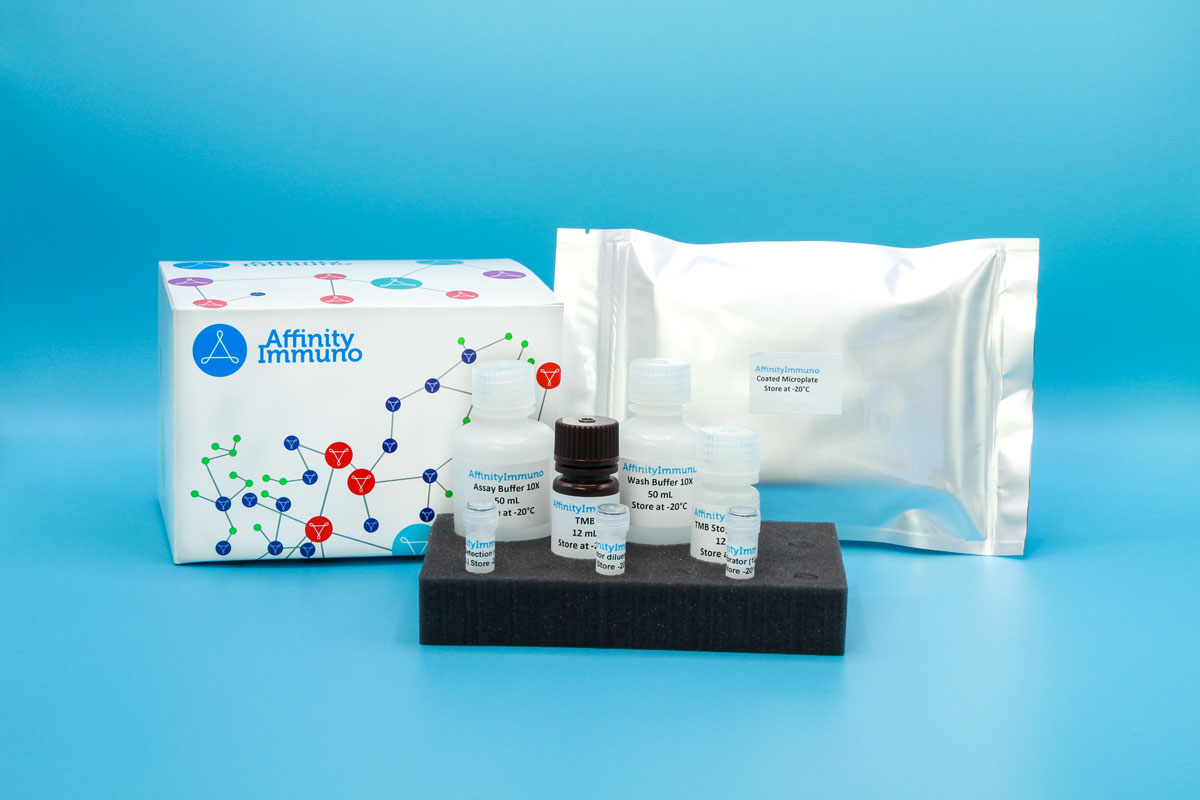
| Components | Pre-Coated Microplate - 12 strips x 8 wells (4°C/-20°C) Standard (Lyophilized) - 2 vials (4°C/-20°C) Biotinylated Antibody (100×) - 120 μL (4°C/-20°C) Streptavidin-HRP (100×) - 120 μL (4°C/-20°C) Standard/Sample Diluent Buffer - 20 mL (4°C/-20°C) Biotinylated Antibody Diluent - 12 mL (4°C/-20°C) HRP Diluent - 12 mL (4°C/-20°C) Wash Buffer (25×) - 20 mL (4°C/-20°C) TMB Substrate Solution - 10 mL (4°C/-20°C (store in dark)) Stop Reagent - 6 mL (4°C/-20°C) Plate Covers - 2 pieces (RT) |
| Storage | 4°C/-20°C |
Introduction
BTN1A1 sits within the major histocompatibility complex class I region on chromosome 6 and encodes Butyrophilin-1, an immunoglobulin superfamily member built around a B30.2/SPRY domain that anchors it in the apical plasma membrane of mammary epithelial cells. There it acts as a docking receptor that tethers cytoplasmic lipid droplets to the cell surface, a step required for the budding, secretion, and structural stability of the fat globules found in milk. Independent of its role in lactation, this same surface protein dampens T-cell immunity: engaging Butyrophilin-1 on CD4-positive and CD8-positive T cells that have been triggered through anti-CD3 stimulation curbs their proliferation, slows their metabolic activity, and reduces their output of the cytokines interleukin-2 and interferon-gamma. The gene is thought to have originated through exon shuffling across separate ancestral gene lineages, which may explain why a single protein serves such distinct physiological roles in nutrition and immune regulation.
Beyond its established role anchoring lipid droplets during milk-fat secretion, Butyrophilin-1 independently dampens T-cell proliferation and cytokine output when engaged on CD4+ and CD8+ T cells, giving this assay dual relevance to lactation-biology and T-cell immunoregulation research.
Principle of the Assay
This kit uses a sandwich enzyme immunoassay format in which the microtiter plate wells come pre-coated with a capture antibody specific to Human BTN1A1. Standards or samples are added to the appropriate wells together with a biotin-conjugated detection antibody that also recognizes Human BTN1A1. Avidin conjugated to horseradish peroxidase (HRP) is then added to each well and allowed to incubate. Upon addition of TMB substrate solution, a colorimetric signal develops exclusively in wells where Human BTN1A1, the biotin-conjugated antibody, and the avidin-HRP conjugate are all present. The enzymatic reaction is stopped by the addition of sulphuric acid solution, and the resulting color change is measured spectrophotometrically at 450 nm ± 10 nm. Human BTN1A1 concentrations in the samples are determined by comparing the optical density of each sample against the standard curve.