
Human BCMA ELISA Kit | EL-213-022
Cat. No: EL-213-022
$859.99 USD
96 wells
| Target protein | BCMA |
|---|---|
| Alternative name | TNFRSF17 |
| Gene ID | 608 |
| Reactivity | Human |
| Detection range | 0.16-10 ng/mL |
| Sample type | Serum, plasma and other biological fluids. |
| Sample volume | 100 µL |
| Assay time | 3h 20min |
| Precision | Intra-assay CV <8%. Inter-assay CV <10% |
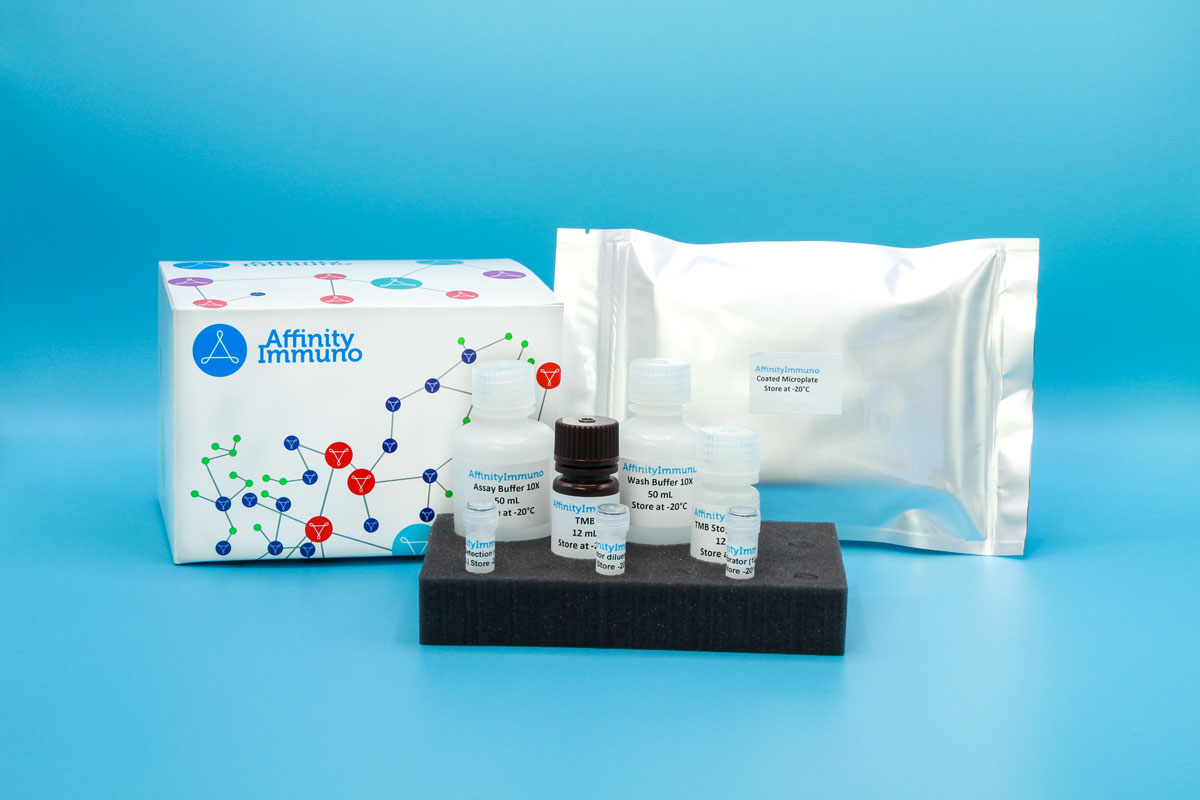
| Components | Pre-Coated Microplate - 12 strips x 8 wells (4°C/-20°C) Standard (Lyophilized) - 2 vials (4°C/-20°C) Biotinylated Antibody (100×) - 120 μL (4°C/-20°C) Streptavidin-HRP (100×) - 120 μL (4°C/-20°C) Standard/Sample Diluent Buffer - 20 mL (4°C/-20°C) Biotinylated Antibody Diluent - 12 mL (4°C/-20°C) HRP Diluent - 12 mL (4°C/-20°C) Wash Buffer (25×) - 20 mL (4°C/-20°C) TMB Substrate Solution - 10 mL (4°C/-20°C (store in dark)) Stop Reagent - 6 mL (4°C/-20°C) Plate Covers - 2 pieces (RT) |
| Storage | 4°C/-20°C |
Introduction
BCMA (B-cell maturation antigen), encoded by the TNFRSF17 gene, is a small transmembrane receptor found mainly on plasma cells and late-stage B lymphocytes. It engages two ligands from the TNF superfamily, BAFF and APRIL, and this interaction recruits TRAF adaptor proteins to switch on NF-kB and JNK signaling cascades inside the cell. Through these pathways, BCMA supports the survival and continued proliferation of antibody-producing B cells, making it a central node in humoral immunity. Because its expression is largely restricted to mature B-cell lineages, circulating BCMA levels are studied as an indicator of plasma cell activity and B-cell-driven immune processes.
Because BCMA expression is tightly restricted to plasma cells and is aberrantly retained on malignant cells in multiple myeloma, Hodgkin lymphoma, and Waldenstrom macroglobulinemia, circulating BCMA is studied as a disease-burden and pharmacodynamic biomarker for the BCMA-directed CAR-T cells and bispecific antibodies now used in myeloma treatment.
Principle of the Assay
This kit uses a sandwich enzyme immunoassay format to measure Human BCMA (TNFRSF17). The microtiter plate wells are pre-coated with a capture antibody specific to Human TNFRSF17. During the assay, standards or samples are added to the appropriate wells together with a biotin-conjugated detection antibody that also recognizes Human TNFRSF17. Avidin conjugated to horseradish peroxidase (HRP) is then added to each well and allowed to incubate, linking the enzymatic label to any captured analyte via the biotin–avidin interaction. Upon addition of TMB substrate solution, wells containing Human TNFRSF17, the biotin-conjugated antibody, and HRP-conjugated avidin develop a colored product. The reaction is stopped by the addition of sulphuric acid solution, and absorbance is measured spectrophotometrically at 450 nm (± 10 nm). Sample concentrations are determined by comparing the optical density of each sample to a standard curve generated from the provided standards.