
Human Alpha-synuclein ELISA Kit | EL-213-015
Cat. No: EL-213-015
$859.99 USD
96 wells
| Target protein | Alpha-synuclein |
|---|---|
| Alternative name | SNCA |
| Gene ID | 6622 |
| Reactivity | Human |
| Detection range | 15.63-1000 pg/mL |
| Sample type | Serum, plasma, cerebrospinal fluid and other biological fluids |
| Sample volume | 100 µL |
| Assay time | 3h 20min |
| Precision | Intra-assay CV <8%. Inter-assay CV <10% |
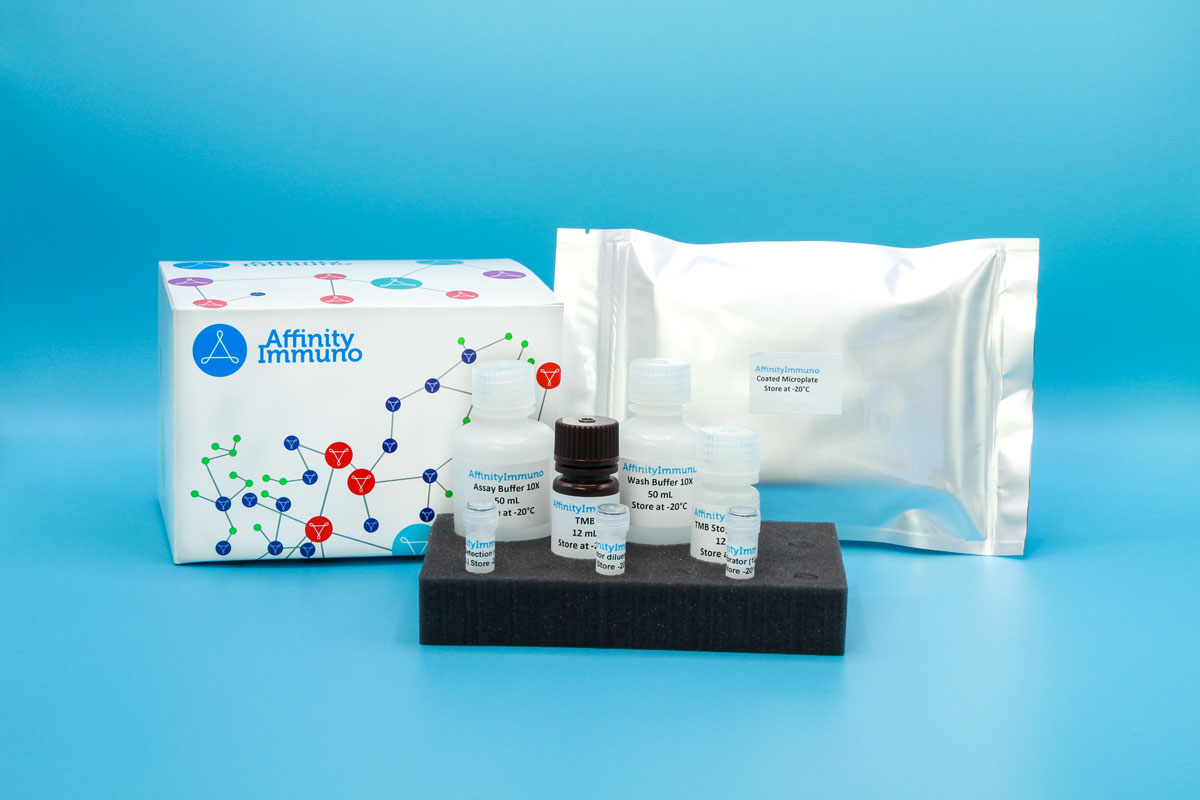
| Components | Pre-Coated Microplate - 12 strips x 8 wells (4°C/-20°C) Standard (Lyophilized) - 2 vials (4°C/-20°C) Biotinylated Antibody (100×) - 120 μL (4°C/-20°C) Streptavidin-HRP (100×) - 120 μL (4°C/-20°C) Standard/Sample Diluent Buffer - 20 mL (4°C/-20°C) Biotinylated Antibody Diluent - 12 mL (4°C/-20°C) HRP Diluent - 12 mL (4°C/-20°C) Wash Buffer (25×) - 20 mL (4°C/-20°C) TMB Substrate Solution - 10 mL (4°C/-20°C (store in dark)) Stop Reagent - 6 mL (4°C/-20°C) Plate Covers - 2 pieces (RT) |
| Storage | 4°C/-20°C |
Introduction
Alpha-synuclein, encoded by SNCA, is an abundant presynaptic protein concentrated at neuronal nerve terminals, where it helps orchestrate neurotransmitter release. As a free monomer it assists synaptic-vesicle priming and helps widen the fusion pore during exocytosis, partly through local calcium handling, while in its membrane-associated multimeric form it acts as a chaperone that helps SNARE proteins assemble correctly for vesicle docking. It also shapes dopaminergic signaling through an interaction with the dopamine transporter, and has been reported to associate with tau, connecting it to cytoskeletal regulation of vesicle movement. Mutations in SNCA cause autosomal-dominant forms of Parkinson disease and dementia with Lewy bodies, and fragments of the protein are also detected within the amyloid plaques characteristic of Alzheimer disease brain pathology.
Alpha-synuclein is one of the most actively studied fluid biomarkers in movement-disorder research, with published work measuring oligomeric and phosphorylated forms in plasma and CSF as candidate biomarkers for Parkinson’s disease, and fragments of the protein are also found within amyloid plaques in Alzheimer’s disease.
Principle of the Assay
This kit uses a sandwich enzyme immunoassay format. The microtiter plate wells are pre-coated with a capture antibody specific to human Alpha-synuclein (SNCa). Standards or samples are added to the appropriate wells along with a biotin-conjugated detection antibody that also recognizes human SNCa. Avidin conjugated to horseradish peroxidase (HRP) is then added to each well and allowed to incubate. Upon addition of TMB substrate solution, a colorimetric signal develops only in wells where human SNCa, the biotin-conjugated antibody, and the avidin-HRP conjugate are all present. The enzymatic reaction is stopped by the addition of a sulphuric acid stop solution, and the resulting color change is measured spectrophotometrically at 450 nm (± 10 nm). Sample concentrations are determined by comparing the optical density of each sample against a standard curve generated from the kit standards.