
Human Adropin ELISA Kit | EL-213-013
Cat. No: EL-213-013
$859.99 USD
96 wells
| Target protein | Adropin |
|---|---|
| Alternative name | ENHO |
| Gene ID | 375704 |
| Reactivity | Human |
| Detection range | 31.25-2000 pg/mL |
| Sample type | serum, plasma, tissue homogenates and other biological fluids |
| Sample volume | 100 µL |
| Assay time | 3h 20min |
| Precision | Intra-assay CV <8%. Inter-assay CV <10% |
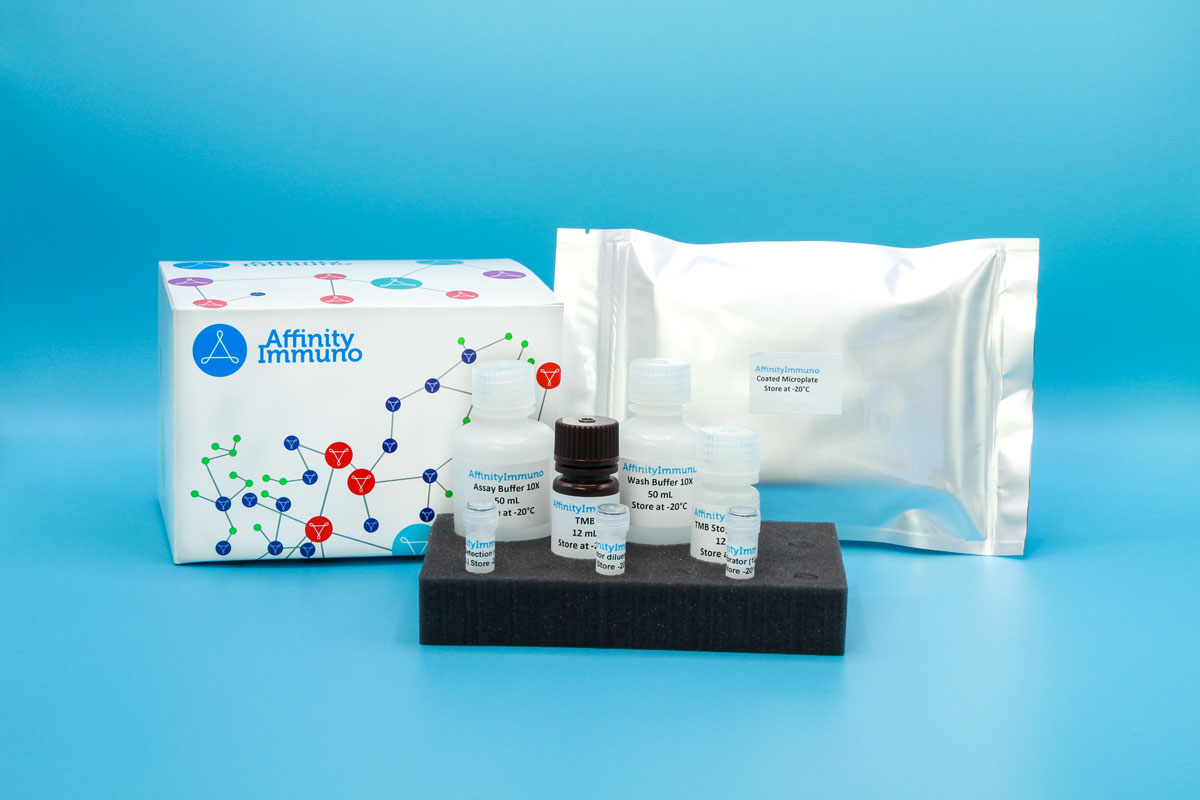
| Components | Pre-Coated Microplate - 12 strips x 8 wells (4°C/-20°C) Standard (Lyophilized) - 2 vials (4°C/-20°C) Biotinylated Antibody (100×) - 120 μL (4°C/-20°C) Streptavidin-HRP (100×) - 120 μL (4°C/-20°C) Standard/Sample Diluent Buffer - 20 mL (4°C/-20°C) Biotinylated Antibody Diluent - 12 mL (4°C/-20°C) HRP Diluent - 12 mL (4°C/-20°C) Wash Buffer (25×) - 20 mL (4°C/-20°C) TMB Substrate Solution - 10 mL (4°C/-20°C (store in dark)) Stop Reagent - 6 mL (4°C/-20°C) Plate Covers - 2 pieces (RT) |
| Storage | 4°C/-20°C |
Introduction
Adropin is a small, 76-amino-acid secreted peptide encoded by the ENHO (energy homeostasis-associated) gene and produced mainly by the liver and brain, with additional expression in the pancreas and other peripheral tissues. It functions as a metabolic signaling peptide that helps coordinate glucose and lipid handling, supports insulin sensitivity, and appears to protect blood vessel function by promoting nitric oxide production in the endothelium. Hepatic adropin output and circulating levels fall with fasting and rise again with refeeding, indicating that the peptide serves as a nutritional status signal integrating whole-body energy balance. In the brain, a membrane-associated form of the protein has separately been linked to regulation of physical activity through Notch-pathway signaling, and in humans, falling serum adropin has been investigated as an early indicator of metabolic dysfunction-associated fatty liver disease progressing toward type 2 diabetes.
Adropin has drawn recent research interest as a candidate biomarker for predicting progression from metabolic dysfunction-associated fatty liver disease to type 2 diabetes, and is increasingly studied alongside other hepatokines/myokines such as irisin in metabolic disease panels.
Principle of the Assay
This kit uses a sandwich enzyme immunoassay format. Microtiter plate wells are pre-coated with a capture antibody specific to Human Adropin (AD). During the assay, standards or samples are introduced into the appropriate wells together with a biotin-conjugated detection antibody that also targets Human AD. Avidin conjugated to horseradish peroxidase (HRP) is then added to each well and allowed to incubate, linking enzymatic activity to captured analyte. Upon addition of TMB substrate solution, a colorimetric signal develops exclusively in wells where Human AD, the biotin-conjugated antibody, and Avidin-HRP are all present. The reaction is stopped by the addition of sulphuric acid solution, and absorbance is measured spectrophotometrically at 450 nm (± 10 nm). Sample Adropin concentrations are determined by referencing the resulting optical density values against a prepared standard curve.